

Interview and photos by Streets Dept Lead Contributor Eric Dale. Additional photos courtesy of Lindsey Gill.
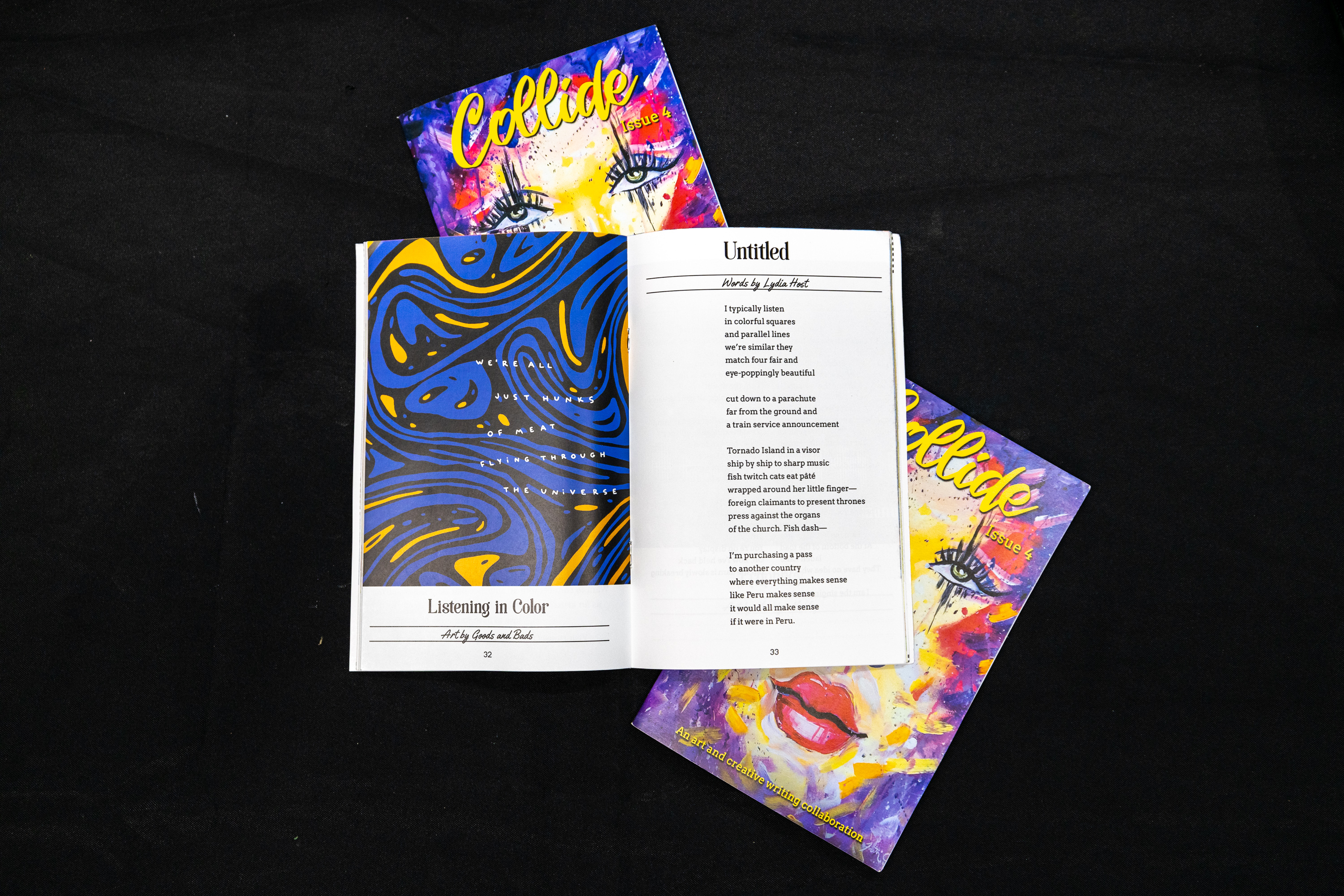
In the last year and a half, a new zine catering to the Philadelphia creative community has popped up: Collide. This quarterly literary and arts publication aims to connect visual artists and written artists through thematic ties in their submitted work. Contributors are encouraged to collaborate on new works, and anyone and everyone is encouraged to attend and perform—if you’re bold—at monthly open mics.
An open mic is where the idea for Collide germinated in the mind of illustrator and occasional street artist Lindsey Gill. She quickly brought graphic designer Katie Dempsey into the project to layout the zine, and then connected with Walls For Justice Executive Director Samuel Rodriguez, who agreed to sponsor the project. This three-way partnership has worked out well, with Collide recently releasing their fifth edition.
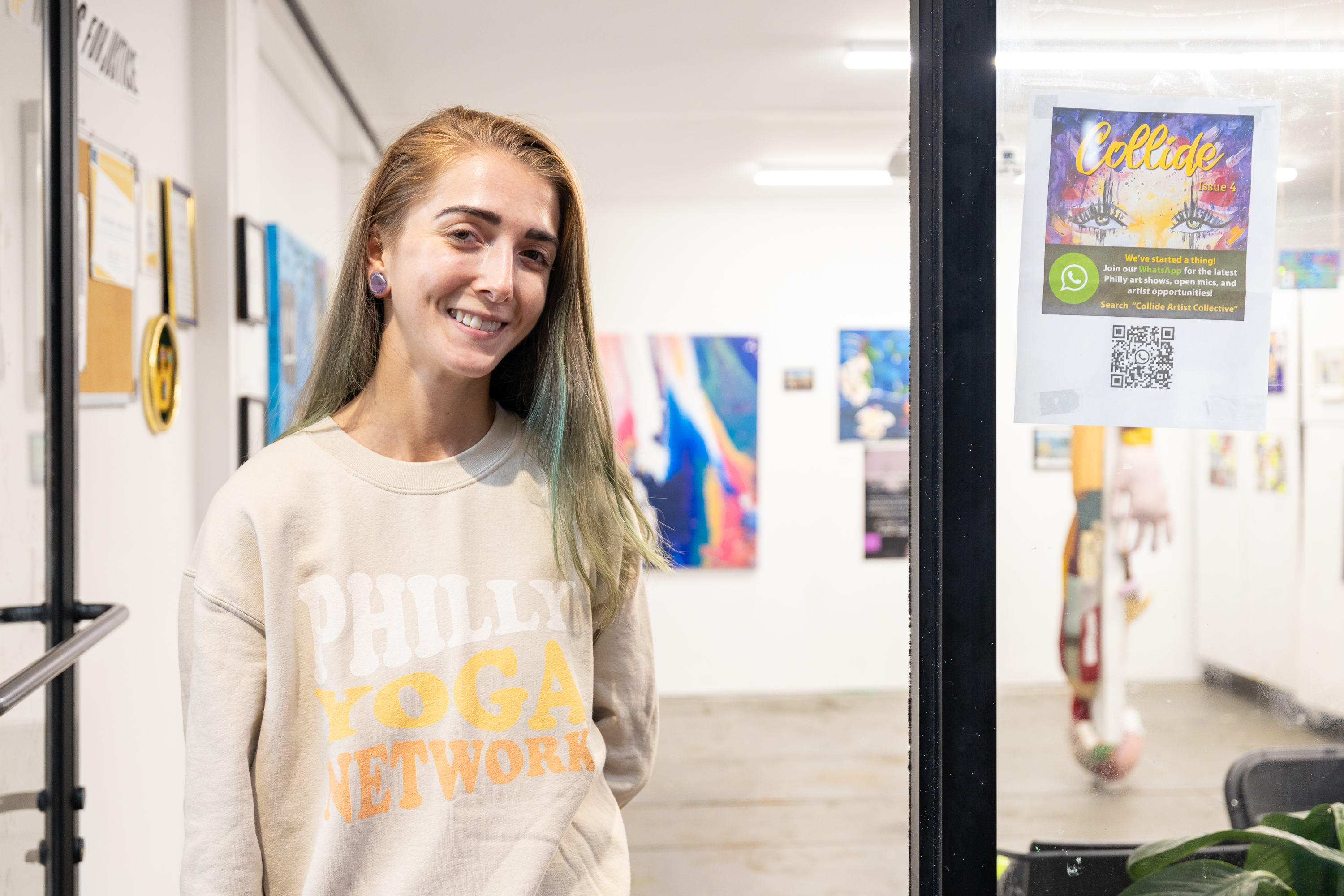
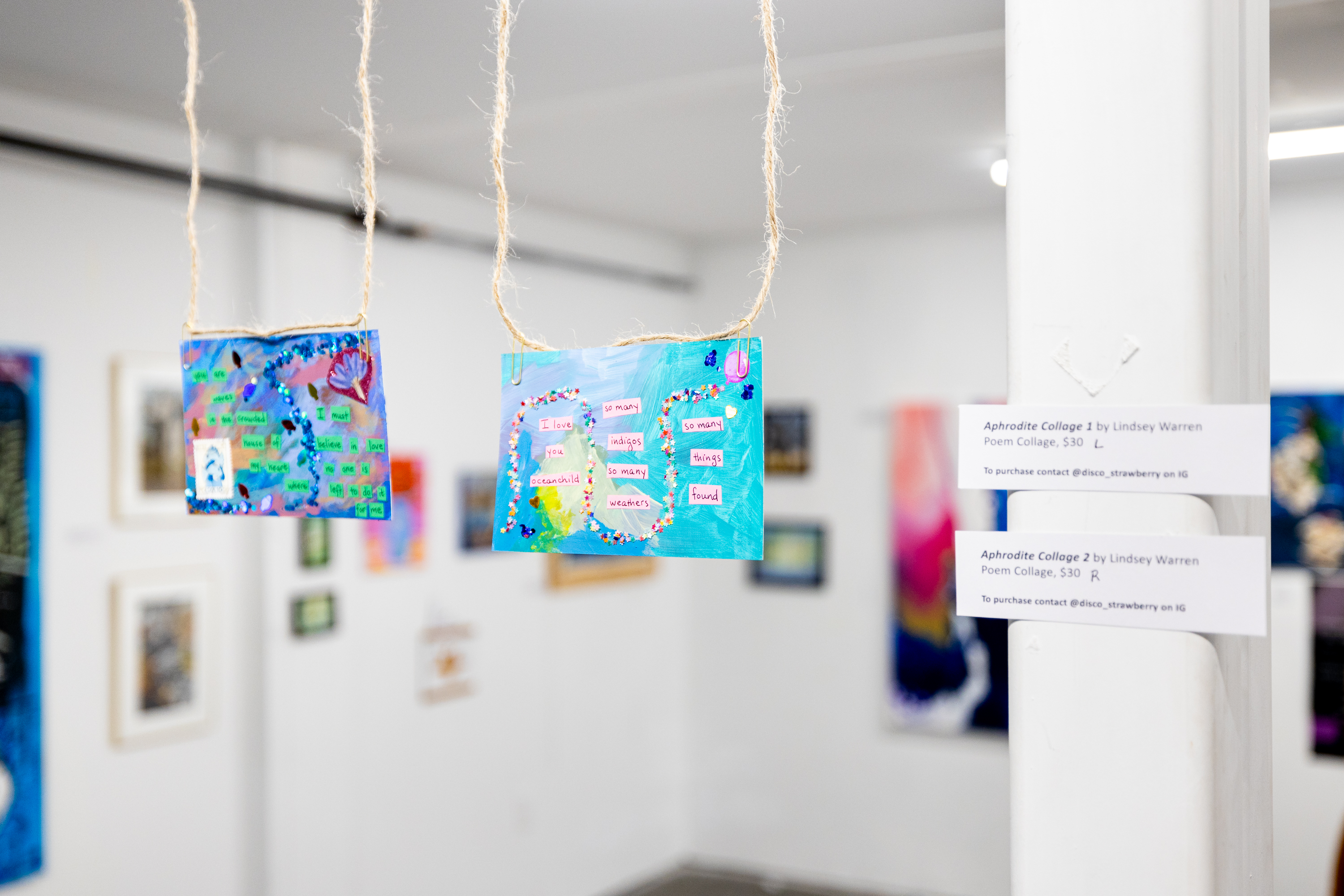
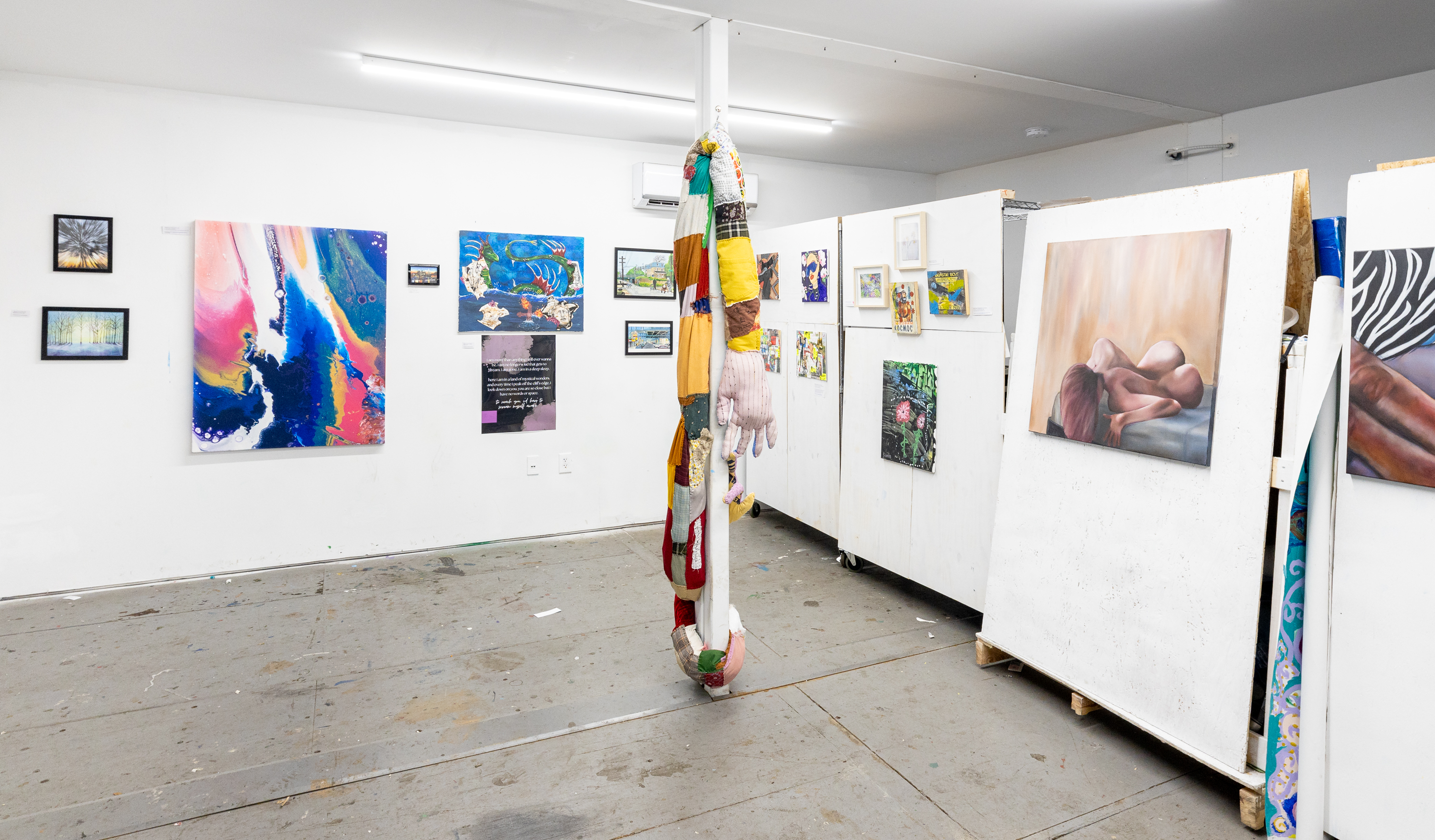
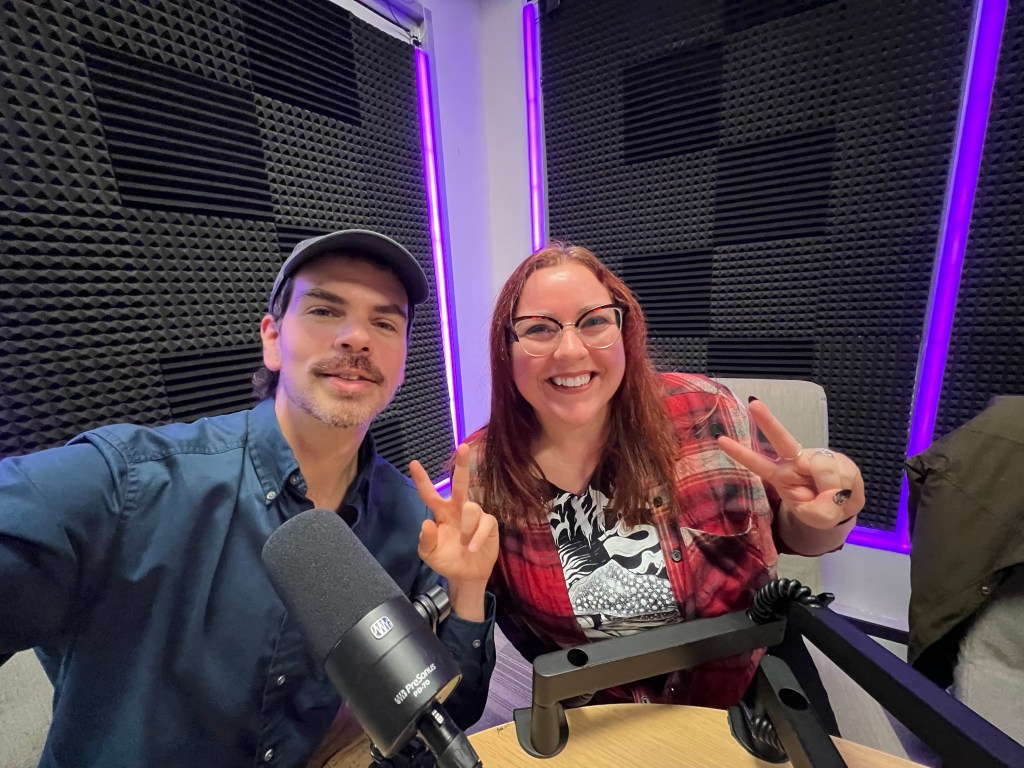
To learn more about Collide, I recently sat down with the group at the Walls for Justice studio space at Cherry Street Pier. The group art show on display at the time was a perfect backdrop—all around us were the works of local artists, most of whom had previously been featured in Collide.

Streets Dept’s Eric Dale: So first, can each of you tell me a little about yourself?
Lindsey Gill: I am a freelance illustrator. I graduated from the University of the Arts in 2019, and ever since then I’ve been building my way in the art world, trying new things, trying new ways of creating and connecting with other Philly creatives. So back about a year ago, I decided it would be super cool to start a zine project that would kind of be the encapsulation of my vision of having artists and writers collaborate on things in a way that wasn’t intimidating. There’s a lot of other magazines you can apply to out there that either cost an application fee, or they’re very curated, so you have a very small chance of getting actually published. So this was my way of making it more accessible to the local community.
Katie Dempsey: I’m a graphic designer. I went to Rutgers, a long time ago—don’t ask me when I graduated! And I have been living in Philly since fall 2020. Before that, I grew up and lived in New Jersey my whole life. I live in Queen Village, which is my favorite neighborhood, and I recently got a kitten named Wolfie. And that’s pretty much it!
Samuel Rodriguez: I’m the executive director of Walls For Justice. Walls For Justice started as a way to use art as a way to support social movements, and I do that by collaborating with businesses that want to support social change, working with local artists that want to utilize their talent, and working with community members that want to be a part of the change. The things we do… we use murals to advocate positive messages, and more recently, partnering with Collide to bring more programming and access to the arts.
Eric: Ok, great. So Lindsey, how would you describe Collide to someone who is unfamiliar with literary arts magazines?
Lindsey: I would describe it as a zine, and probably the first question I would get back is what’s a zine? And a zine is something I only recently discovered as a Philadelphia artist, but it’s actually very widespread. It’s basically a miniature version of an official magazine that’s widely distributed. It’s usually low cost to print. But this particular zine is meant to be a collaboration project. So it’s not just people submitting, it’s the opportunity to submit and then get feedback from your work that you submitted and possibly make something new out of it.
Katie: So it’s more of a partnership, rather than two strangers having their work thrown together and never interacting.
Eric: Right, I know that’s something that makes your zine unique—that partnership between artists. Do a lot of people take you up on that opportunity?
Lindsey: We’ve gotten a lot of really good feedback from the community in terms of how this is a unique project where it’s not just being thrown in with another random person, it’s actually themed. In some cases we’ve paired artists based on a common theme, and they just went all-in and made this beautiful new creation, either through poetry or an illustration… So it’s kind of a way that you would meet another artist in Philly, not even in person. And that’s great, because sometimes it’s really hard to build up the confidence, especially if you’re just starting out as an artist, to go to a public event and meet people. Here, it’s more email initially, and then we started doing events as a way for people to kind of get out of their shell a little.

Eric: Speaking of events, I know that this project was born out of an open mic night, and that open mics continue to play a role in the trajectory of Collide. So I’m wondering why open mics are important to you.
Lindsey: I started going to open mics as almost a mental health practice, because I felt so cooped up in my own apartment, not meeting new creatives like I wanted to. I had a full-time job at the time, so I would just come home and be super tired and uninspired. So since then, I’ve kind of made it a point in my own personal wellbeing to intermingle with other creatives, and open mics are a great way to do that, especially if you’re afraid of performing. You can just show up and listen to other people.
Eric: Cool. So what sorts of events does Collide organize?
Lindsey: We try to at least do either one or two events a month, whether that’s an art market, an open mic, or some kind of collaborative initiative that is in line with the theme of the zine.
Sam: Through Walls for Justice, we have even done programming with Eastern State Penitentiary, where we created an activity station. Working with the educators at Eastern State, the activity station resulted in people being able to create submissions for the magazine. So we asked people what changes they want to see in the world and what does justice mean to them. Usually Lindsey and I were there hosting an open mic. We’d invite people from the magazine to attend and really create more opportunities to create engagement throughout the community.
Eric: How does one submit work to Collide?
Lindsey: We try to make it as easy as possible and most people that submit either find us on Instagram or through the Walls For Justice website and then they can just click a link on our Linktree that sends them to a creator submission form.

Eric: Ok. And how do you evaluate submissions? Are there any themes or messages that you’re looking for? What’s the process for going from applying to being published?
Lindsey: Usually what happens is at the end of a period of rolling submissions, when we’re getting close to starting the process of editing, I go into the form, take a look at what’s been submitted, and see the commonalities between poets and artists that I think would be a good pair in the zine. I reach out to them all individually via email, and they have the option to say, like oh, this person doesn’t really fit me, or actually I really love this person’s work and we’re definitely going to work together. And then after that process is finished, that’s when we really start to get the final images from people who decide to create new stuff. And that’s where Katie does her magic!
Eric: So why did you decide to get involved in Collide, Katie?
Katie: Because my job at the time was not super artistic, and as someone who loved being creative, I was a little bit frustrated. Like, I have all this creative knowledge of the [Adobe] programs and whatnot, and I was like I want to do something creative, but not necessarily drawing. I want to do something design, but I don’t know what to do. Like, what kind of hobbies do you do with design?
Me and Lindsey were friends previously, so one day I was like hey, what’s up? Do you want to hang out? And she was like you know, it’s so funny that you reach out because I have a magazine that I want you to design.
Eric: And how do you approach the design process for the zine?
Katie: Every time, it’s different. I mean, it’s consistent, but it’s not the same spacing and fonts and geometric style every time. What I usually do is I do a couple of test pages, and then I send them to Lindsey, so she can be like ooh, I like this font, and I like this line element, or this shape of the picture or whatever, but really, the layouts are decided by the size and shape of the writing piece and/or art piece.
Lindsey: Whatever we get submitted informs the final design.
Katie: Yeah, because if you get a portrait art piece, it has to be portrait on the page; I don’t want to crop stuff so much so that you’re only seeing a tiny portion of the art. But I really love having so much creative freedom on this, because that’s not something I’ve had in the past.
Lindsey: I just let her loose.
Katie: Yeah, you reigned me in! And you’re like ok, you can take less time, you can’t take six hours for every single page. But it’s nice to not have someone be like that’s terrible, you need to completely change that, you know what I mean? It’s really my voice coming through in those pages.
Lindsey: And that’s kind of what we want to exude in what we publish, too. We’re never gonna turn somebody away that submits, that has art that people don’t really recognize as art. Like, we had a crochet artist submit a piece of work. It was just a photo of a dress, and we were like should we accept this?
Katie: But then we found a piece that matched it so perfectly! So we were like yes, it’s in!
Lindsey: So now we’re opening it up to anything that you can print: photography, installation art…
Katie: …sculpture, ceramics, jewelry, that sort of thing.
Eric: What’s been the most rewarding part of creating Collide? That’s for all three of you.
Katie: Having a physical manifestation of my work; something that I can actually show people. Because with traditional artwork, you can do a canvas and show it or whatever, but mine is more like this is something I created for a restaurant…? I don’t know if you want to see this? This is just, like, an ad for them? You might not be interested; it’s just a menu… You’re not gonna care, you know? But this is the one thing I have that really expresses my artistic style, I guess. My parents have every copy; they always show people…
Lindsey: And also your appreciation for artists around you—I think you really exhibit that in your layout design. Like, you really want to make sure that they’re taken care of. As the editor, you want their work to shine, and it shows. And there is open communication with people whenever there’s a cloudy part, like, say an artist didn’t email their partner—which does happen, unfortunately—we just simply reach out to the person that’s like what’s going on? and we’re like we’re sorry, maybe we’ll get you with this person instead. So, it’s not a perfect process, no doubt. Like, even this art gallery had its hiccups. But I think that is just a symbol of how spontaneous we aim to be, but also keep people as a community. That’s been the most rewarding part for me, is the community that it’s built.
Sam: Community is the aspect that really resonates with me, and the impact of what we’re doing. The open mics that we have curated together, at, like, TMoms, have been spectacular. Being able to work with underserved artists and giving them the opportunity to be in Collide and be a part of our community. That is the most fascinating part for me—seeing the amount of submissions that we get each issue and just the constant growth that keeps us going.
I mentioned to Lindsey earlier this is bigger than us. In their process of collaborating with other artists, it has such an influence and change on everyone involved—even myself. ‘Cause I once was a poet—I still kind of am—but I’ve been able through the open mic to share some poems that I’ve never shared with anybody, that I’ve written more than 15 years ago. So if I had those experiences, I know other people had those as well. It’s a testament of the work that we’re doing and the impact that we’re having, and that’s one of my favorite parts about Collide and being able to partner with Lindsey and Katie on this.
Eric: So how did this partnership come about?
Sam: So initially our conversation with Lindsey and Katie was Walls For Justice would sponsor the magazines. So I’ve allocated funds through other partnerships that I’ve done and I would award Collide $1,000 to use in the programming, and the money that’s made from Collide would go back to the issues. And that pretty much has been our partnership. And just being able to have this be a part of our programming, where people can apply and participate on our open mics, and participate in some of the events makes it a good partnership.
Lindsey: Before Collide, Sam was mainly doing murals and community events. I think I had volunteered on a mural with [him], and then I was talking about this thing. I had this idea in my head, and he was like oh that’s super cool, do you want to bring this to a larger scale? So It’s really cool that we were able to do that.
Sam: And then lastly, I just want to add that part of my programming is also helping other artists. I’ve helped different artists around the city create their first murals and using art as a way for them to utilize their talents in a way that promotes higher goods to our communities.
Eric: What are your plans for Collide in the future?
Lindsey: What we do as events at open mics is already in really good shape, thanks to Walls For Justice, and also just the trial and error I’ve done myself as an event organizer for the project. I’ve started to learn that it’s much more impactful to not just work with one organization, but multiple. So I want to expand that so we are not only partnering with Walls For Justice in the future, but also possibly outside sponsors and other people who really care about that connection that we have.
Sam: I just wanted to mention that one of the reasons I helped Lindsey and Katie is a part of our programming. It’s not really official, but just in my project model, businesses, community members, and artists can reach out to Walls for Justice for projects. And I recently announced in my newsletter that I’m doing free art consulting for artists in the city—like I’ve helped Lindsey and Katie. I’m open to help other people in their dreams. One thing I’ve learned about art and creativity is that there is no limitation. If you can dream it, it can happen. And I’m a testament. Lindsey’s a testament. And that’s what I would want for the future of not only Walls For Justice, but for Collide—continue the openness and availability that we have, the freedom of speech that we have, and the visuals that we come up with.
Lindsey: And also just the accessibility. We initially wanted to make events for Collide ticketed, but the more I find the community just organically coming to events without even super promoting it, I want to make everything that we do for Collide donation-based. So that it’s simply people coming, sharing their work, and it’s not for any kind of profit, but just the culmination of uplifting people who really don’t have a lot of money to spend on recreational open mics and things like that.
Eric: Do you ever see yourself moving from zine to magazine?
Lindsey: That’s a good question. I have a good friend who recently ended her magazine that ran for ten years. And she has kind of helped me picture what Collide is going to be in the future. I don’t think, at this point in time, we’re ready to go to full-fledged magazine, but it is definitely in the back of my mind.
Katie: I think that the quality of the magazine is extremely high, and that it can eventually be bigger than it is. It’s just growing slowly and we’re each getting more and more experience. The sky’s the limit, and I’m willing to go as far as this is willing to take me, you know?
Eric: So you’ve recently released your fifth issue. Can you tell me a little about it?
Lindsey: This fifth issue is more long prose poetry. A lot of really unique collage pieces are featured. And we’re starting to see more improvisational art submitted, which I think is a testament to our whole project—that it is more of an improvised way of making people friends when they haven’t even met. It’s like here’s your art; here’s my poem; make something out of it. I think that’s really cool to see. Already, I can’t even believe we’re in our fifth issue. But our goal is to have an issue out every three months, kind of like a standard publication, so that it’s consistent, and people can look forward to a set date that we have it coming out. It’s not concrete, the date, but it is every three months.
Eric: And where can people buy a copy?
Lindsey: As of right now, we have a little tab on the Walls For Justice website where people can purchase online. We have just about sold out of all of our issues as they’ve been printed. But we’re planning to build our own website with additional copies of every issue we’ve had previously and the current issue going forward. So that’s in the works for the future of Collide. And aside from that, we’ve partnered with about eight different retail stores around Philly. They’re a mixture of art shops, indie bookstores, and just friends of mine that have offered a space for it in their store.
Eric: Anything else that any of you wanted to share?
Sam: Yeah, stay tuned for the next release!
Lindsey: And we’re always looking for other creatives that want to do events collaboratively, so reach out to us on Instagram or through our email, and we’re happy to talk.
Katie: And we’re always happy to get more submissions, too.
Lindsey: Yeah, and submissions are constantly rolling! We are currently accepting submissions for Issue 6, which is set to come out in early February 2024. On our new site, when it is up, we will also be accepting presale orders for that issue, so you can buy a copy even before it hits local stores!
This interview has been edited for length and clarity.
 Streets Dept
Leave a comment