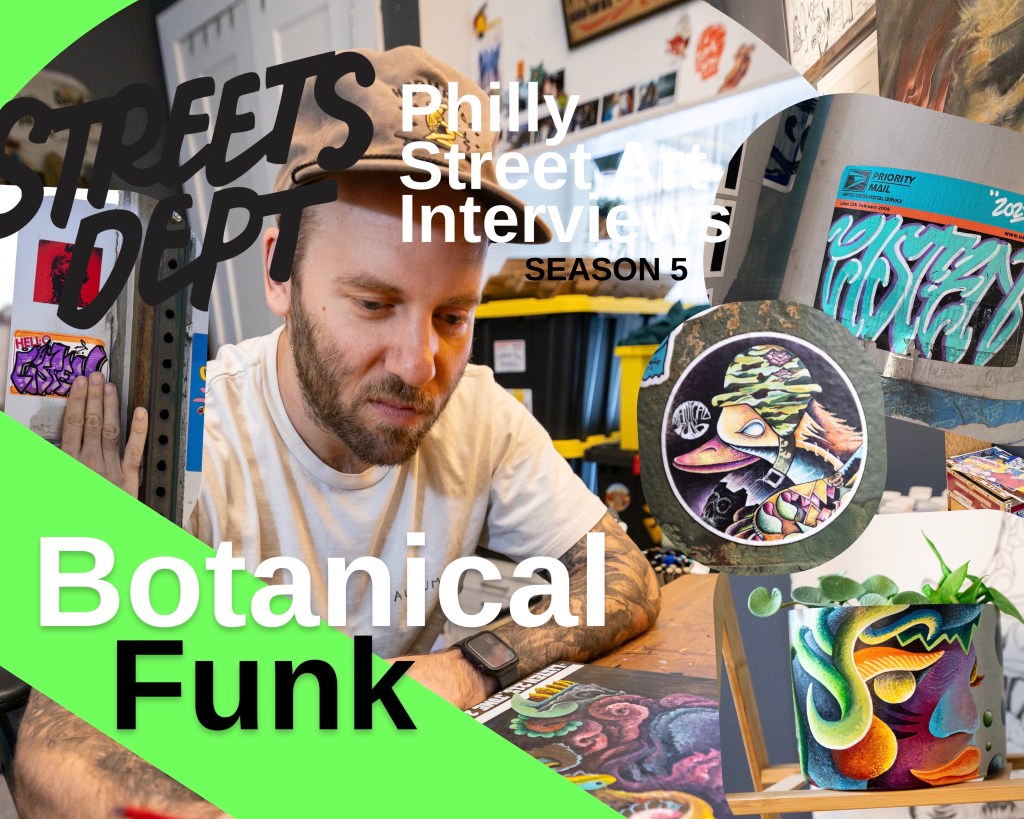
This is the fourth post in our fifth season of Philly Street Art Interviews! This season is sponsored by Philadelphia International Airport (PHL) and its @PHLAirportArt program, which curates museum-quality art exhibitions that introduce millions of visitors from around the world to the vibrant artistic culture of the region. PHL proudly supports Philly arts and culture/365! Interview and photos by Streets Dept Lead Contributor Eric Dale.
Botanical Funk has been immersed in Philly’s street art, graffiti, and skate cultures for 15 years. His artwork reflects that, but you may not have seen much of it on the street, because as an introvert, he naturally tends toward the artist archetype of holing up to work in solitude. Or as he would put it, he “stays in his own lane.” Nevertheless, he’s always paid close attention to the people shaping Philly’s public space, as well as the tools, techniques, and style they use to do it.
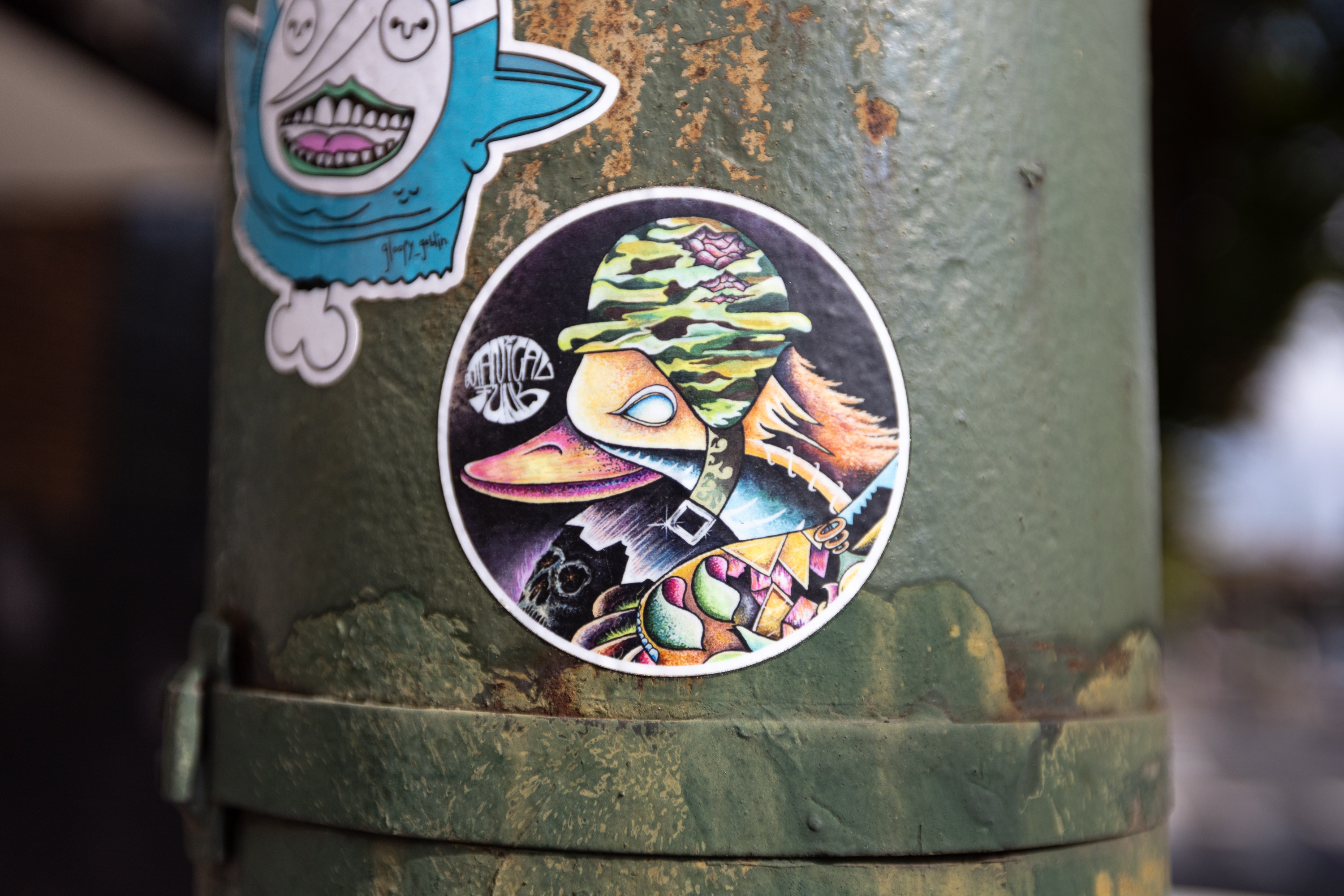
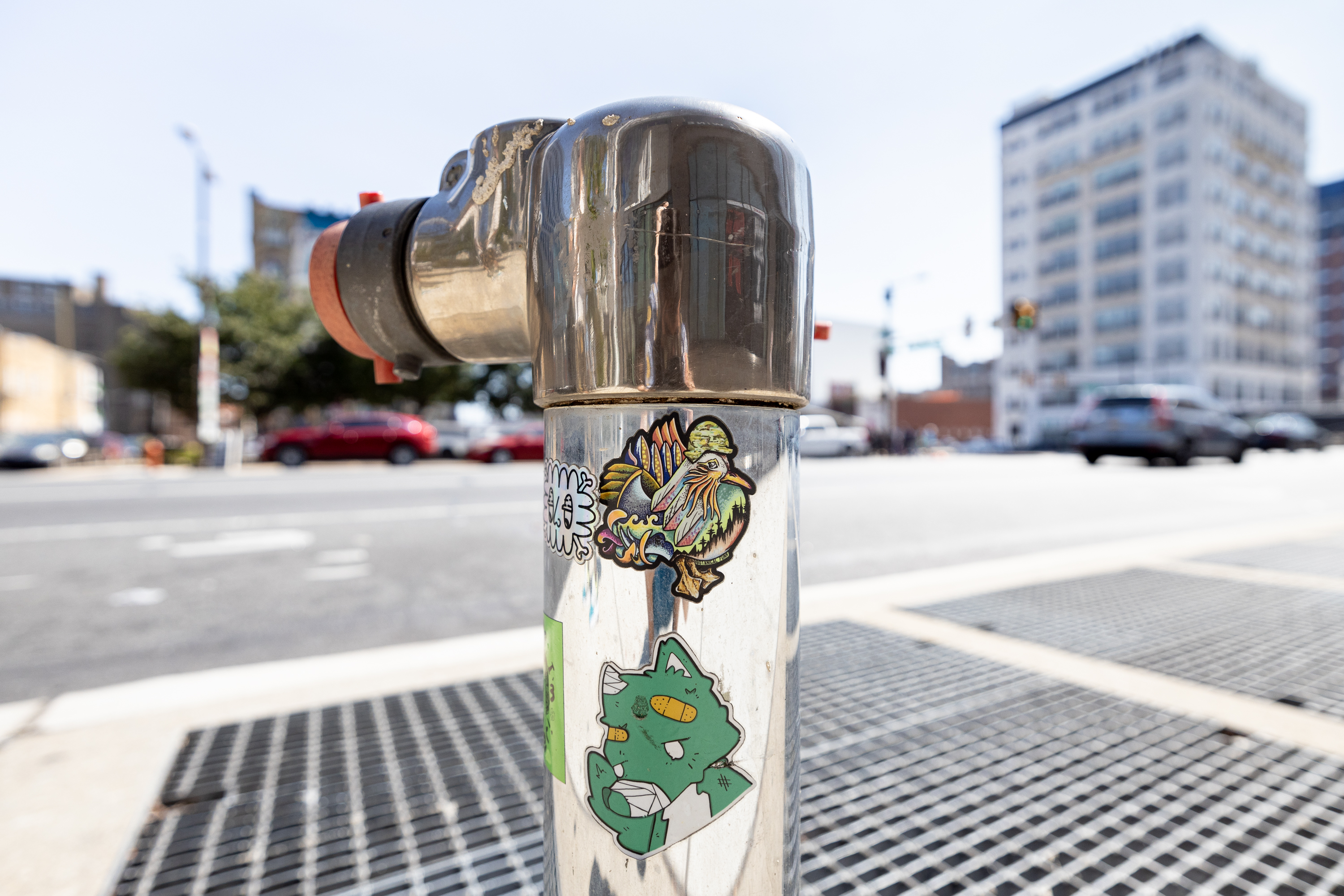
The name and artistic brand Botanical Funk was developed after graduating from University of the Arts. The surreal and abstract works he’s created, showed, and sold under this name have been his primary creative outlet for the last 10 years, and some of his work has found its way onto the streets in the form of stickers.
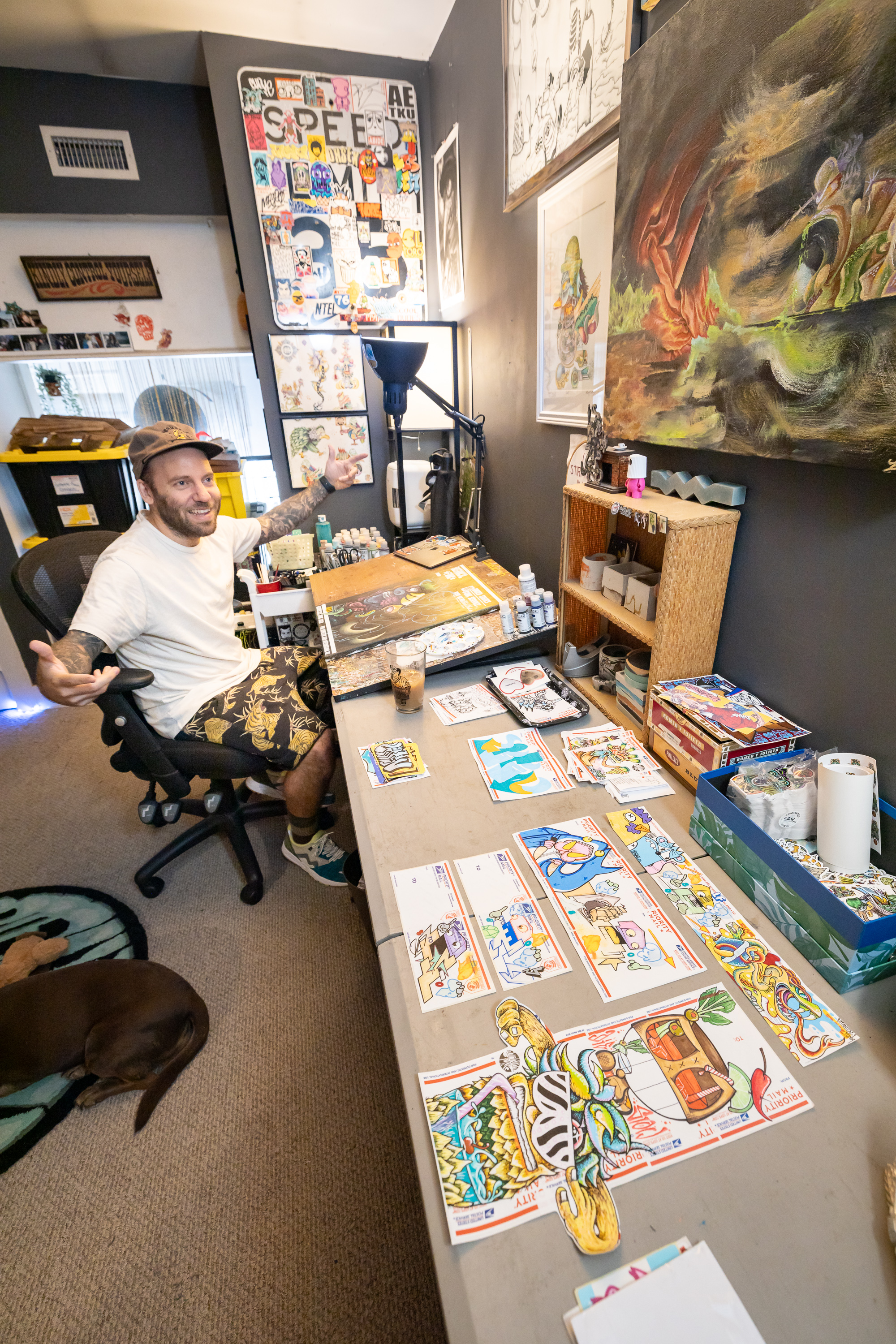
But recently, Botanical Funk has pushed himself to get out and more actively participate in the street art community. He’s found it both personally stimulating and professionally nurturing—and he now regularly assists another artist with mural projects. With an extensive portfolio, a polished and identifiable style, and a growing network, is he on the cusp of a new phase in his art career? I sat down with him in his home studio to find out!
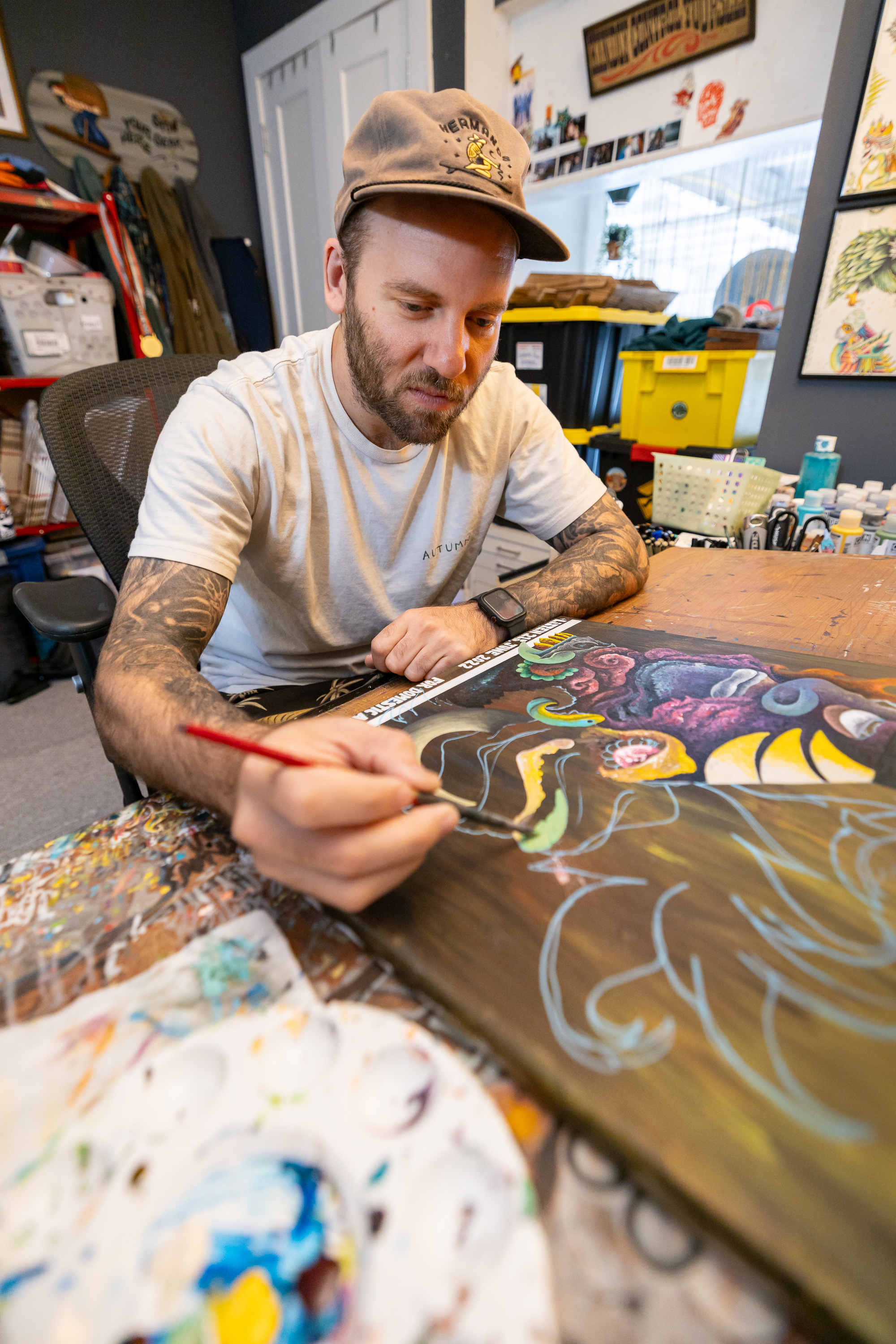
Streets Dept Lead Contributor Eric Dale: Tell me about yourself and your artwork!
Botanical Funk: So I go by Botanical Funk, and that kind of sums up the direction I’m trying to go for. I like the botanical imagery, the tropical, organic creating. And then I bring in the funk and try and like twist that shit up a little bit. So I use a lot of floral imagery or botanical imagery, but I don’t think it’s traditional imagery. I try and give the funk side to make it my own, in my own language. Merging those two together is the best way to sum up my artwork or my mindset on what I’m trying to do, and that’s why I’m heavy pushing that brand, ‘cause the more I’ve been doing it, [the more] I’m like you know what, organic creating with a funky twist? That’s kind of it.
SD: Okay! I’m always fascinated by people’s names, so let’s talk about this name, Botanical Funk. I love it, because, like you just said, it’s a perfect description of the subject. Like, I feel like if your artwork was on Family Feud and people were asked to describe it, “botanical funk” would be in the top five answers.
BF: Yeah, dude! And that’s the hope, man, of creating a vocabulary and a language. Not being boxed in by your style, but still recognizable. Oh, that’s Botanical Funk shit. Even though it might be something different than what you’re used to seeing, it’s still—you can tell. Same with graffiti—you got the same guy writing different words, but you know [it’s his work] because what he’s flaring or how he’s whipping or the structure of his words… But that can also go against you—you could get stuck in that box and never get anywhere. I think it’s important to have that structure, but leave a ton of room to grow off of it, which is what I’m trying to do.
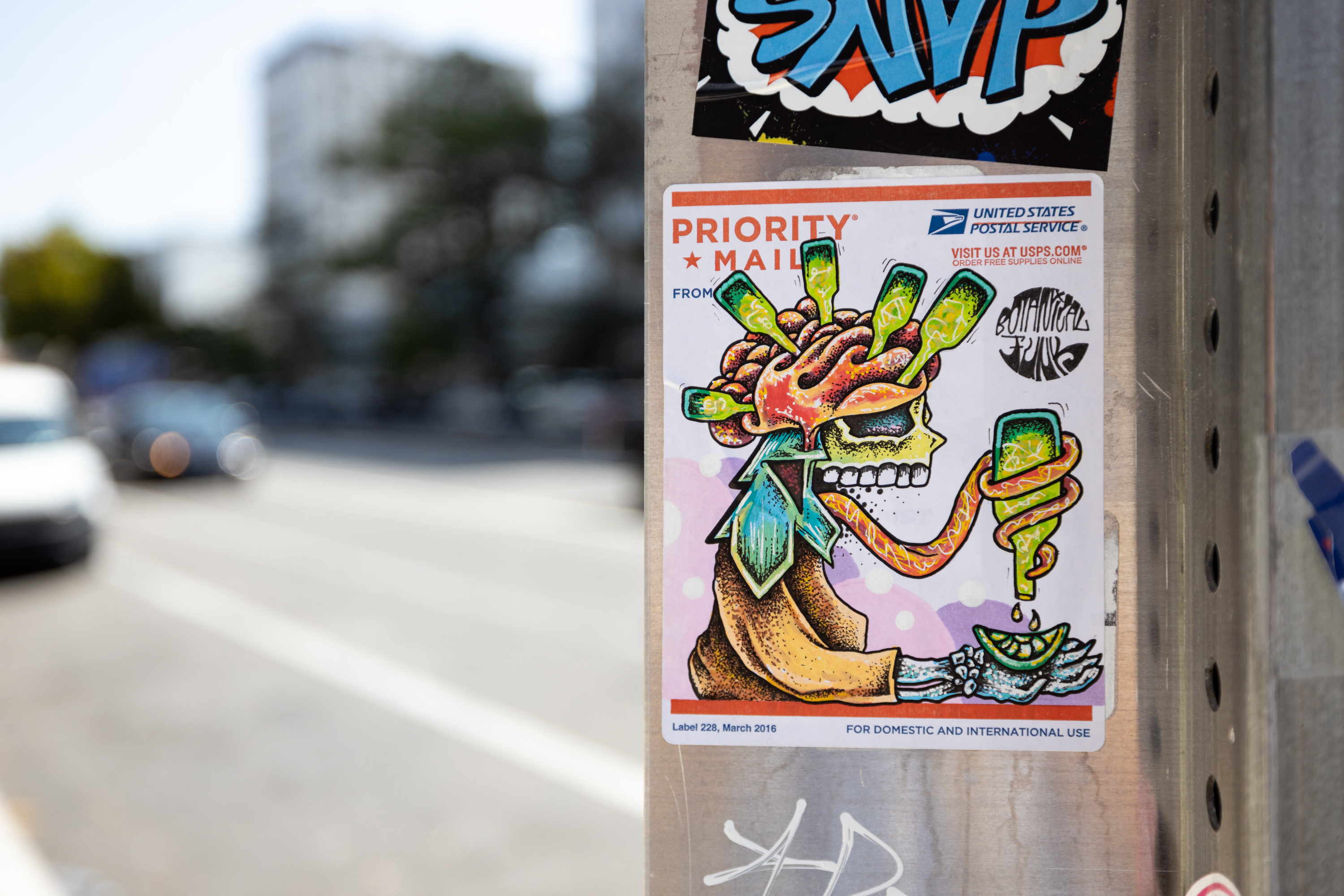
SD: So where does this imagery come from?
BF: I’ve been trying to sum it up with an 80/20 approach, which is try and have 20% of an idea, or concept, or thought, or even a word, and leave 80% up to the creative process. So a lot of it’s like… say I want to draw a mammoth. The idea is a mammoth, but it’s twisted up to where there’s, like, a fucking whale; it’s, like, decaying; it’s morphing into other shit. So the idea was like I’m gonna do some ancient mammoth shit, but I want to leave room to make it something else.
I’m kind of hoping for mistakes. I’m hoping for little blips or little off things—like, breaking habits to [the point where] when I step back and look at it, I’m like oh, that’s different. So it’s a lot of reacting and adapting to what I’m doing, and sometimes it’s completely off the top, or sometimes it is like a mammoth or some specific idea. But a lot of it is just trying to be present and reacting to what is happening because there’s so many distractions.
I want to do something that shocks me and I’m proud of. So I’m trying to do something new to me in hopes that the viewer can connect as well. I guess it’s kind of a selfish act!
SD: You’re just trying to impress yourself!
BF: Yeah! ‘Cause this is my mental escape. It’s like my therapy, dude.
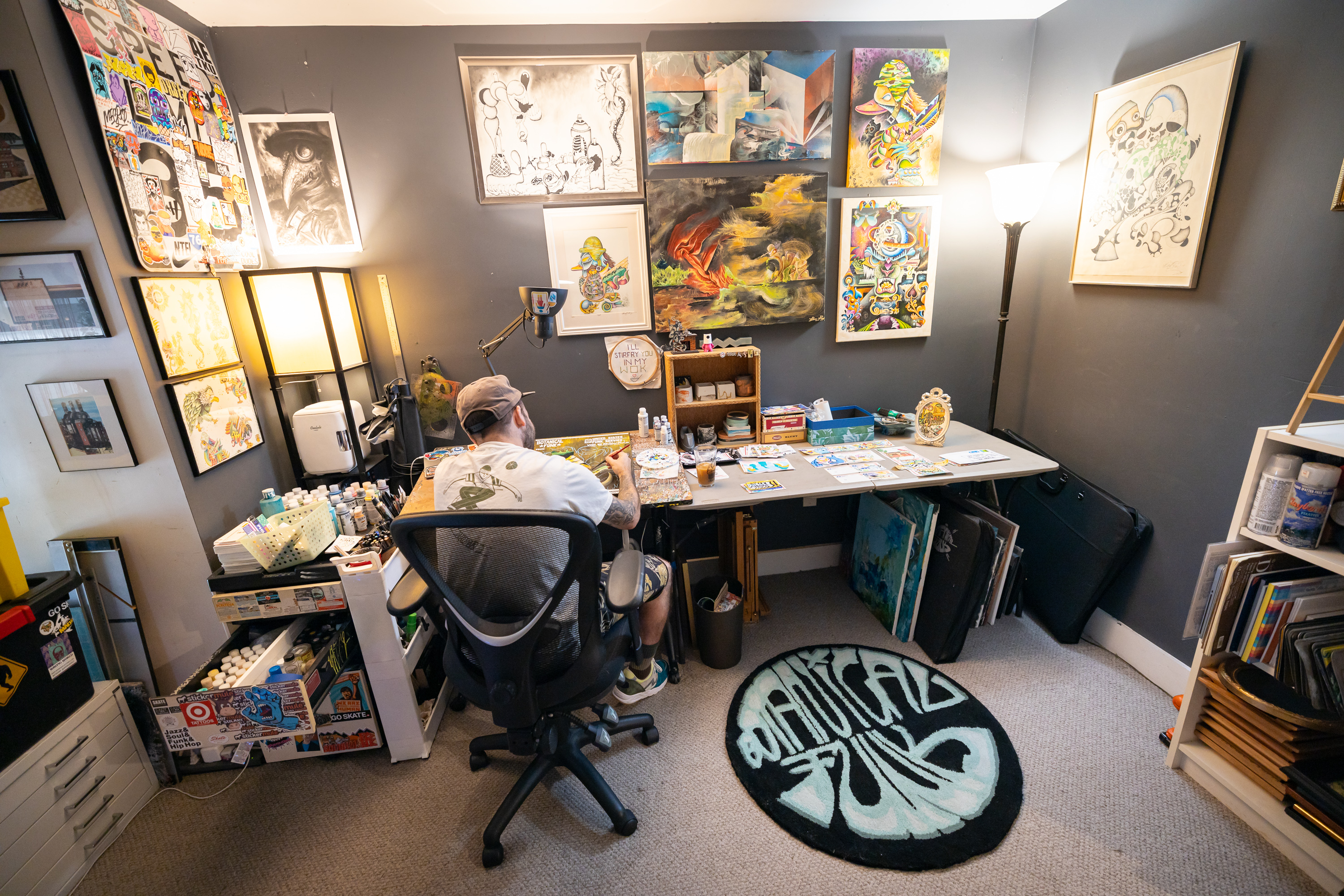
SD: So then we have your real name, and it looks like you have a separate website for artwork under that name. So, what’s the difference between those works and a Botanical Funk work? Why separate them at all?
BF: Yeah, that’s a good question, man. I think I’m trying to work on merging that, because it is essentially the same thing. I guess in layman’s terms, [I would use my real name] if I ever got into some gallery shit. In art school, I was like yeah, it’s “[my name] paintings.” But then after that, you realize it’s not so cut and dry like that. I started making, like everyone does, a little brand that sums up my interests and my creative visions, really. At this point, it’s pretty much the same thing, but that’s the origin. I felt like I needed to just use my name. I thought “Botanical Funk” couldn’t be respected at that level. Now I’m like well, why can’t it?
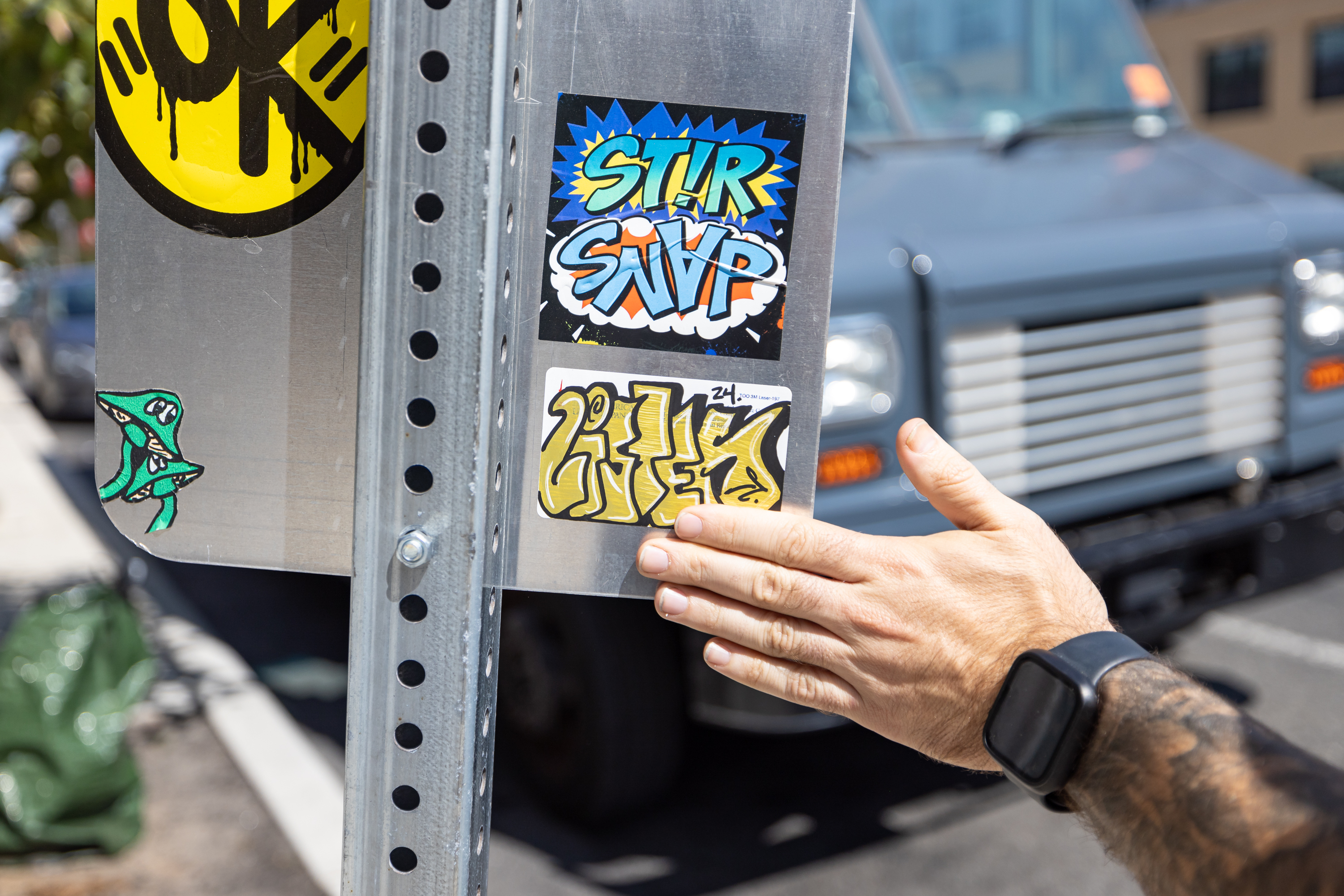
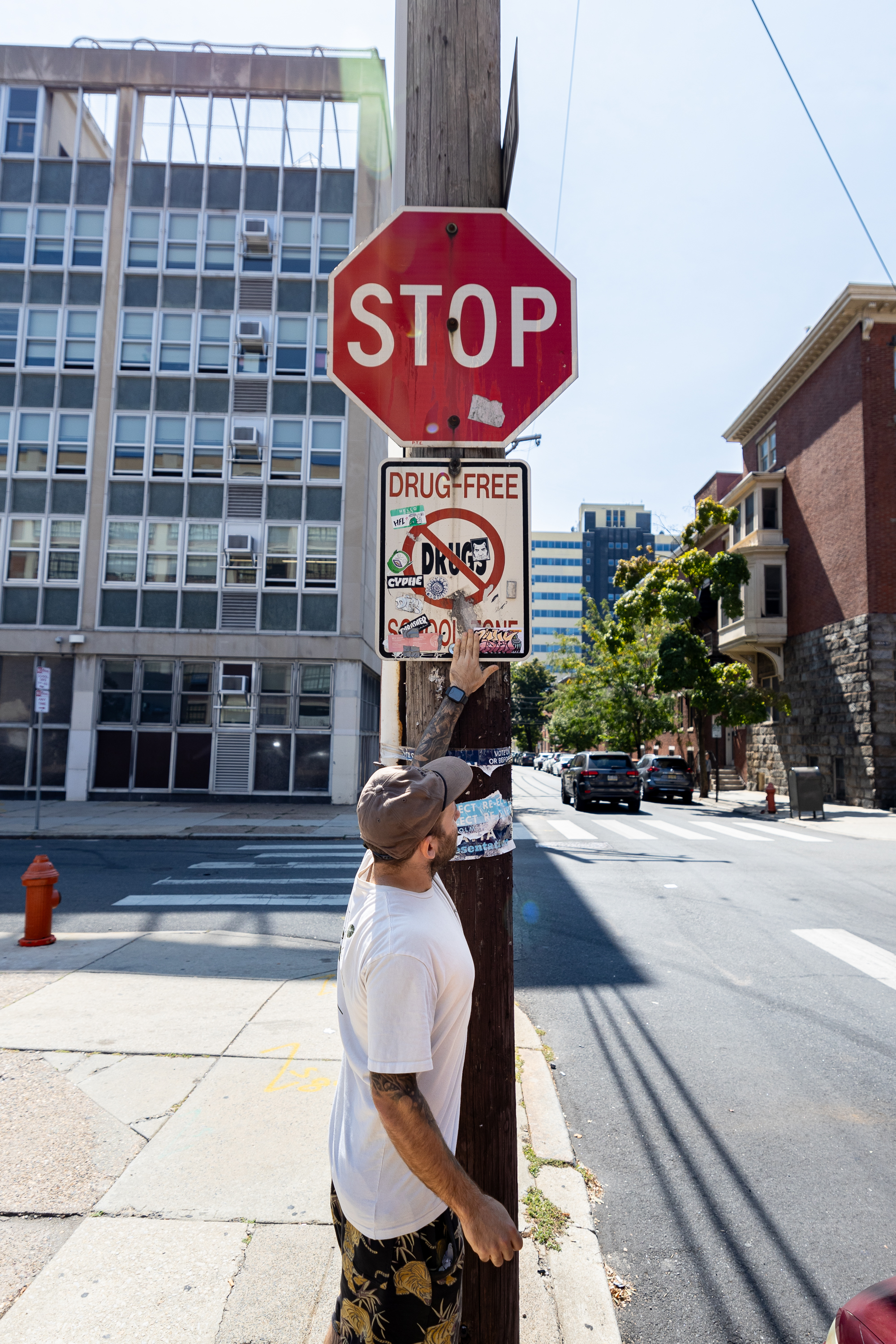
SD: And then I know you also have a graff name, LISTEN. Where does that name come from?
BF: So that’s just a word that I’ve been playing around with for a minute. There’s a lot of different takes, honestly. I chose that word because I’ve always been a quiet dude. And I’ve always not had a lot to say or just was in my own head. So that was the beginning where I was like I’m better off just listening. I’m not a good communicator; talker.
That was early on. Now it’s evolving to I just think there’s too much shit going on. Like, everyone’s trying to be seen and heard. And all people want is for someone to listen. So it’s kind of like a more cornier take, but that’s honestly what it is, man. Like, I know for me, if I’m talking to someone, I want you to fucking be with me. People are so distracted.
So, like, I don’t write a name, I write a word. And that’s what I think more people should do. I like the letter structures too, as the aesthetic. But you ask me why, that’s kinda why. There’s so many people talking no one’s really listening. There’s so much shit going on that just breezes by people, and it’s like slow shit down and listen a little bit. It’s just way too chaotic, man. I’m trying to slow shit down. So I’m telling myself that at the same time that I’m putting it out in the world.
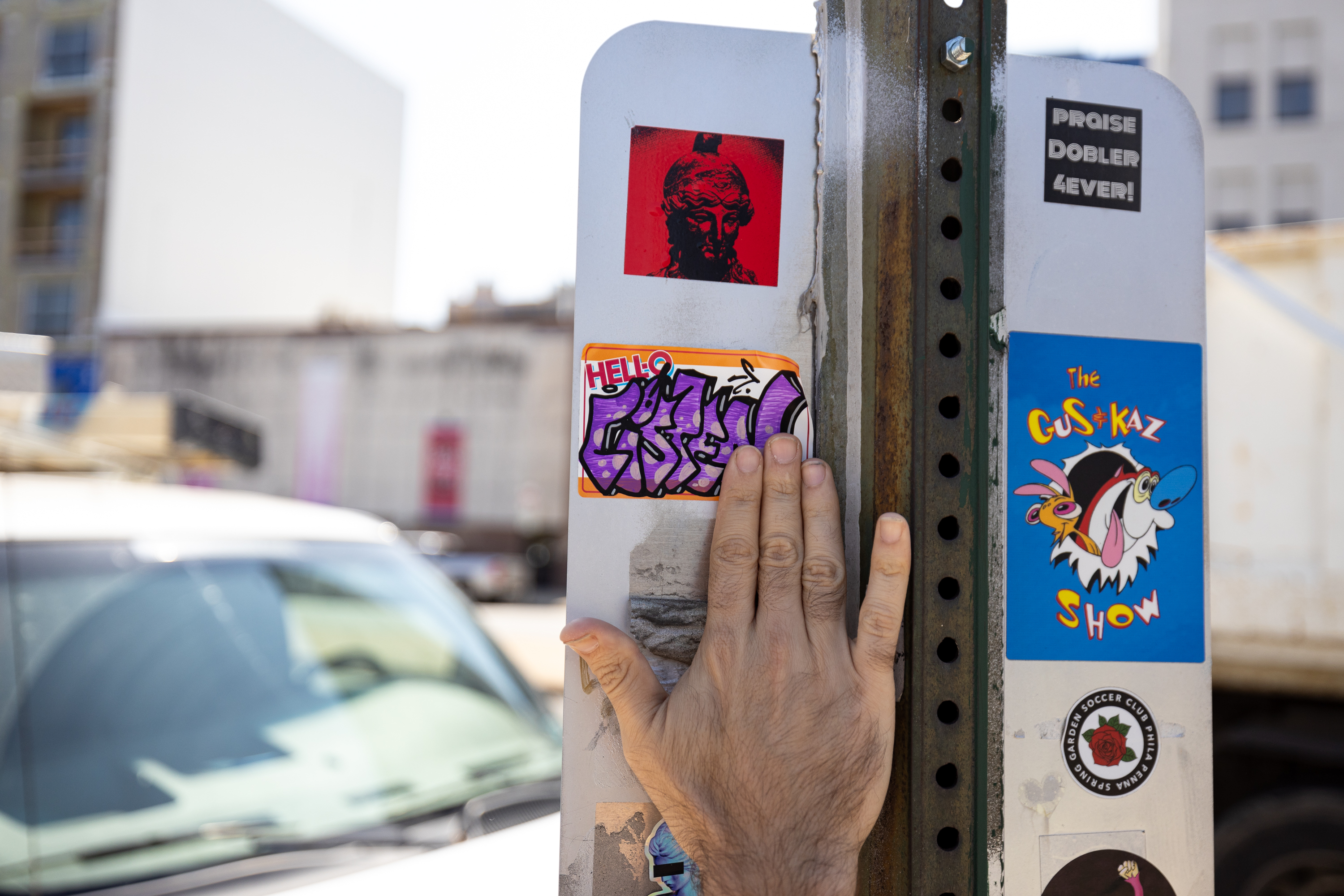
I stay in my lane. I’m not claiming nothing. I like doing the stickers and playing with the craft; I like the lettering, and learning the history of Philly, and all that shit, and really staying in my lane. There’s a lot of history and a lot of people take this shit seriously. I take it seriously, but I’m not these big dogs out here getting crazy. It’s just another leg of Botanical Funk. It’s just another leg of my creative language. I like the therapy of ripping out stickers or catching a couple tags or talking to like-minded people about it.
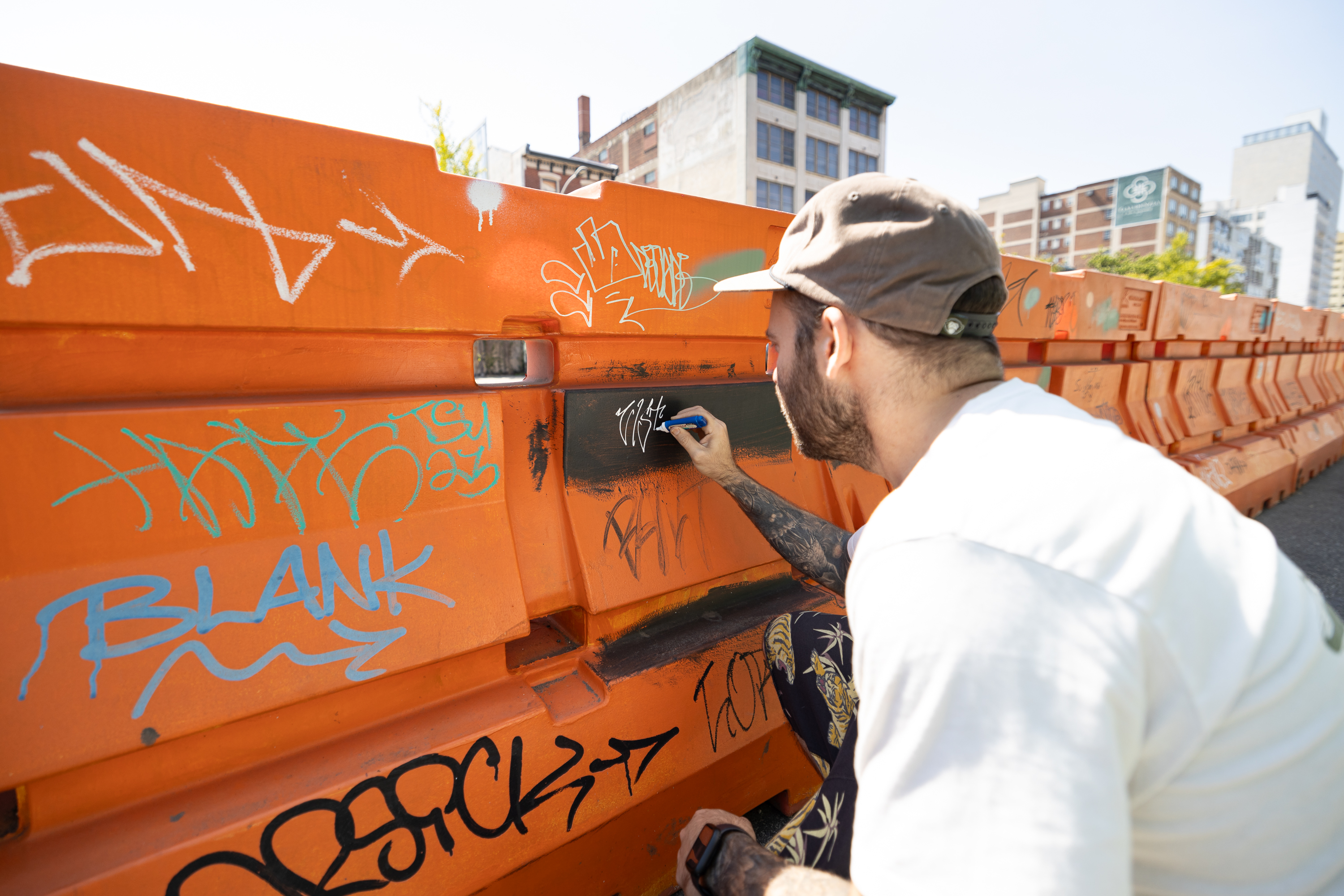
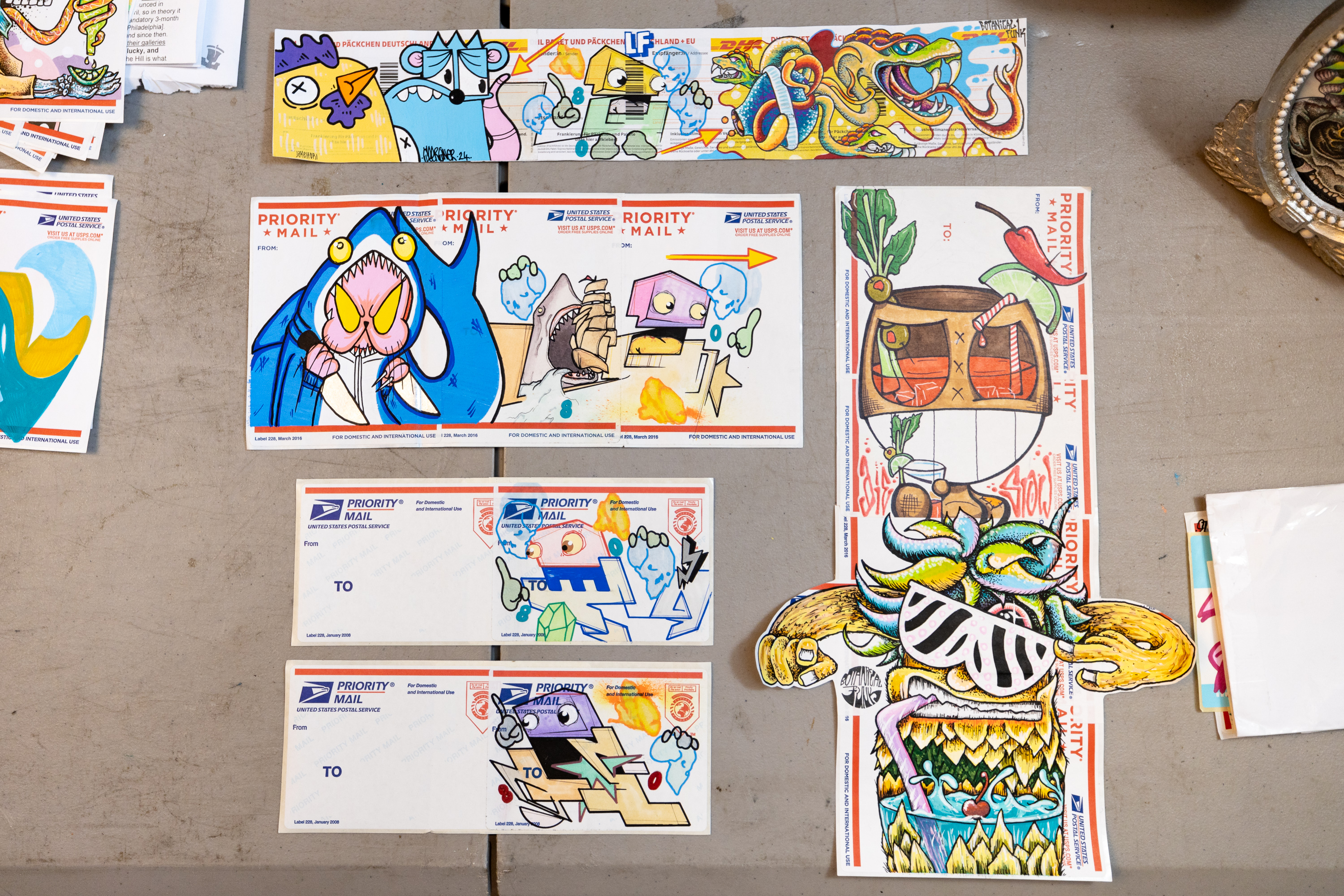
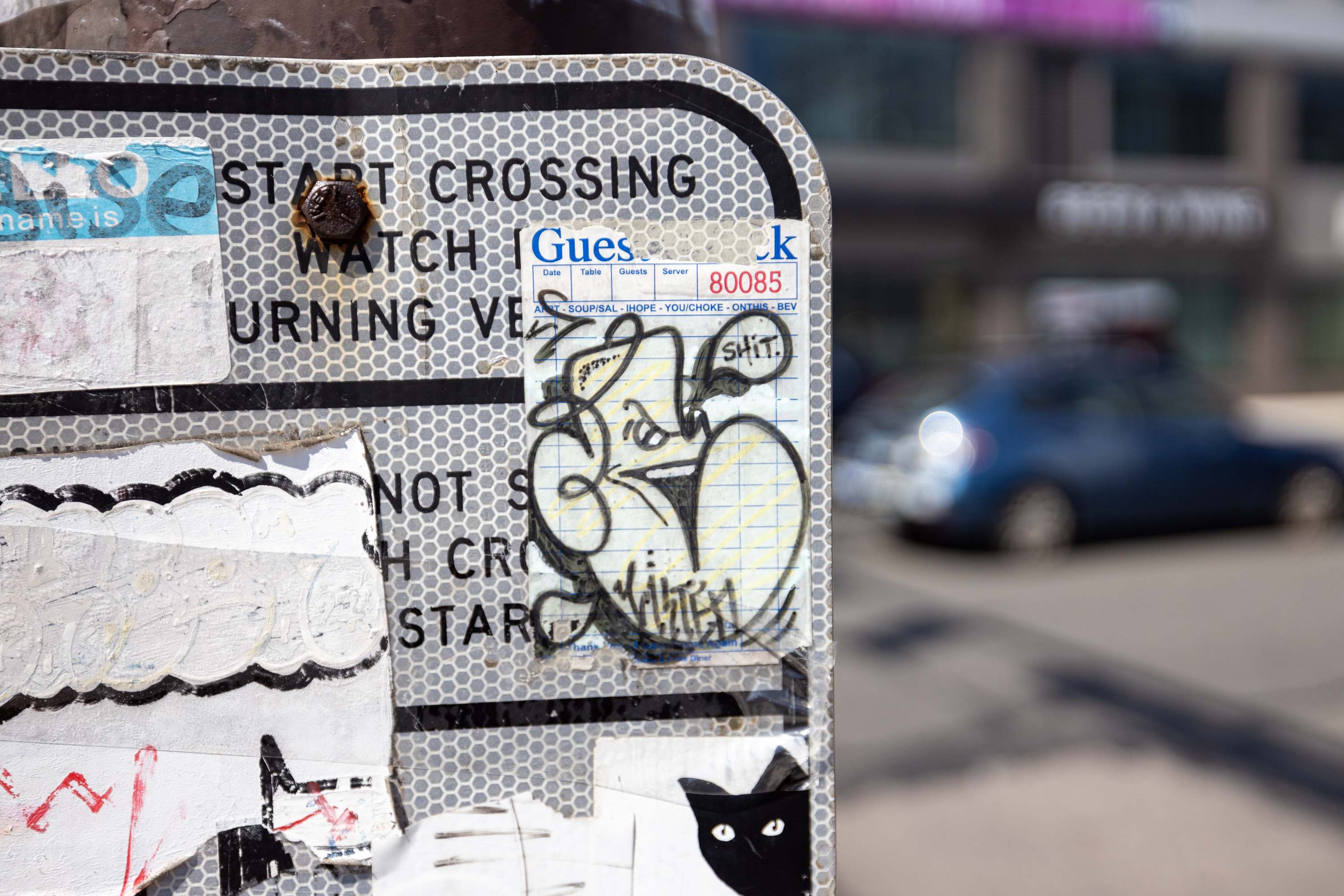
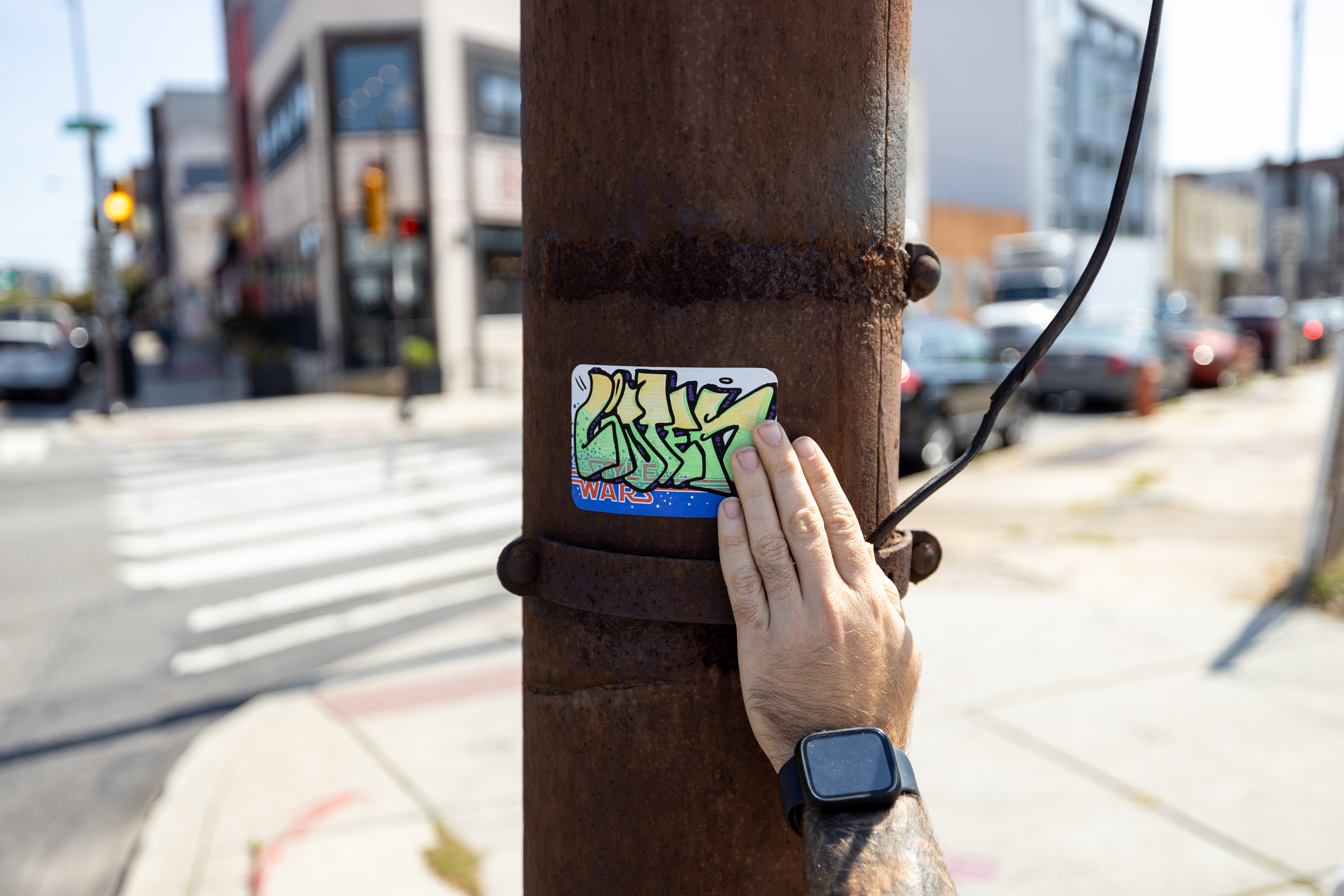
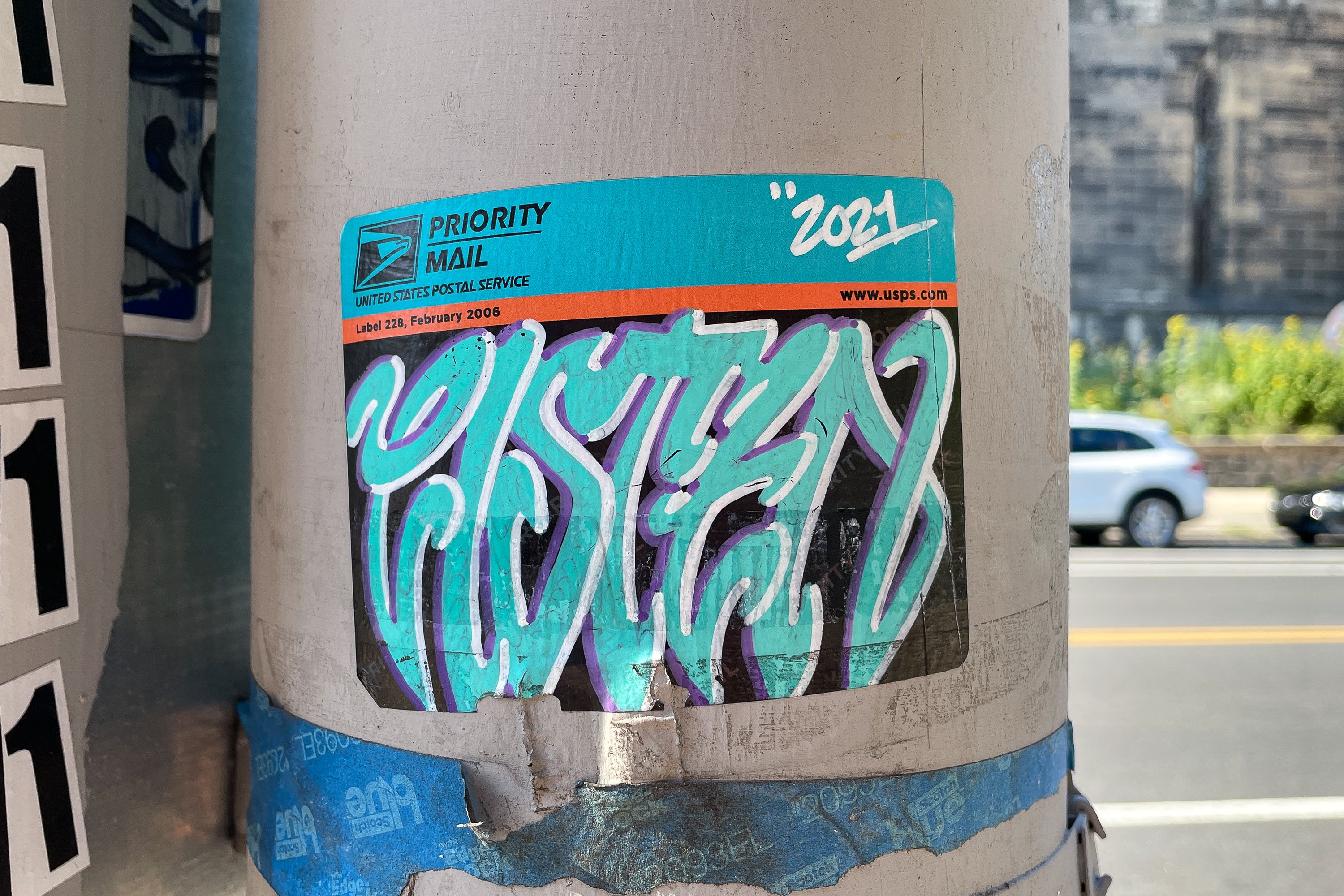
SD: One of the main reasons I wanted to interview you for this series is because you do such delightfully colorful and detailed hand-drawn graffiti stickers that really stand out from the quick bubble fill stickers that most writers do, if they do stickers at all. So why is it important to you to put more time into your graff stickers than most people do?
BF: Honestly, I think I can’t break my mold. Like, I would love to just rip out a ton and just get up a shit ton like everyone else, like the names you see a lot around town. But I just have that—it’s not perfectionist—but I have a certain standard of my shit that I want. And that’s why I take that much time, because I respect the craft and I want my shit to look right. Like you said, there’s not a lot of people doing hand-drawns anymore. I grew up on that—that’s what interested me. Like, walking around streets seeing big collabos on anything. People that you know, but don’t know—like, you know their work on the street, but you have no idea who these people are, which is cool. And they’re putting out this crazy creative work. And I just think that hits way harder than a bubbly vinyl whatever.
I don’t know, like, vinyl stickers are great, but I like the hand-drawn shit that hits, and is different. Everything’s a shortcut—quick; eliminate. But I don’t think you can eliminate the time for that. Same way writing graffiti—you can’t skip and just write some bullshit. People can tell, like dude, he’s just writing whatever. I like to show that I put time in and I care about what I’m doing. I think that’s the main thing—I care about the craft and what I’m doing, man. This is my life. Like, I’m putting all my time into doing this. I work a full-time gig and then I do this full time forever. What’s my time if I’m not putting in my best work? So that’s where I’m at with it.
SD: Cool. How did you get started drawing stickers?
BF: That’s a good question, man. I don’t even remember. Probably just walking the streets, honestly. I was a big skateboarder. So, graffiti, street art, stickers—that community is merged. Like, it’s all the same shit, all the subcultures. Philly’s rich with everything, dude, so you walk outside, you can change your whole inspiration—just taking a lap around the city. Which is why I love living here, man! It’s great.
SD: Yeah, same.
BF: Yeah, it’s like dude, if you get bored or uninspired, go take an hour walk. Change your whole mind.
SD: On the topic of stickers, I’ve seen multiple elaborate sticker tributes to As Above So Below that you’ve put up at Tattooed Mom. Was he an important figure to you and your artwork?
BF: Yeah, he was one of the first heavy hitters that I would start to see around Philly. You could tell through his work that it was hand-drawn. Like, I don’t really remember seeing a vinyl—I could be completely off with that. But the ones that stuck out are the hand-drawn ones, cutouts, and all the interesting sayings and certain interests he was into. I never really met him, but you connect through people that you don’t even know through shit on the street, and I felt like I knew this dude through passing on the street. You put that effort and time in, and you’re putting a piece of you anywhere you’re putting it. So if someone’s taking the time to appreciate it, you can get a feel for that energy transfer.
But I just really appreciated his unique take on the culture. Like it was always something different. It’s just different than what I saw on the street, man. But yeah, I really grew to like his stuff, and over the years he was just consistent. Always up, man. Like he’s definitely one of the kings of Philly for sure, I would say.
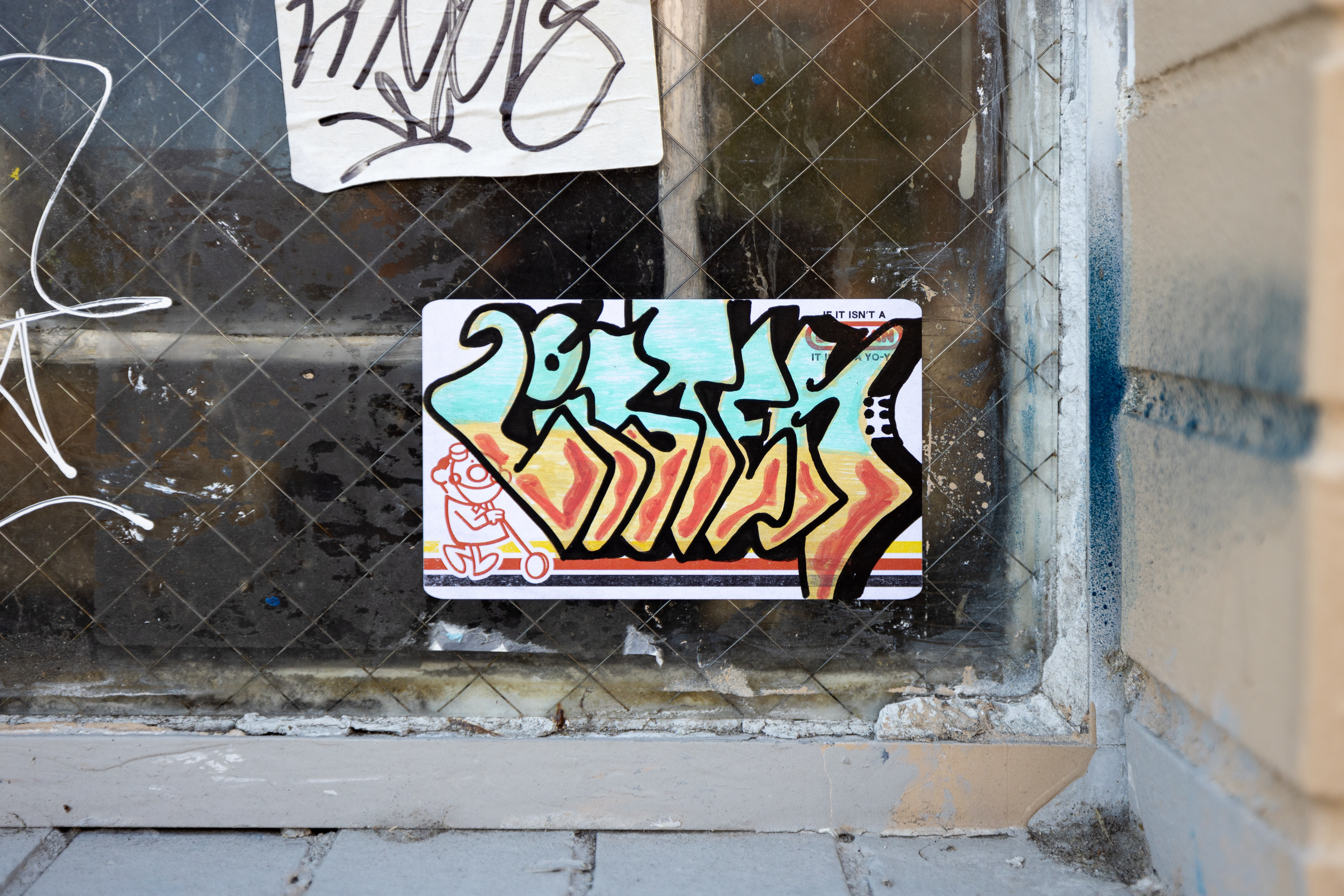
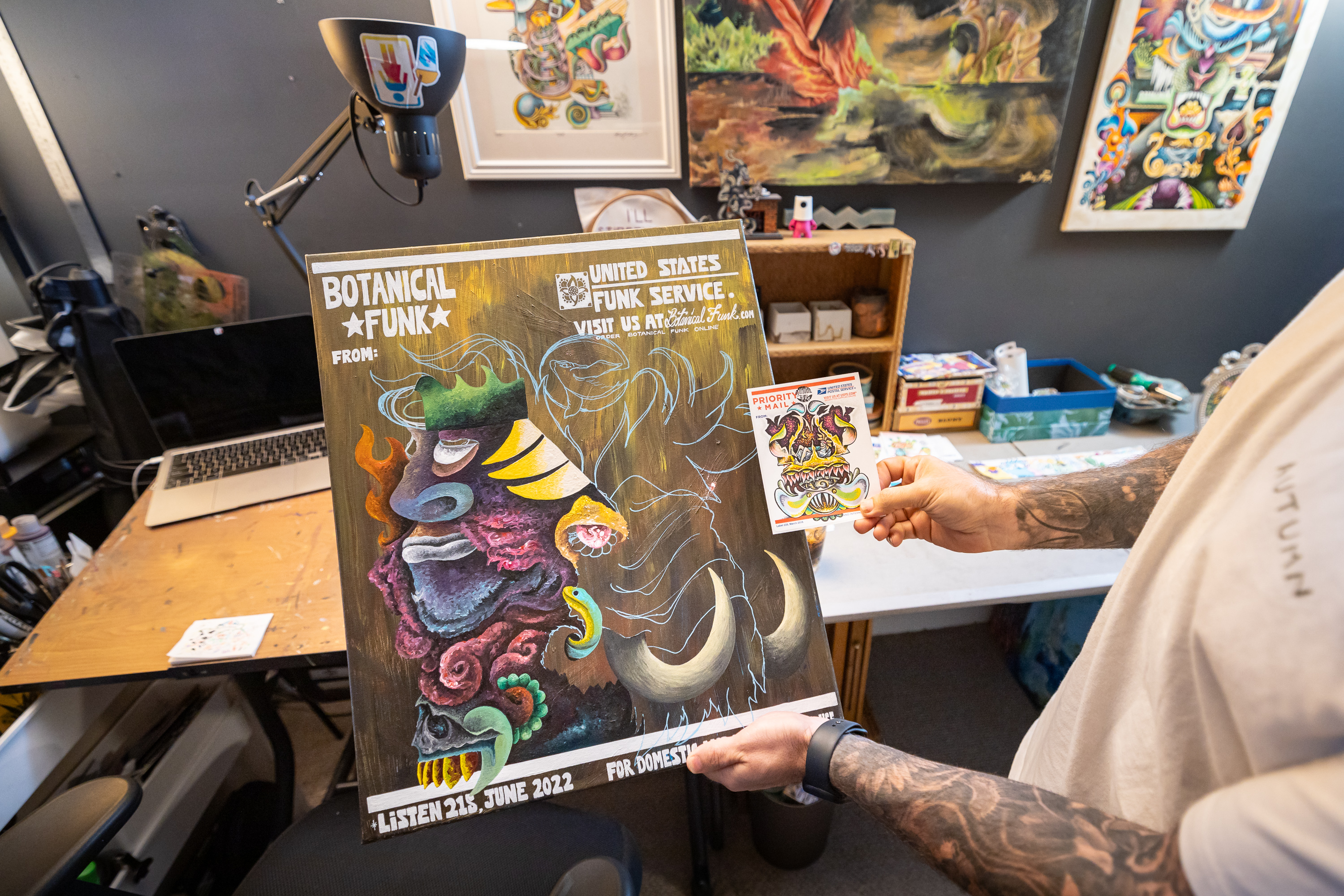
SD: You frame a lot of your 228s (the USPS labels), so how do you decide what gets sold and what goes on the street?
BF: That’s a good question, dude. I struggle with that. It’s pretty much the ones that I really like, I frame up. The ones that I either surprise myself or came up with something that I wasn’t expecting [go into the streets]. Sometimes I like to put up a fully hand-drawn one in the streets just to even it out a little bit—like, to still show to myself that I’m okay with parting ways with something I put a lot of time into, because you can’t get too attached to some things.
And that’s why I think stickers are great—especially putting a lot of time in, because it is like a therapeutic release: putting everything into a sticker that may take two hours, and I put it up in the street, and it could be gone in an hour. It kind of humbles you for a second, and also just [gives you a] big perspective.
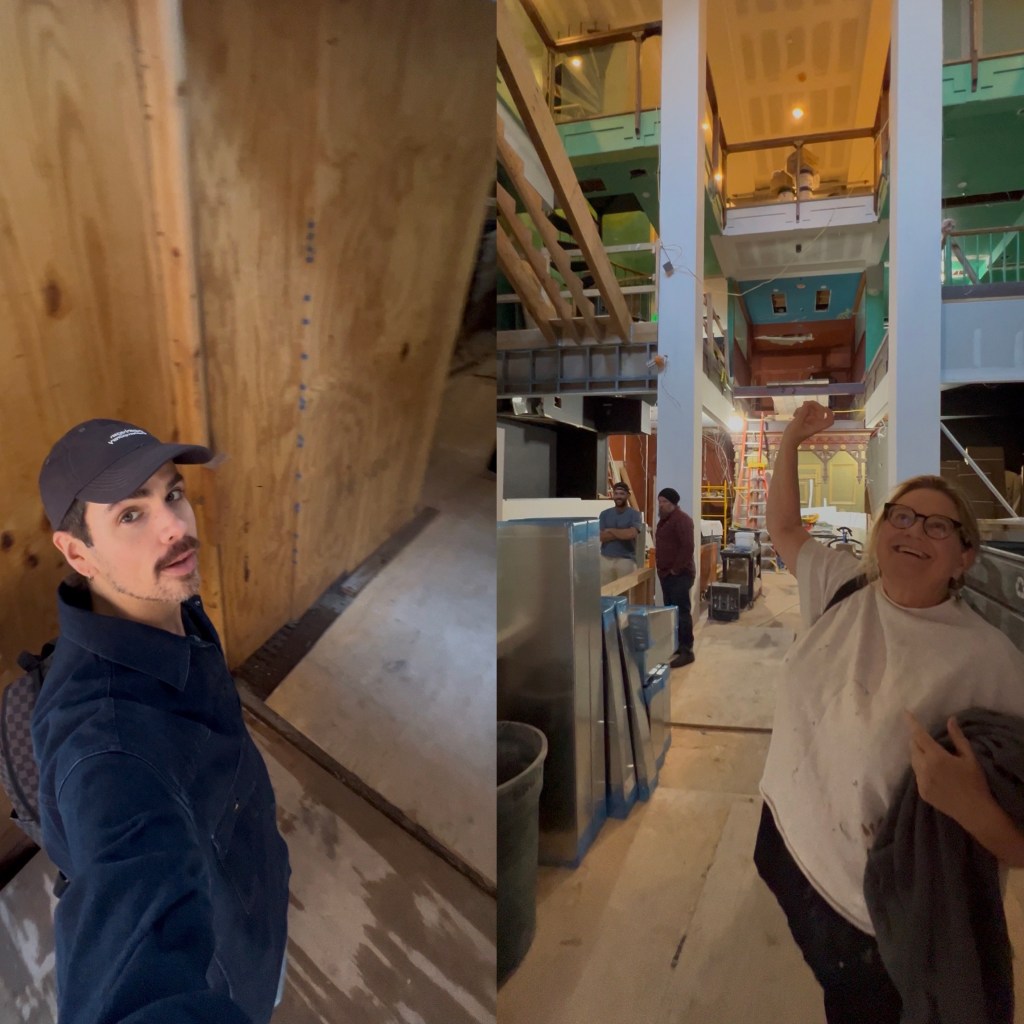
SD: So you’ve been an assisting artist on a couple of murals now, including one painted on a business in Mt Airy this summer. What was that experience like for you?
BF: Oh, it was amazing, man. I’ve been fortunate to link up with an amazing artist in the city, Paul Carpenter. His shit’s everywhere. Super cool guy. I tag along with with him and help out with projects.
Painting a two-story building was the first time I ever did that, like, using the lift and everything, so it was amazing, man! I love doing murals and just being out in the public. I would love to do more of that as a whole, with Paul and with my stuff. I’m super thankful that Paul has brought me along, and has shown me how to live off of your artwork.
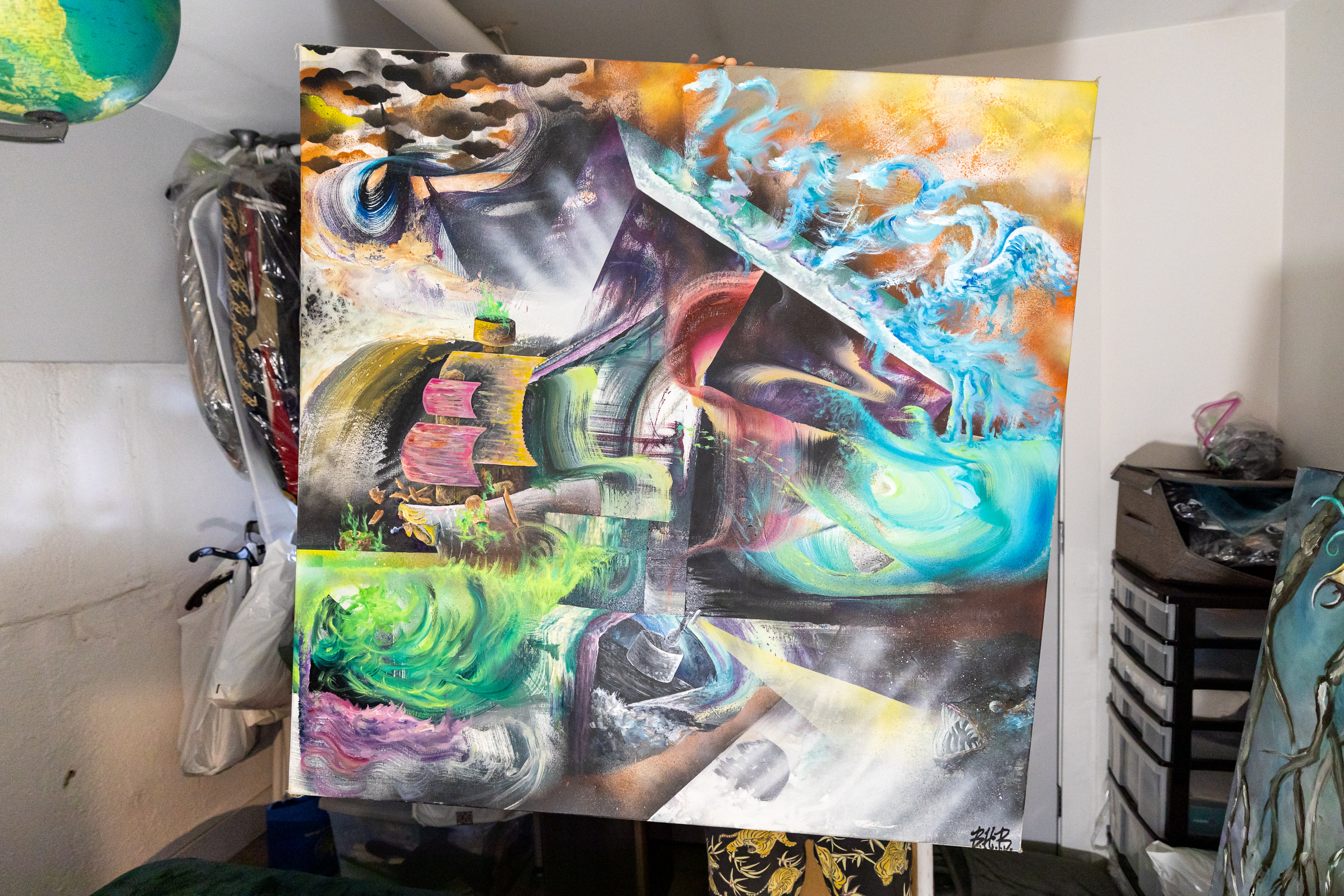
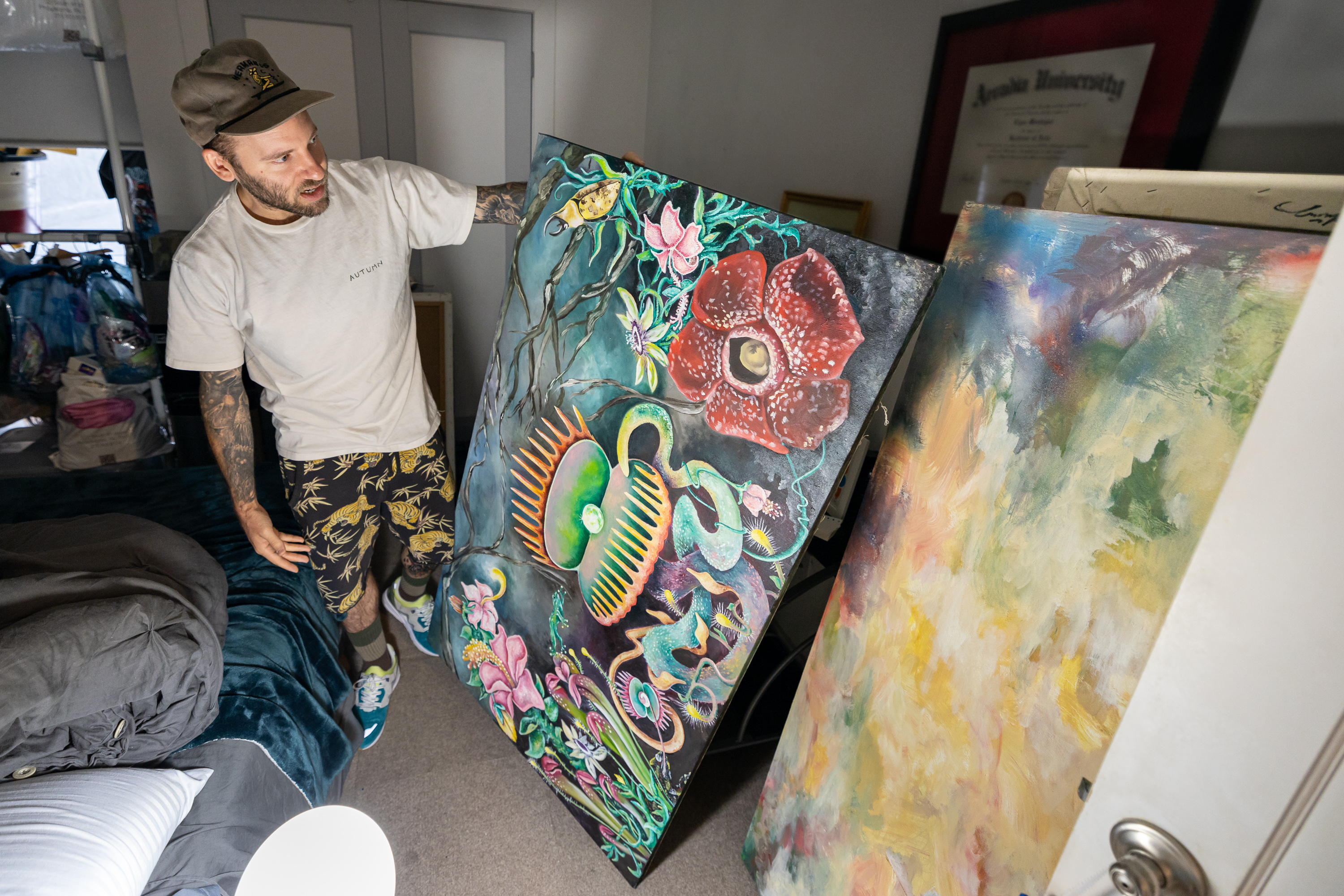
SD: That’s great! Are there any artists that people often compare your work to? I ask this partly because I personally feel like your style is really familiar, but in a way that I just can’t quite place.
BF: Sometimes. No one really specific, but I do a lot of the street vending: the markets, festivals, stuff like that, so you get some wild comments from people. But a lot of people do say Salvador Dalí. They’re like oh, this is some Dalí shit. But I think that’s just the common folk who don’t have a lot of knowledge on art and are just like yo, Dalí’s that surreal guy, right? This shit’s surreal—it looks like it. You know what I mean?
SD: Right. It’s like “name one surreal artist.”
BF: Yeah, it’s the low-hanging fruit. Which is sick, dude! Like, Dalí’s the sickest!
SD: Haha, it’s an honor to be compared to him!
BF: Right! But a lot of psychedelic art—since I have a lot of color-blasted imagery, I think that hits a lot with that community. Think of an artist who used a bunch of color and kind of lump me in that a little bit. But no real specific artists.
SD: It also feels a bit tattoo-y to me. Is it at all influenced by tattoos?
BF: Definitely, yeah. I’d say most recently I’ve been dipping more into that inspiration pool. I participate in the culture; I love it; a lot of the people I follow and find myself now heading towards is that scene. And I just like the imagery and how it’s evolving and everything. And I’ve been doing some flash sheets, but again, it’s doing my twist on shit that’s already been done to other stuff, but trying to make it my own.
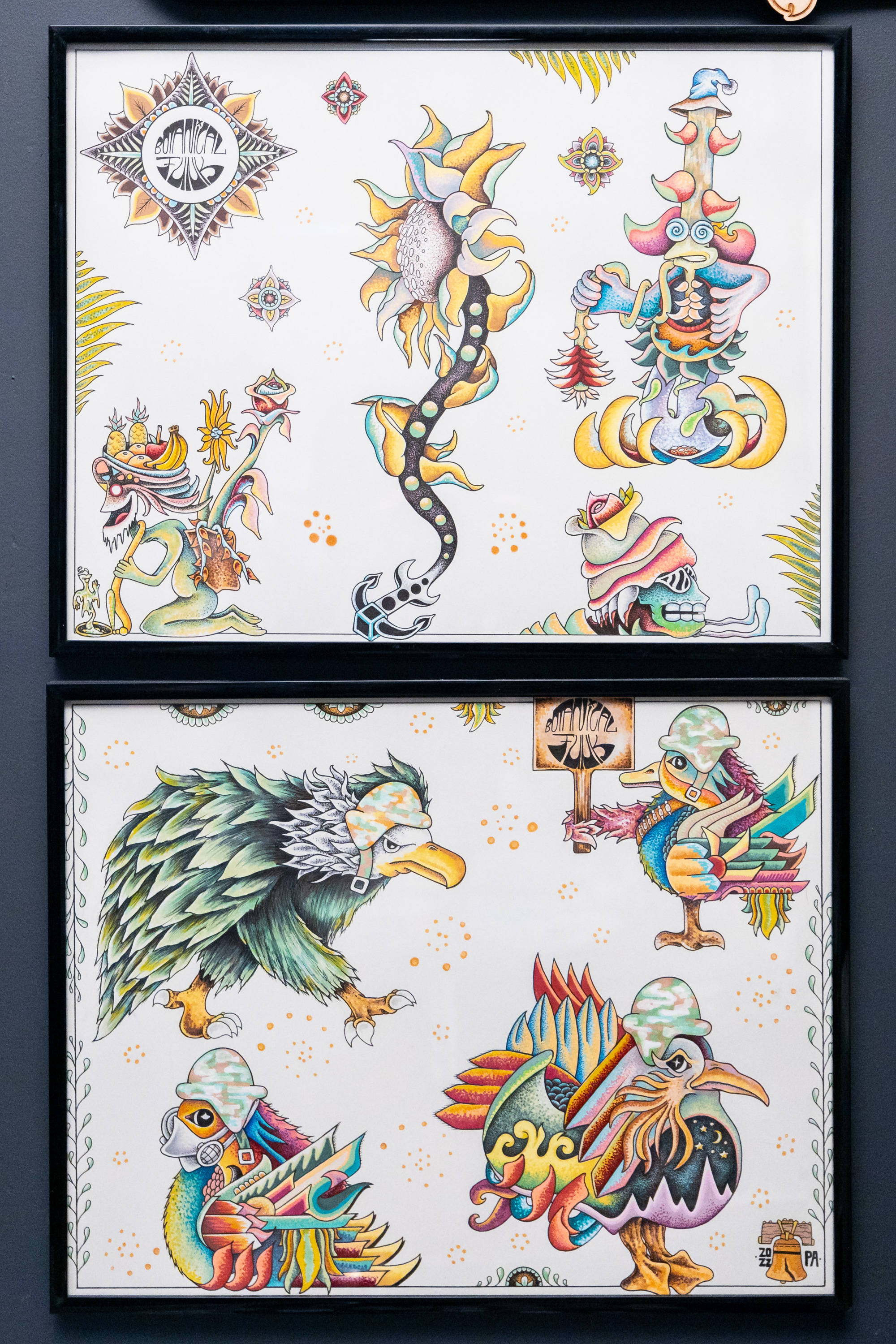
SD: So is that where the stippling comes from? ‘Cause that feels like a tattoo.
BF: No. In the street, I get the question all the time if I tattoo, but I never have. I have been interested, but never have tried it. Done a bunch of commissions for people. Love doing commissions for people; I’m down for whatever. But the stippling—it’s just how I drew. I don’t even really know if it was a pivotal moment; this is how I’m gonna draw now. I don’t remember—like, maybe in school, maybe an assignment was like “draw a bird in this style” and maybe that stuck with me subconsciously?
SD: Your Facebook page describes your creations as “surreal, tropical, funky artwork for your soul.” And I think we’ve covered the surreal and the funky parts of that, but where does the tropical bit come from? Did you live somewhere tropical for a while?
BF: Dude, quite the opposite, man. I haven’t done a ton of traveling. I think that’s probably a subconscious interest and hope of mine. I love tropical shit. But I’ve never been outside of the country. So maybe that’s me just projecting. That’s the vibe and lifestyle I like.
But Facebook, dude, that’s funny. I never log onto that shit. That’s probably 15+ years old, that description, but it’s funny to hear it now in a new light.
SD: You said the word “tropical” at the very beginning of this, so you’re still using that word to describe it!
BF: That’s funny! I think it’s embedded in my work for some odd reason. It’s like something that I’m drawn to without even knowing it. The tropical just seems so lovely. Honestly, it’s got to be some subconscious thing—maybe it’s just relaxing, and maybe I’m just trying to relax.
SD: Going on vacation through your art?
BF: Yeah, it might just be like yo, you gotta go on vacation, dawg, ‘cause shit’s too crazy.
SD: Haha! Alright, so in a podcast interview, you said “I don’t think I could paint or draw if I didn’t listen to music.” What do you mean by that?
BF: Damn dude, you did your homework. That’s cool. And that’s funny—I left that out with the LISTEN thing. Music is a huge thing, dude. I got really good headphones and that’s where I feel the most creative; when I have music on. Music’s probably the most powerful art form, I think. It just hits—especially in concerts, you’re hit right fucking there. You can’t hide behind a painting.
But yeah, it helps the creative process for me. Having something else going—it’s just another distraction, but I wouldn’t really call it a distraction! It’s more of a focus for me, which is weird, ‘cause I like a lot of aggressive, heavy music, like hardcore metal. I love that shit. I’ll have that blasting in my head, and I’m like I feel calm. Which is weird.
SD: You talk a lot about getting loose and improvising, but honestly, I feel like I don’t see that in your work. I feel like it’s really careful and balanced and precise. So how are you able to create paintings like that with this sort of see-where-it-goes approach?
BF: That’s funny, man. That’s an accurate read, because even me saying that, I’m trying to be as precise and steady as possible, like, steady hand.
I think if I had more space, I would get the body more involved with the creative process. But internally and externally is probably a different definition for me. So internally, I’m trying to get loose; like, combating my habits and tendencies. That’s the loose part of the creative preparation and thought that I’m trying to tap into. Like, eliminate any structures so I can get to a loose creative point.
But it is contradictory. For some reason, I’m still very tight with the external release. I don’t know if that makes sense.
SD: I think it’s from the street art world. Everyone’s always obsessed with oh, you gotta make it clean.
BF: Yeah, exactly, dude, ‘cause aesthetically, that’s what people like. Across the board. Even if someone doesn’t know what the fuck they’re looking at, they’ll say ooh, I love the colors, or ooh, that’s very well done. But they have no idea what the fuck they’re looking at. So on that base value of aesthetically, it looks pleasing, that gets people closer to where you want them to be with the reaction to your work. So maybe that’s in my head. If I have that, maybe I can kind of control how they react to my work by it being so clean and defined.
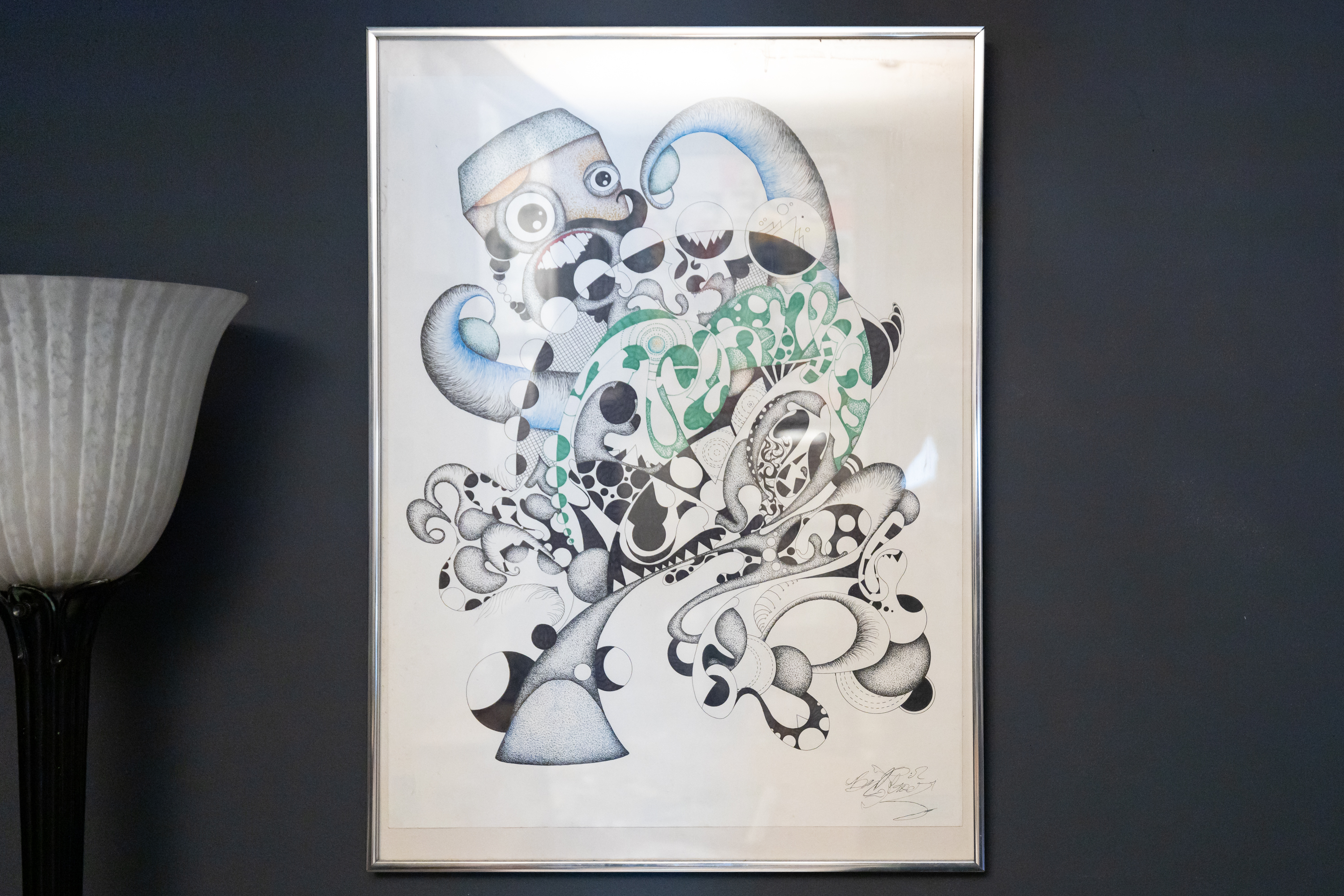
But it is a total contradiction, because that is very important in my work. I think in the beginning is what I use it in. In the beginning, I think it’s important to get loose. Like, say, that drawing right there—that was made by just scribbling on a page with pencil. So it was like big loops, and then I went in with ink and reacted to what was there and built off of that. So I think that process is still visible in my current state of mind. I gotta find a better way to explain all that, but I think that’s the source.
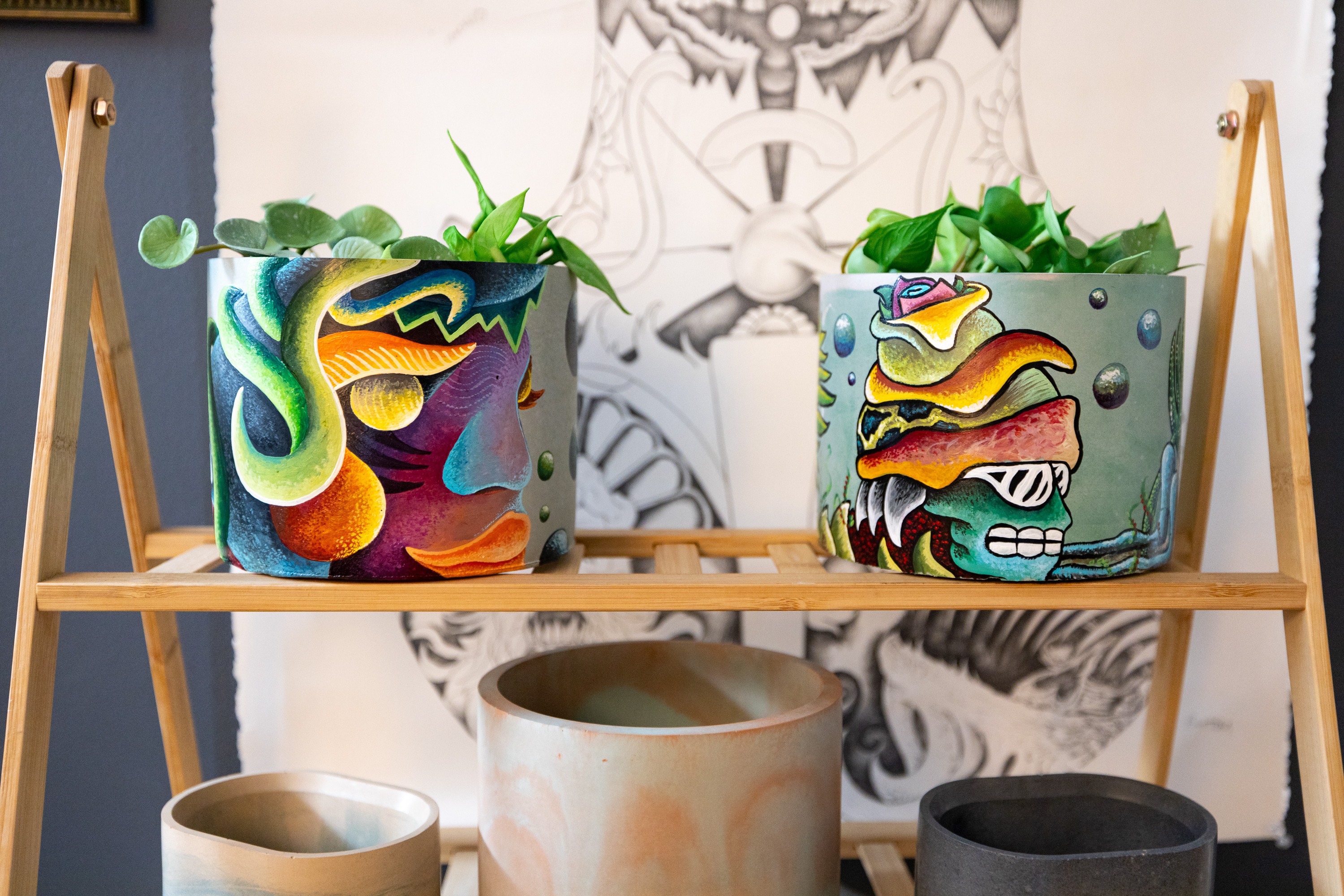
SD: Well, one aspect that I think communicates this feel of improvisation is your unusual canvases, which include license plates, broken skate decks, concrete planters, and PPA tickets. Which have you found to be the most popular?
BF: It just ebbs and flows. I’d say probably now is the parking tickets. I think being in the city, everyone’s got their opinions about the PPA. I’d say 99% of the people fucking hate ‘em. And so if they see that blue “VIOLATION” tab, it’s like a trigger. It just ruins your shit.
SD: Please tell me that you have a source of PPA tickets to paint on other than your own.
BF: Yeah, now I do. The first ten or so were my stupid-ass tickets. It was enjoyable to do ‘em, and then a good response was coming from it, and I was like you know what, I’m going to keep doing this.
It’s the same technique, just evolving weird, surreal, funky stuff. The different canvases hit harder with certain people, just on a relatability factor. The broken skateboards was like a nostalgic kind of thing. Everyone used to skateboard. And then they see that repurpose and you already have that common bond. So I guess I’m using that with the idea of repurposing, making a negative a positive and flipping it completely, a different narrative. It’s something I’ve always been interested in.
SD: So, lastly, as a UArts alum, I’m wondering how you feel about the school’s closure.
BF: Isn’t that crazy, man? What the hell happened there? That was like, what, one of the oldest art schools in the country? I’m pretty shook. And for it to close in a week, dude, there’s definitely some shady business going on. A school just doesn’t close in a week.
But yeah, it sucks, dude. Now I’m paying loans on a school that doesn’t exist. I’m going to die with loans from a school that doesn’t exist. So I wonder if something will happen with that in the future. It’s fucking weird, dude. It sucks, ’cause I graduated in 2013, and that was like one of the catalysts to get me taking this as a life path, honestly. I went to school not knowing what I wanted to do, like most people. It was just like that’s the next thing to do, is go to a school. So for that to happen, it’s like closing a book on a big part of my story. I feel bad for all the kids and teachers. Hopefully they’re helping kids get set up with some other transfer or whatever.
But it’s crazy, man. Philly’s known for art and murals and creative people. I wonder what’s next.
SD: How do you feel about Philly’s art scene in general right now?
BF: I think it’s strong, dude. I think it’s strong. You see it in all the different branches. The Philly subcultures have always been strong. Like, you see it in graffiti right now—you got people going super hard, putting Philly on the map for a lot of different new techniques and shit. And then you got the sticker scene—it’s pretty alive. I’d like to see more hand-drawns, personally, but it’s a lot, man! You got—Willy’s crushing it… Like, people are getting after it, which I love to see.
Yeah, man, Philly’s alive. The wheatpaste, like, all those guys are crushing it, man. I love seeing it. I want to see more in the street, and it’s good to see a lot of these street artists and, like, the community, coming together more and putting on shows. Doomed Future has been putting on all these group shows, and the community seems to be coming together more.
And maybe that’s just me saying that because I’ve always been on the outskirts? I’ve always just stayed in my lane, and was always outside looking in, even though I’m paying very much attention to what’s in. So I’ve been making an effort to be more outward, because I am naturally introverted. So I’m trying to be more in the scene and meet people; connect. And I feel like the artists in Philly, for my few years of putting myself out there, are doing a great job, man. Like, it seems like a community supporting each other, which is great to see.
Tattooed Moms; the sticker get-togethers—that shit’s great, man! Doing shows for people who pass; it seems strong, man. And like I said, maybe I’m ignorant to how it was, but I can only speak on what I’m experiencing. I was, like, a silent “LISTEN” dude, just listening from the outside. And I was like maybe it’s time for me to get in there.
 Streets Dept
Leave a comment