
Words and photos by Streets Dept Lead Contributor Eric Dale.
______________________
This post is a free sample of our monthly “Local Tourist” column, a Patreon-exclusive series that recommends interesting places to visit in the Philly area. Patreon is a membership platform that lets readers like you directly support the work we do here at Streets Dept (and enables us to operate without ads!) Bonus Patreon-only articles like this are one of the ways that we thank our members. If you enjoy it (and our other reporting), join our Patreon today for just $5/month!
_____________________
Hello and welcome to another installment of Local Tourist, the column that looks at a map of Philadelphia and says “that looks like fun!”
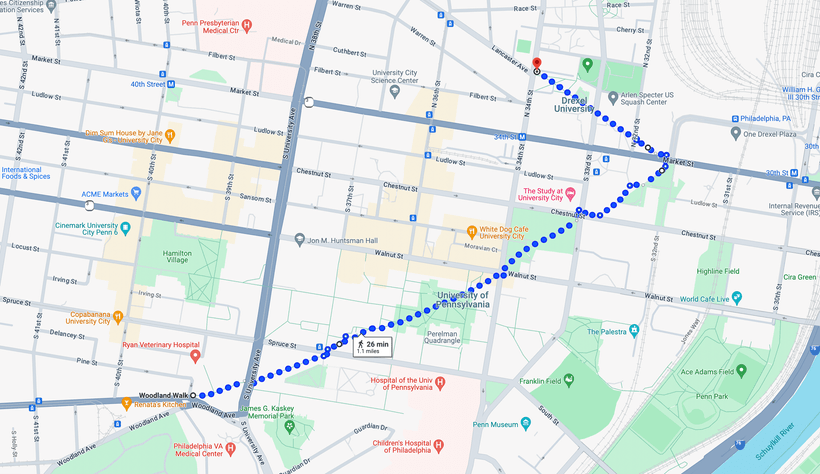
This month, I have a walk with an interesting route to propose to you. As suggested by that opening sentence, sometimes I choose the subject of this column by literally scrolling around Google Maps and looking for something interesting. On one of my cartographic jaunts a while back, I noticed an unusual V shape in University City. Upon further inspection, I discovered that there are walkways through the various campus areas that can get you quite a distance without ever being on a sidewalk next to a road. In fact, you can travel more than a mile on foot through University City without any road contact other than crosswalks!
So I took that mile-long walk on a recent warm day—one of the first of the year. I made many discoveries, from flowers and trees to large sculptures and beautiful architecture. There’s something for everyone on this walk, and it truly is spectacular to traverse the city for such a long distance with hardly any contact with cars!
Here’s a map of the route I took, from Woodland Walk onto Lancaster Walk. My guide to the route follows!
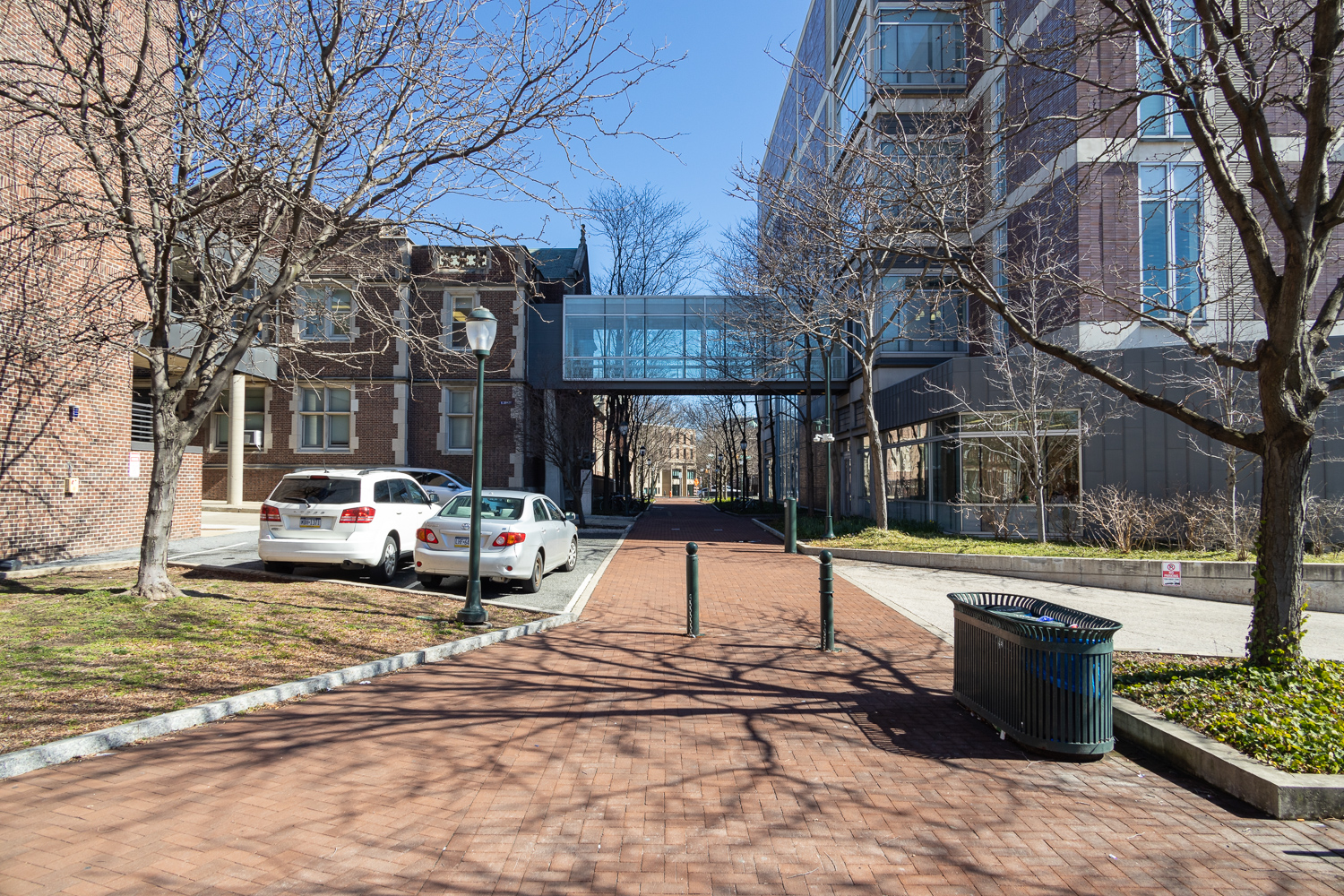
We begin at 39th Street and Woodland Avenue, on the campus of the University of Pennsylvania. (It would be very easy to extend your expedition by beginning with a walk through the Woodlands, just across the street.) There’s a little plaza and a glass walkway that feels like a gate welcoming you to this journey!
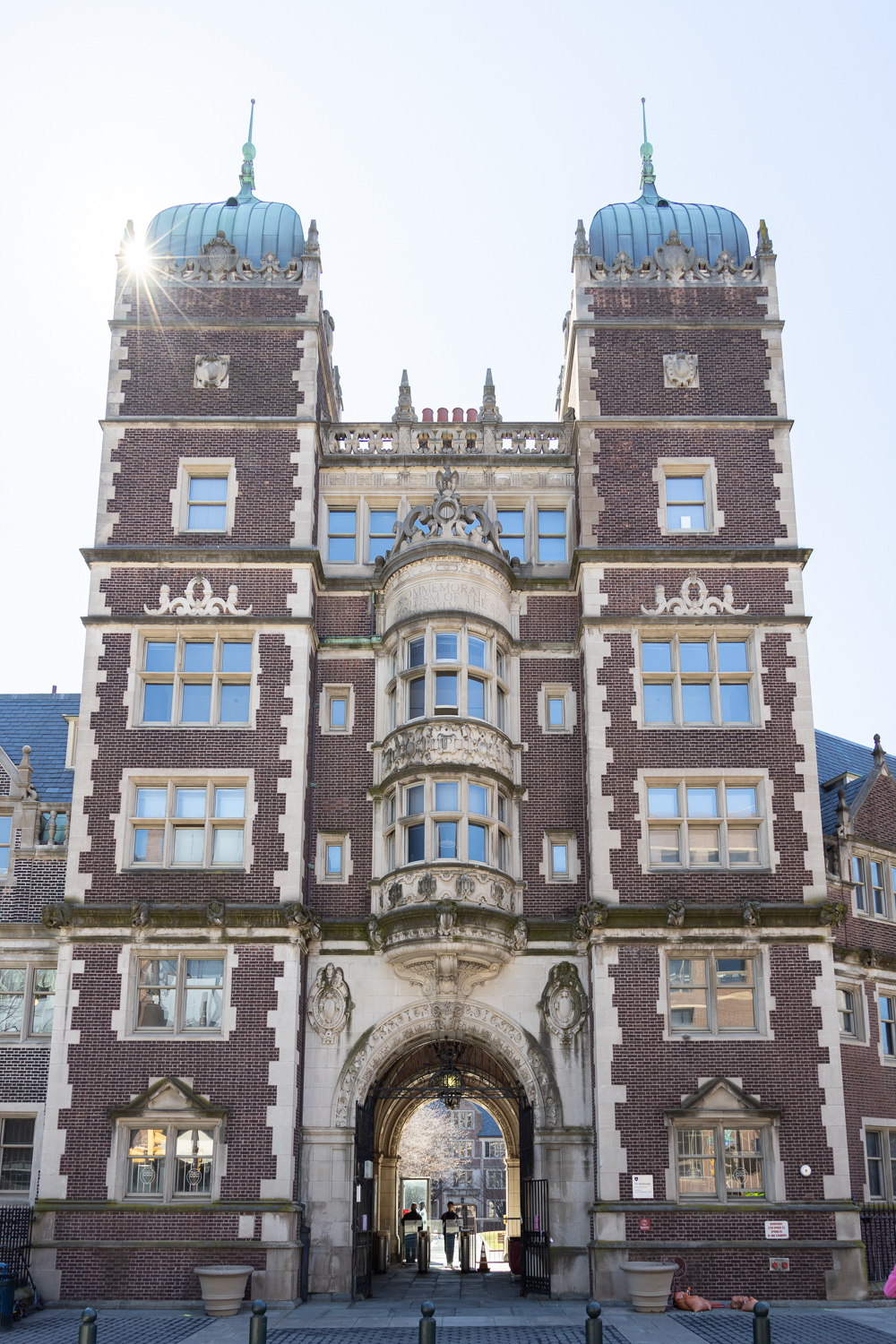
Right away, you’ll start seeing architectural flourishes that sadly no modern construction firm would spring for.

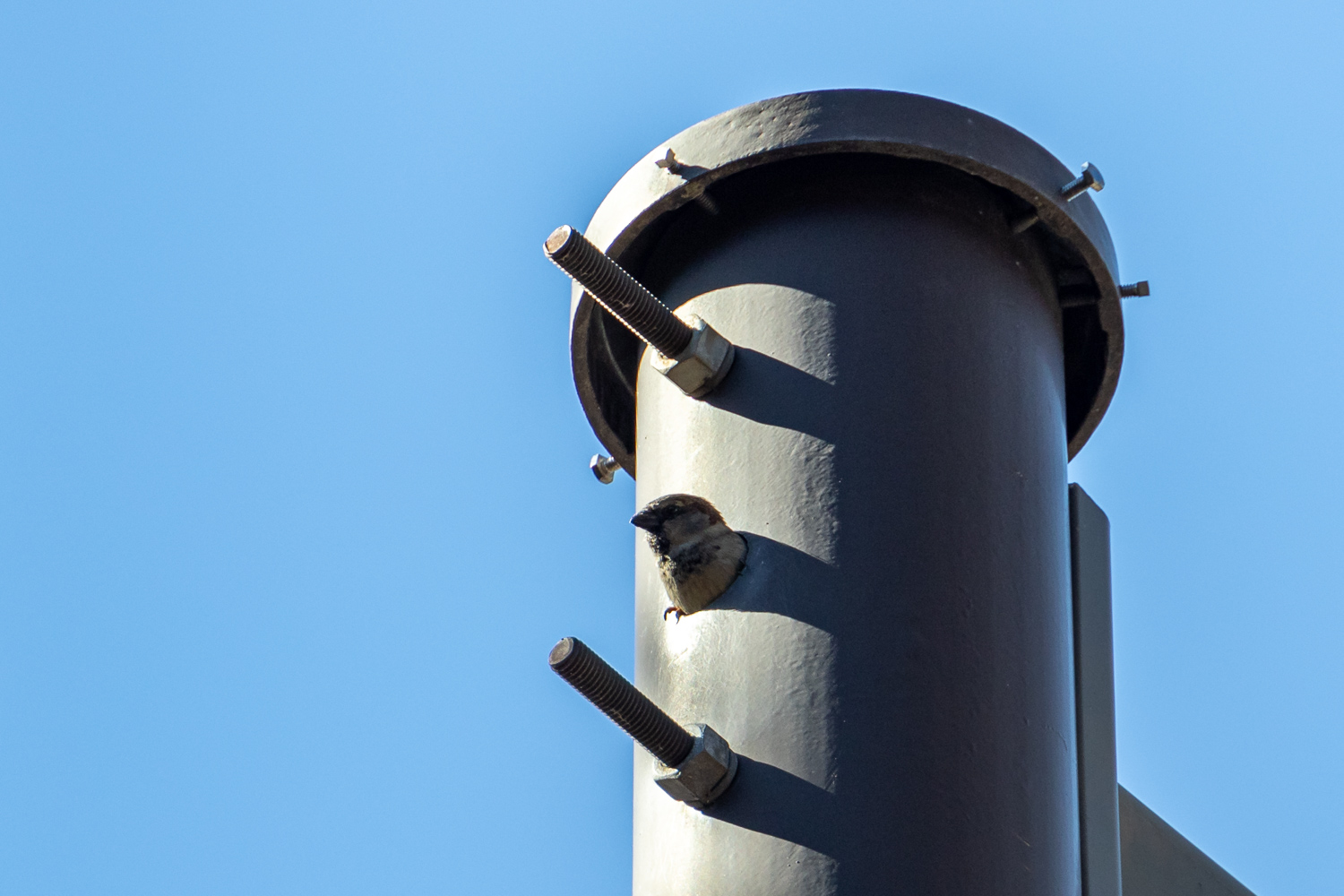
As soon as you cross University Avenue, turn around and look up—you might catch this house sparrow poking its head out of its house! Or sitting in front of it! It’s like this pole was made specifically as a birdhouse.

Architectural flourishes continue on the building to your right, which is absolutely covered in grotesques. You will not believe how many grotesques are on this building, the Fisher Hassenfeld College House. As far as I could tell, no two are alike. Can you find any duplicates? If you’re with someone, see who can find the scariest, or funniest, or most inscrutable!


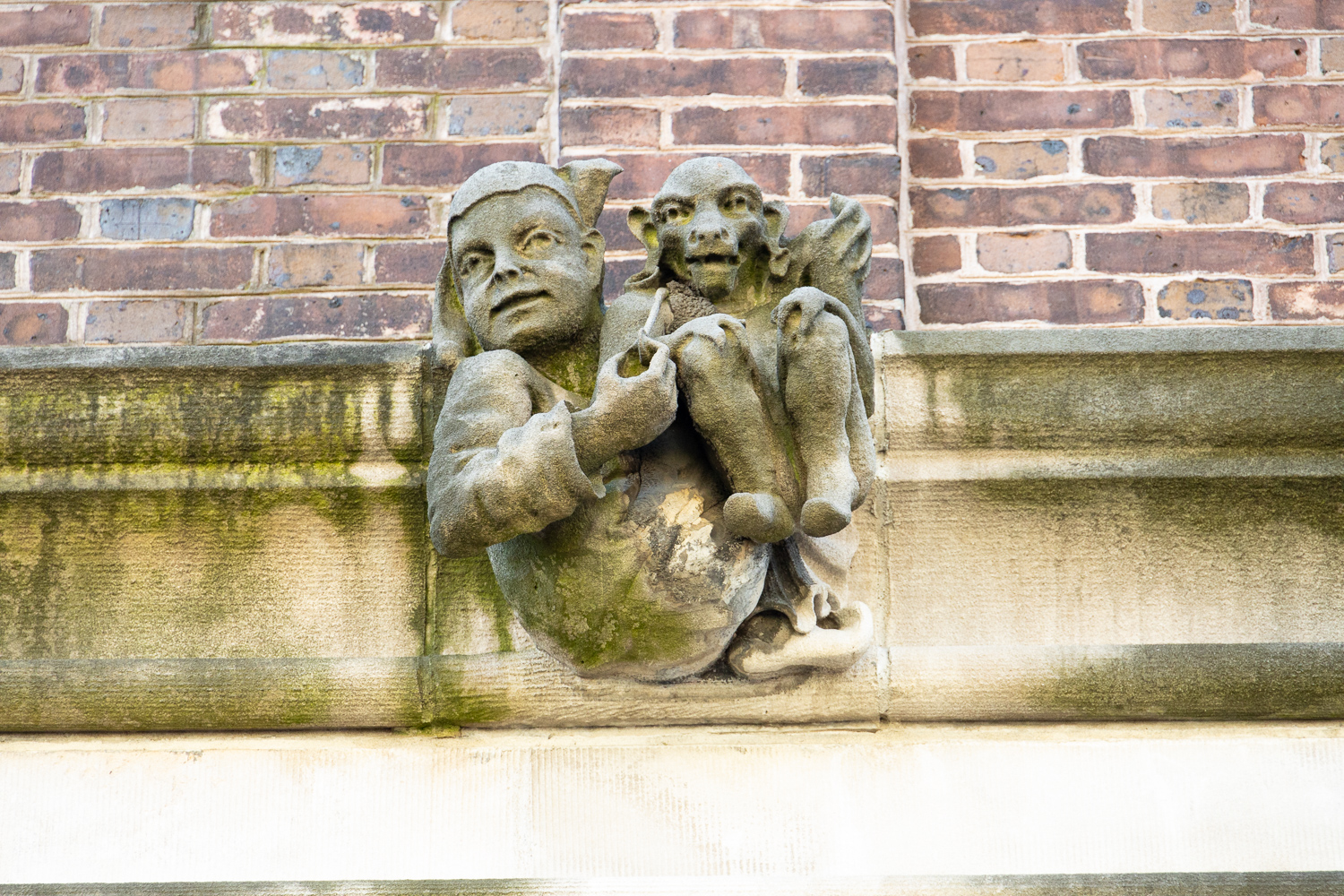
I think this one is holding a model of the building it’s on!


Even the gutter components are ornamented. Can you imagine if modern buildings were built like this? How wonderful that would be.

You’ll eventually reach the corner of this building, at Spruce Street, which is quite majestic. You may then realize that this building continues all the way down Spruce Street for the same distance as the length you just walked beside. Actually, it turns the corner again, and again, and connects back to where you first saw it, presumably with grotesques all the way around. That is a LOT of grotesques. I love it!
When you cross Spruce, you’ll see an underground trolley station entrance… which itself is a trolley!


This was a 2006 gift from Penn’s Class of 1956, and the other side is a little seating area with some historical information about the trolleys. Apparently, most of this walk is only possible because the trolley lines were put underground in 1956!
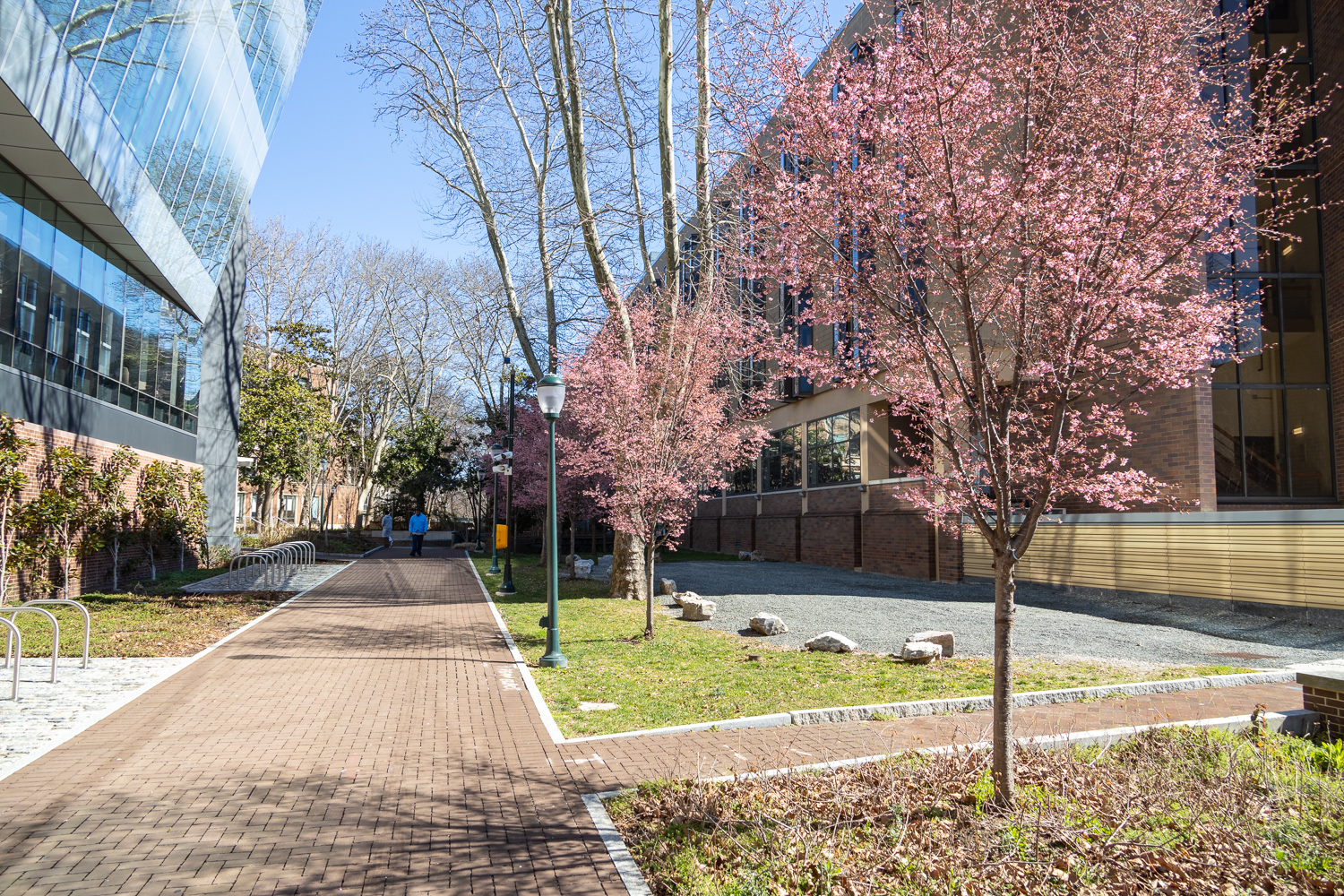
Next up, some blooming trees and daffodils. It truly will be spring soon! Many of the trees throughout this walk are nicely labeled by Penn’s botany department.

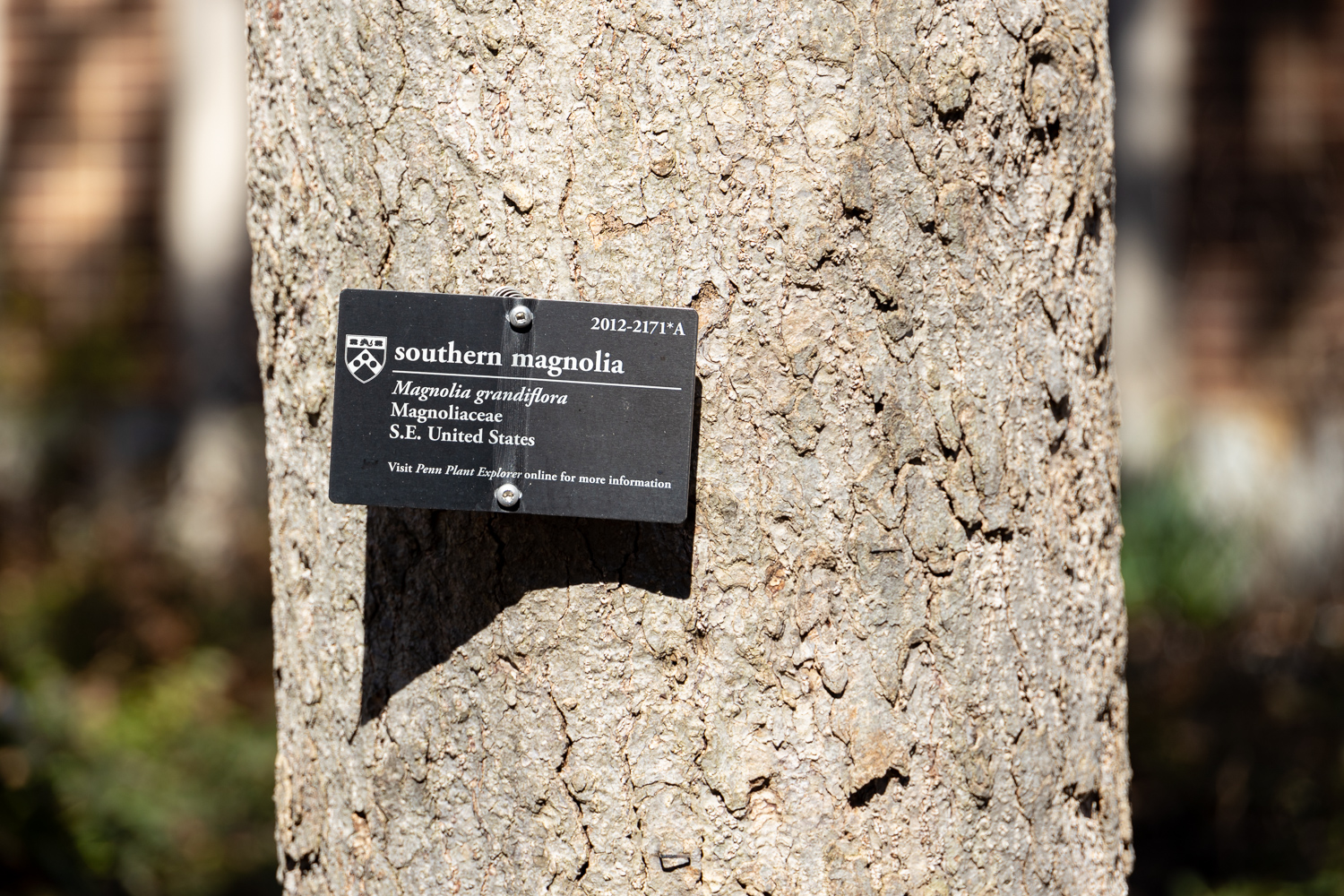

Just past the trolley, in Steinhardt Plaza, the sculptures begin. We start small, with these lilypads in a fountain that was not yet turned on for the season when I was there. But I bet they look very cool when there’s water below them!
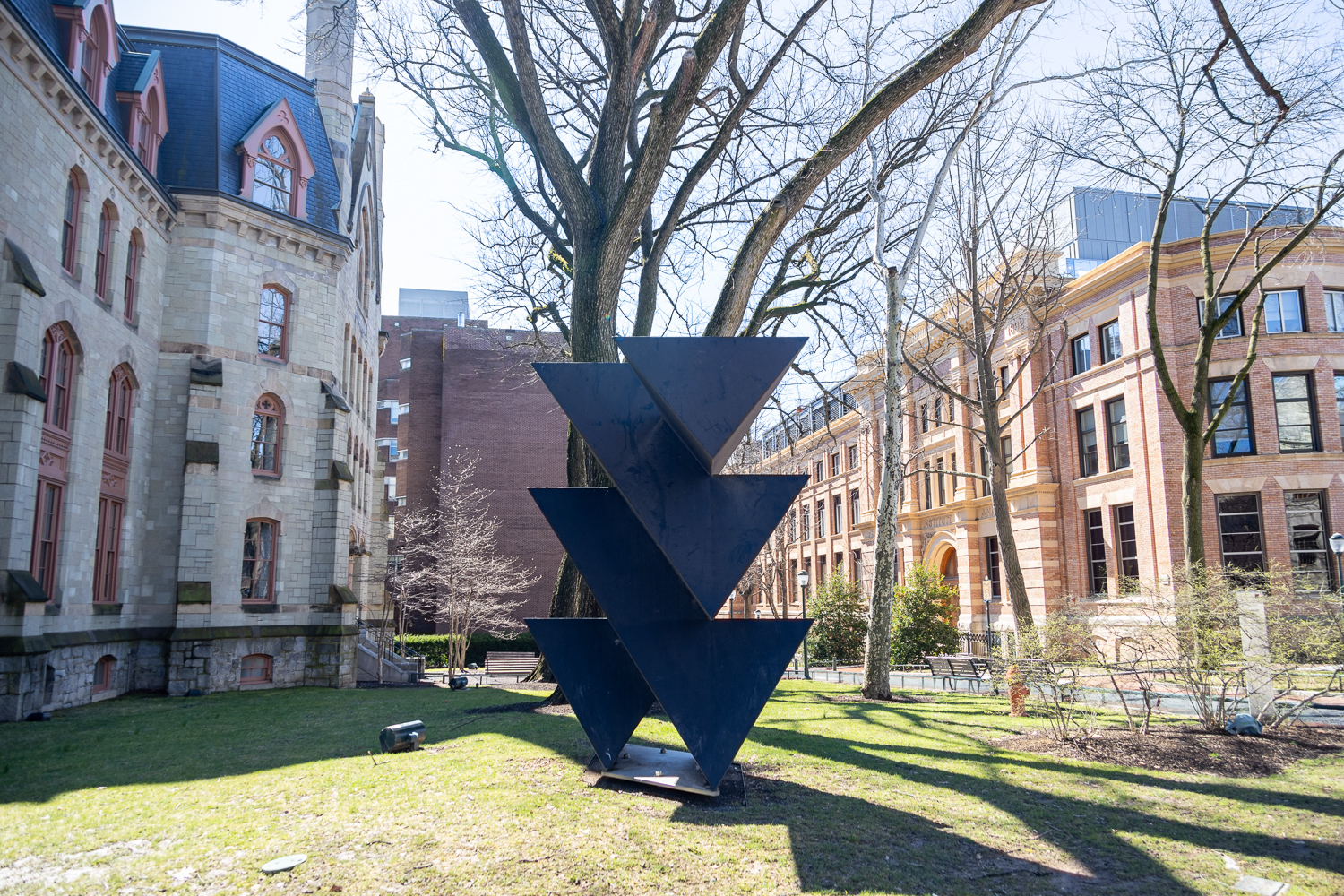
Continuing down Woodland Walk, there’s a sculpture on the right by Robinson Fredenthal called Black Forest. The artist studied architecture at Penn, and has several other sculptures around the city, including at Woodmere Art Museum. From one side, Black Forest looks like evergreen trees; but change position, and the triangles turn upside down! Speaking of changing position, this sculpture was originally installed in 1984 but was relocated to this spot in 2020.
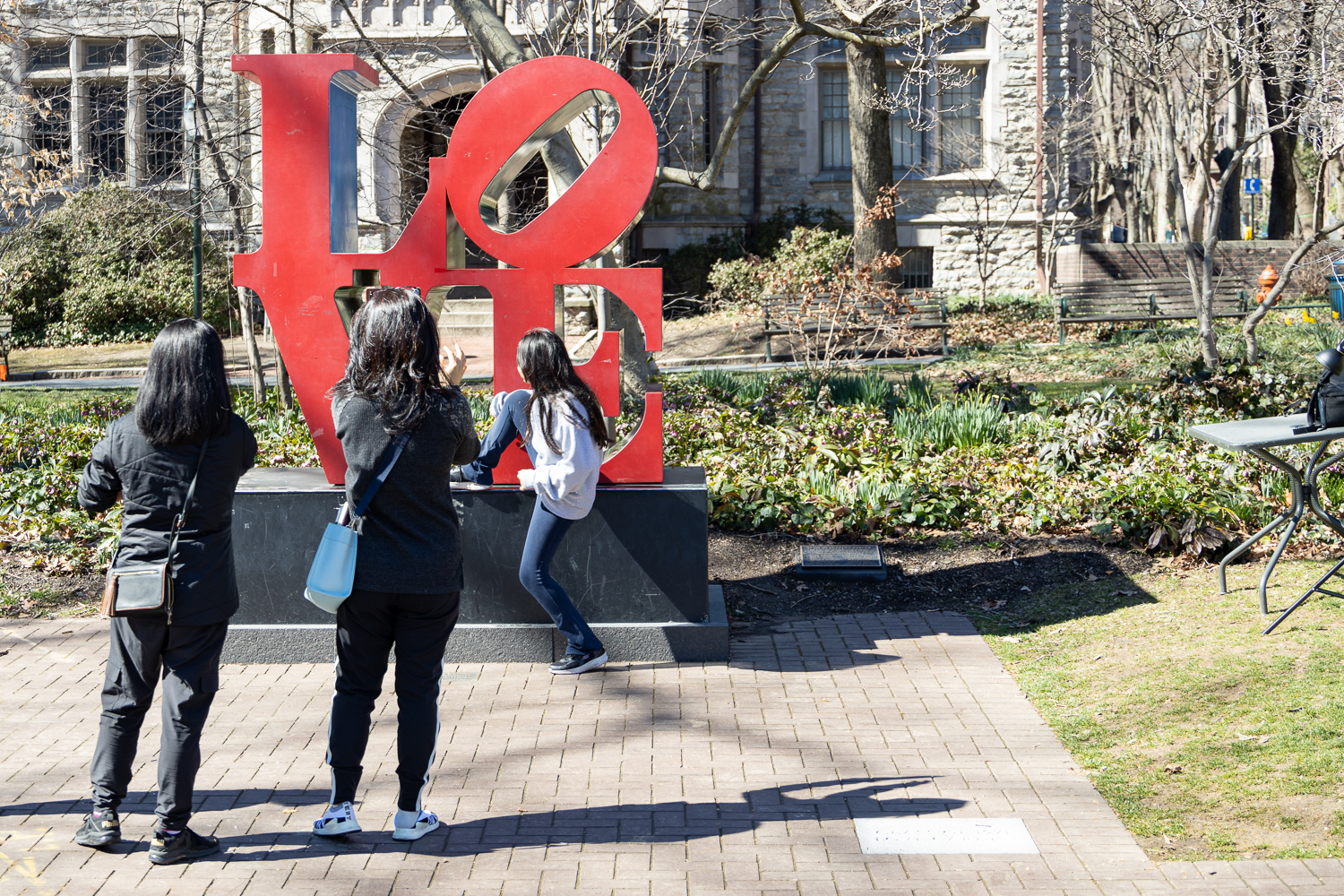
Next up, a sculpture familiar to all Philadelphians: LOVE! Yes, there’s another edition of this famous Robert Indiana sculpture on Penn’s campus. Since 1999, like its Center City sibling, it’s been a popular spot for photos, and if you’ve never gotten a photo with it, I think the line is generally shorter at this one! (As long as it’s not near graduation.)
I wasn’t originally going to include the next photo, because we’ve all seen enough statues of Benjamin Franklin. But in researching this article, I realized that it’s the only photo I took that happens to include a very important tree!

The tree at back left is a descendant of “The Great Elm,” the tree under which William Penn supposedly signed the 1682 Treaty of Shackamaxon with Tamenend, a chief of the Lenni Lenape indigenous peoples. We can’t be 100% sure this treaty was actually made, but the tree in the legend was definitely real, and once grew at what is now Penn Treaty Park. That elm blew down in a storm in 1810, when it was 283 years old and eight feet in diameter, but cuttings were taken and planted elsewhere, including right here in front of College Hall, the most generically named building I’ve ever heard of.
On the other side of Woodland Walk from Ben sits the Percent for Art project Split Button, a husband-and-wife collaboration between—who else?—Claes Oldenburg and Coosje van Bruggen. Installed in 1981, it actually relates to Ben, as apparently Oldenburg thought that the statue of Franklin is missing a button. He has also said that the split represents the Schuylkill River dividing the city and the four holes represent the four parks in William Penn’s original design for Philadelphia. Originally panned, the sculpture has become a beloved icon and meeting point on Penn’s campus.
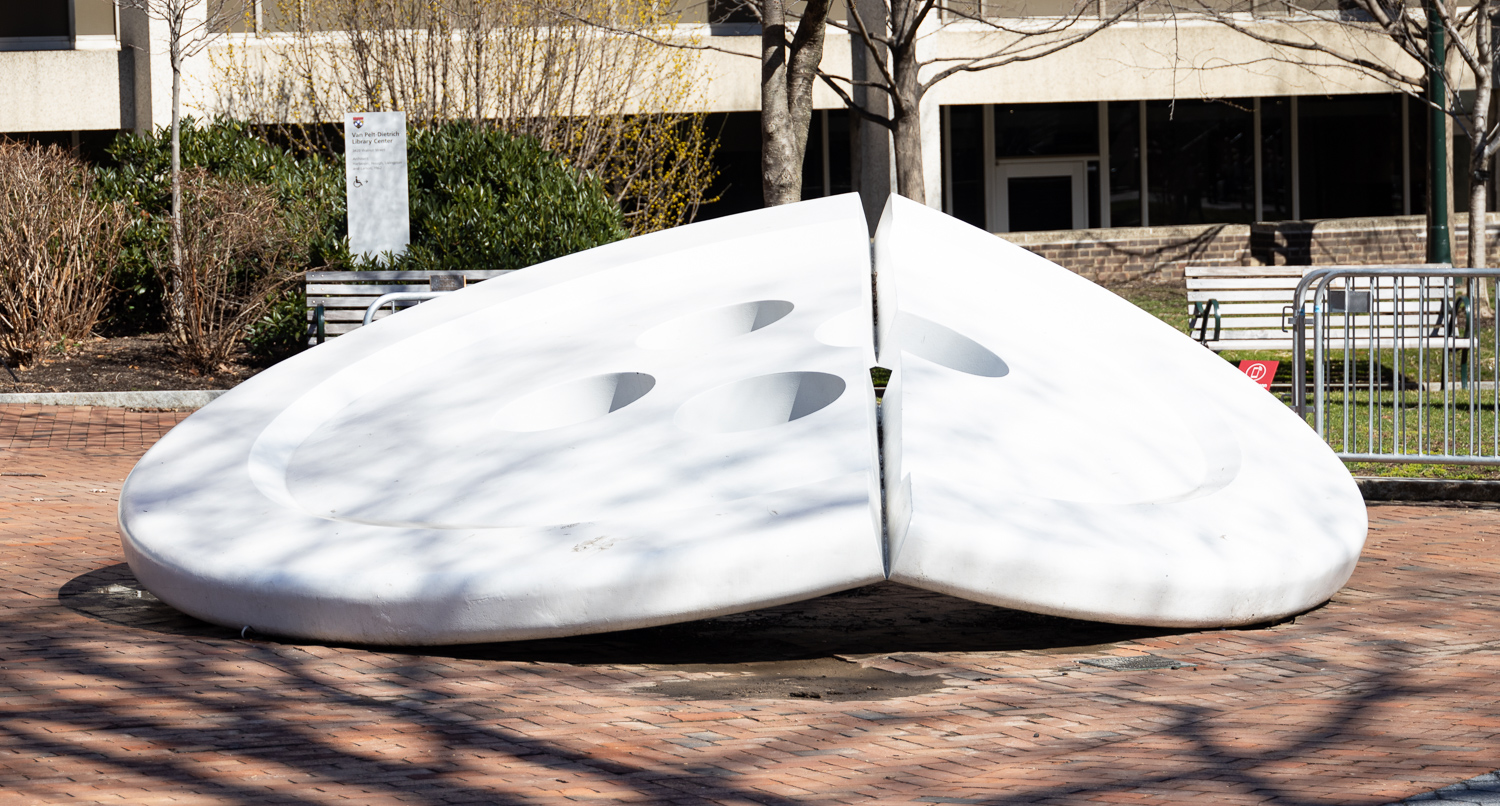
The button is one of several locations incorporated into the Discover Penn phone tour. Here’s a map of all(?) of the locations with entries you can call and hear about, in case you want to pull on that thread! (Button-related pun partially intended.)
In the central quad between Ben and his button, there are a couple of interesting blocks in the path, commemorating Ivy Day. This is the day when all eight Ivy Leagues release their admissions decisions—in late March, no less! I guess it was kismet for me to write this column this month. I’m not sure why this day is worth commemorating in stone, but apparently there’s a long tradition of “planting the ivy” to honor academic prowess and welcome new students. Can you find other Ivy Day stones nearby?

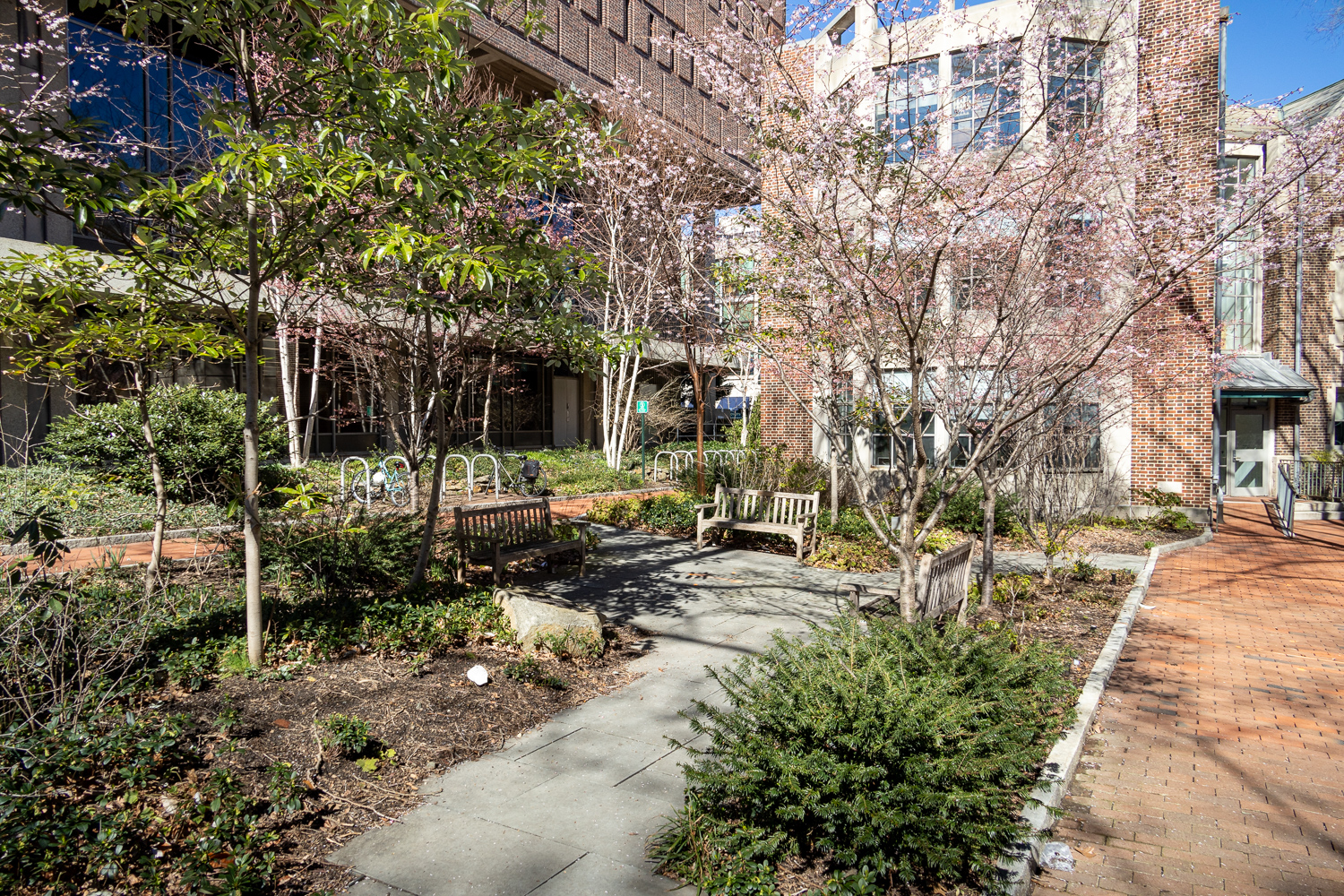
It’s amazing how many of the portions of campus that attracted me during this walk are class gifts! As you approach Walnut Street, on the left, there’s a beautiful little garden that will surely be full of spring blooms very soon. I’m sure many an important, late-night conversation amongst college students has taken place here.

Next, on the right, there’s a very modern sculpture, Brick House, by Simone Leigh. Installed in 2020, it’s the first on-campus public artwork in Penn’s collection (of 59) by a Black woman. It references the architecture of Benin, Togo, Chad, Cameroon, and a restaurant in Natchez, Mississippi.
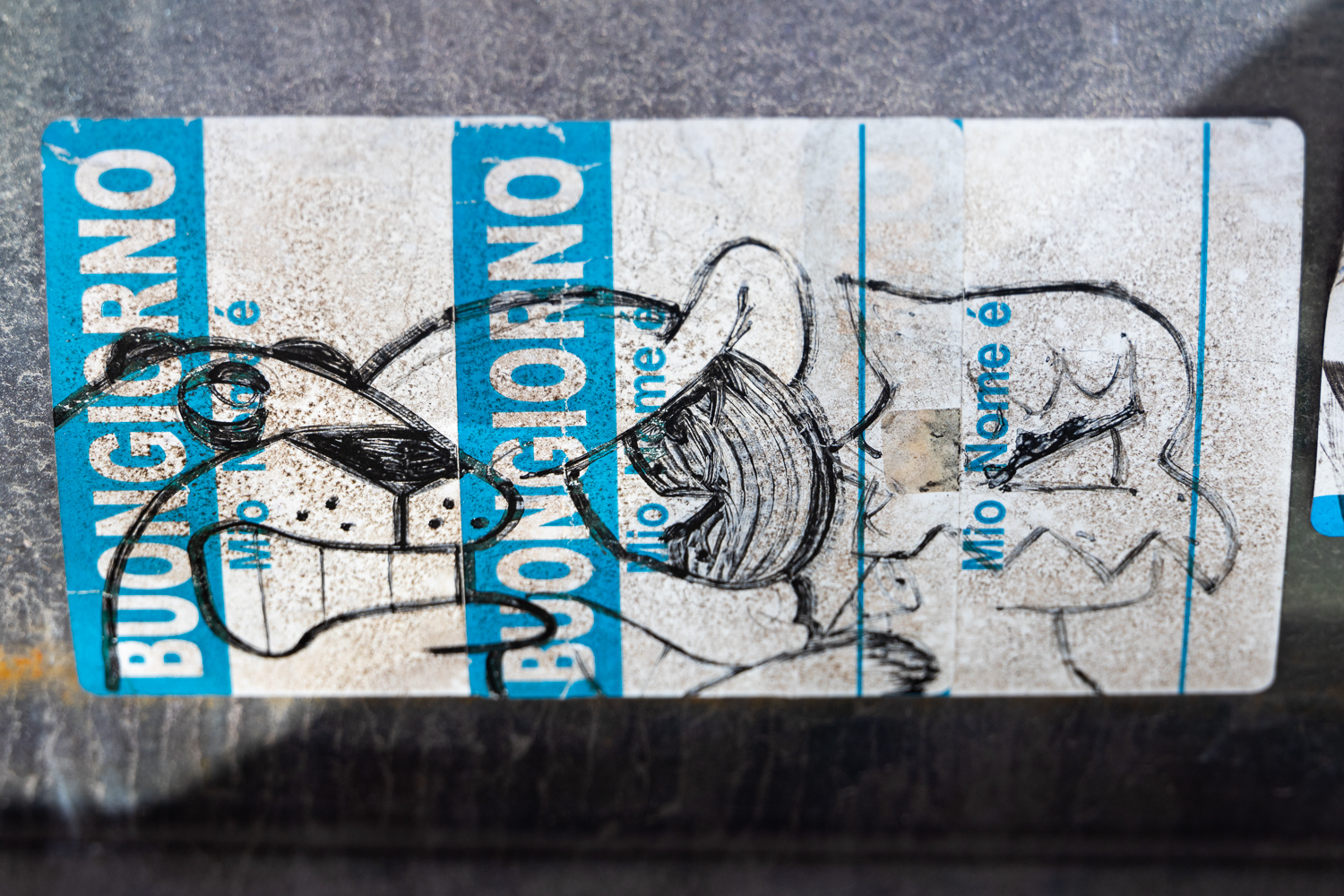
At Walnut and 34th, make sure you look closely at the newsbins. There’s an absolutely ancient sticker collaboration between Philly sticker artists QTP, Zer, and Yerp! Work by the first two artists is exceedingly scarce at this point, and works by Yerp are decreasing in number now that he no longer lives in Philly. I did ask Yerp to estimate the age of this sticker and he thinks it’s probably been up for a decade. Incredible!
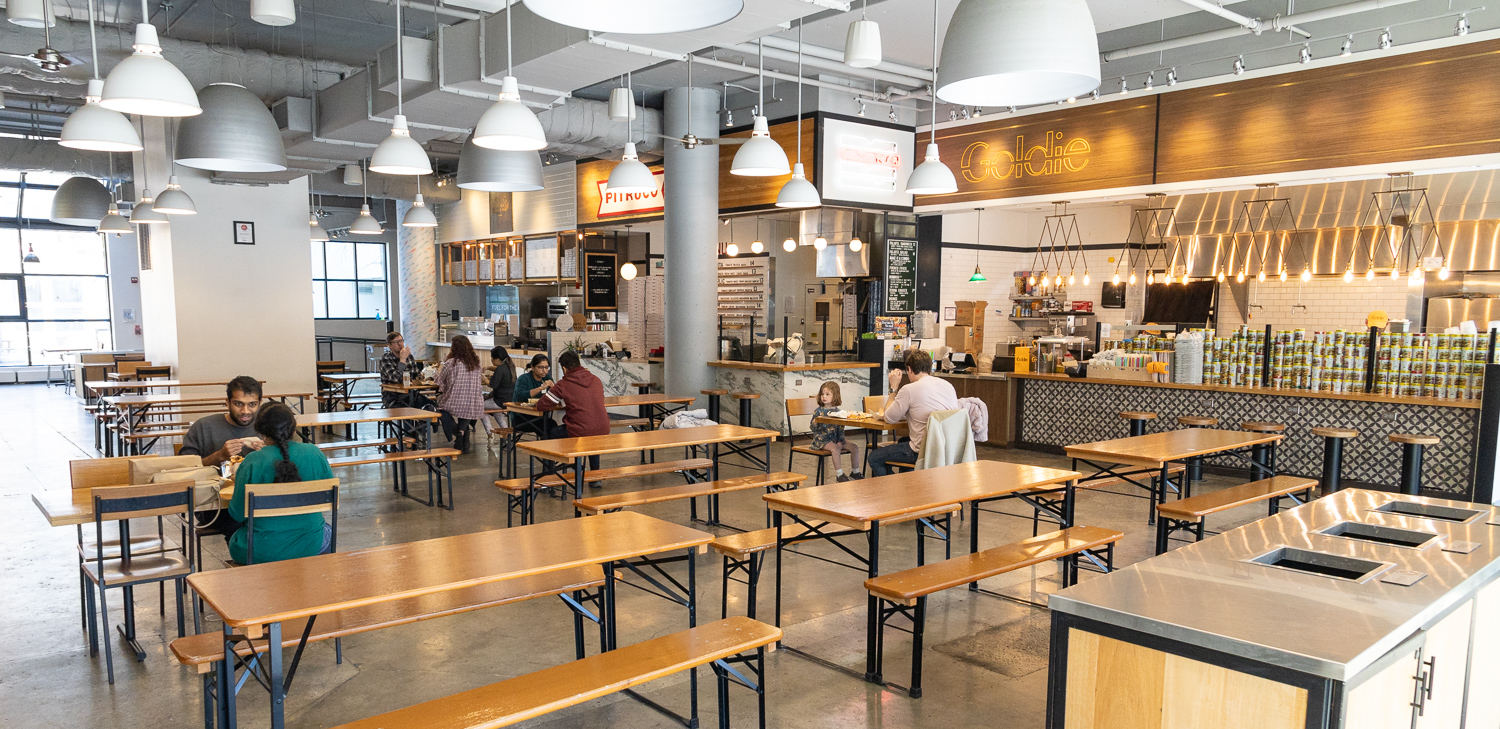
Ok, shall we stop for lunch? I did at this point, just across Walnut Street at Franklin’s Table Food Hall. (I’m a sucker for a food hall.) I elected to get a delicious falafel wrap from Goldie, a Mike Solomonov and Steve Cook outlet. Somehow, Steve’s aptronym has never hit me until now!
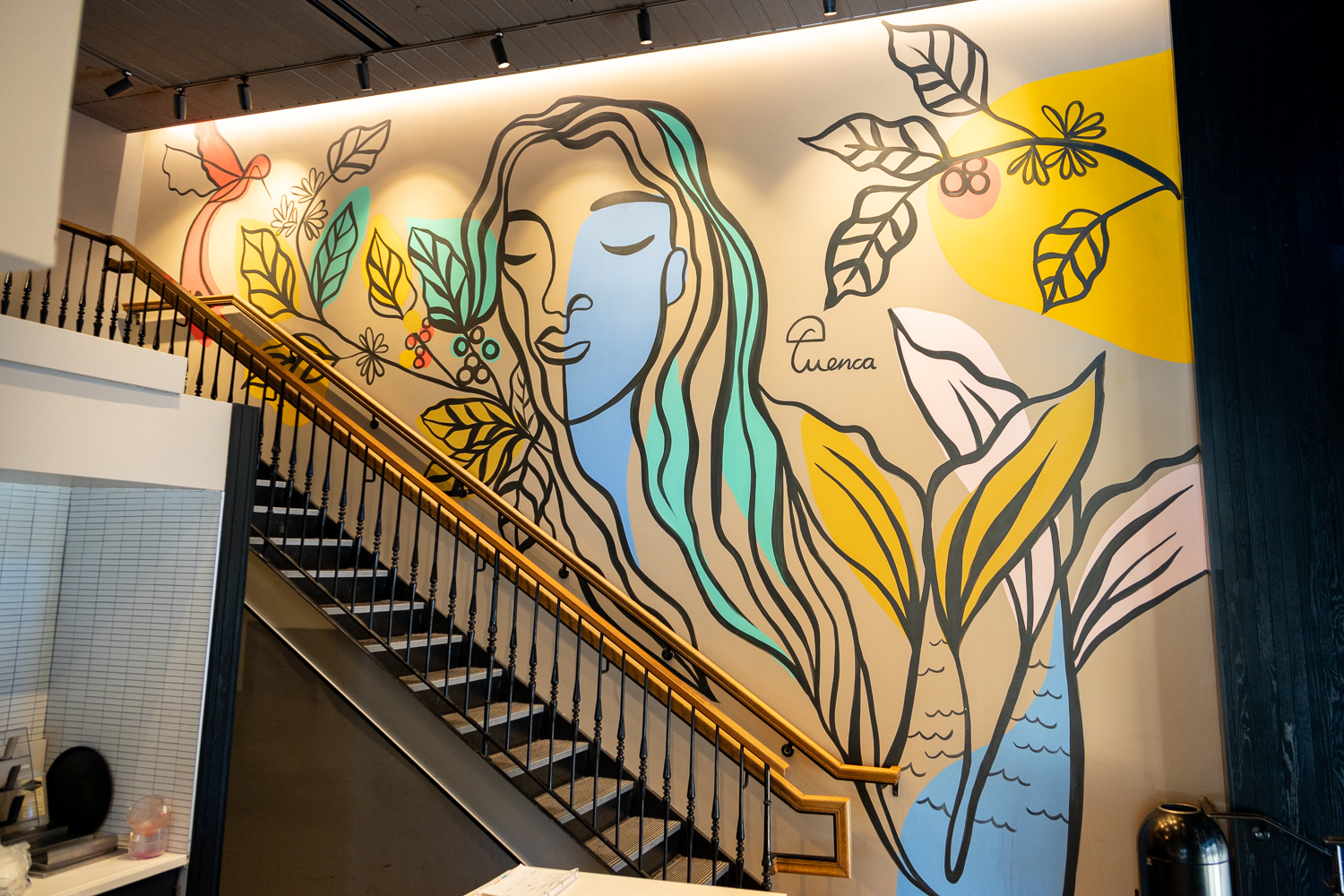
If all you need at this point in the walk is a coffee break, there’s also a Starbucks at this corner, with a mural by Philly artist Dora Cuenca inside!
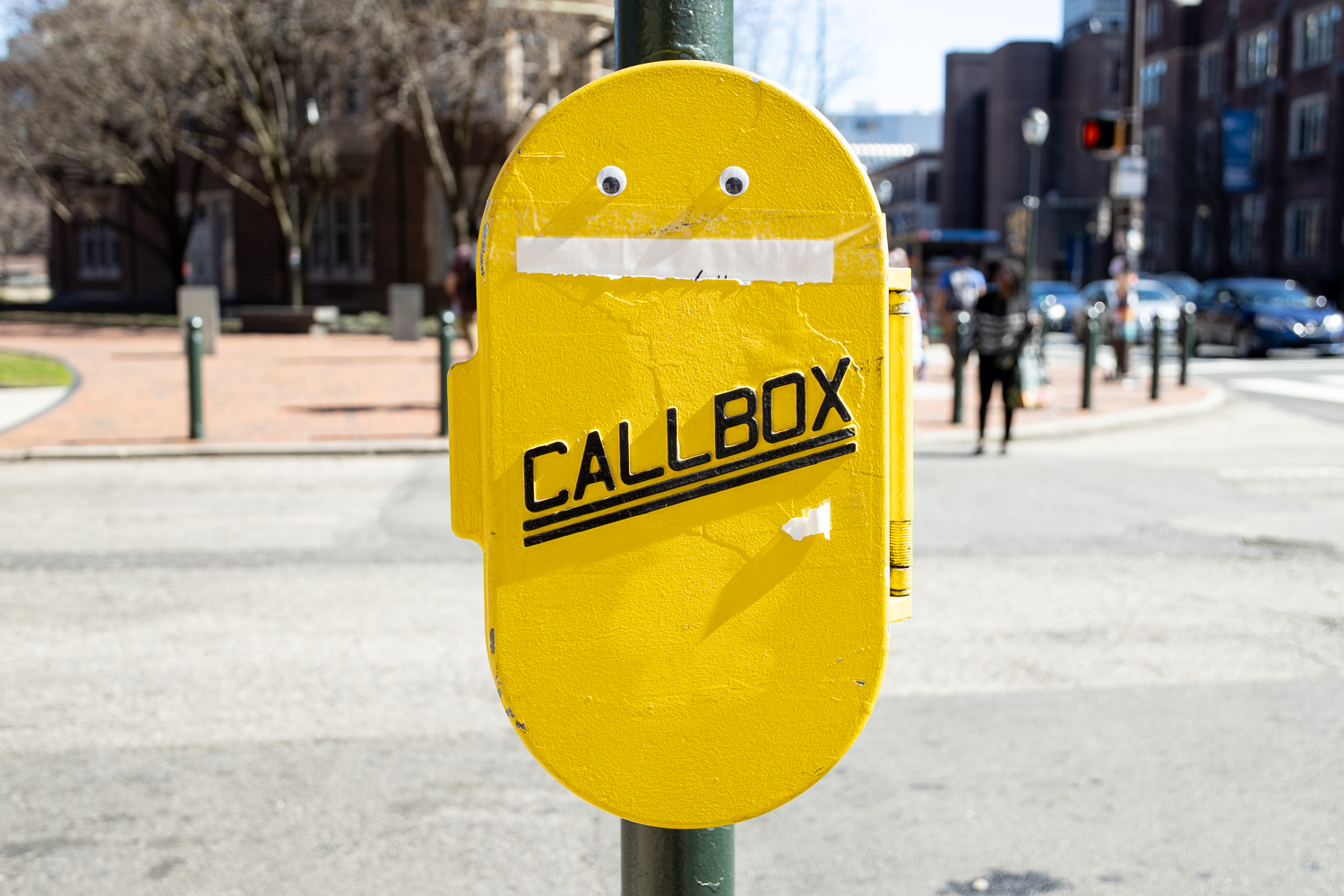
After your break, see if there are still googley eyes on this call box, then continue down Woodland Walk.
You’ll soon encounter 125 Years, a 2003 public art project by world-famous text-based artist Jenny Holzer. The benches and curbing all along this section of path are inscribed with quotes Holzer took from the Penn Archives to honor and reflect on the 125th anniversary of Penn’s first female students. The quotes follow women throughout the time period, without sugarcoating their experiences. The lights (which you’ll notice are placed directly over the benches) and much of the landscape are also a part of the installation—Holzer worked directly with the firm that constructed this segment of the path.

Once you cross over Chestnut and 33rd Streets and are confronted with this placid view, you’re officially on Drexel’s campus. On the right is an interesting monument—or “non-monument,” as the artist, Theaster Gates, calls it. When you really consider this 2020 installation, called Monument In Waiting, it’s quite striking.


That date may give you a hint of what the artist is responding to: the widespread removal of Confederate monuments. His work also provokes discussion of the broader topics of preservation, memory, and memorialization. Personally, I read the inscription on the largest block as a commentary on the current moment as well as a challenge to the past and the future: “UNTIL REAL HEROES BLOOM, THIS DUSTY PLINTH WILL WAIT.” I like it.
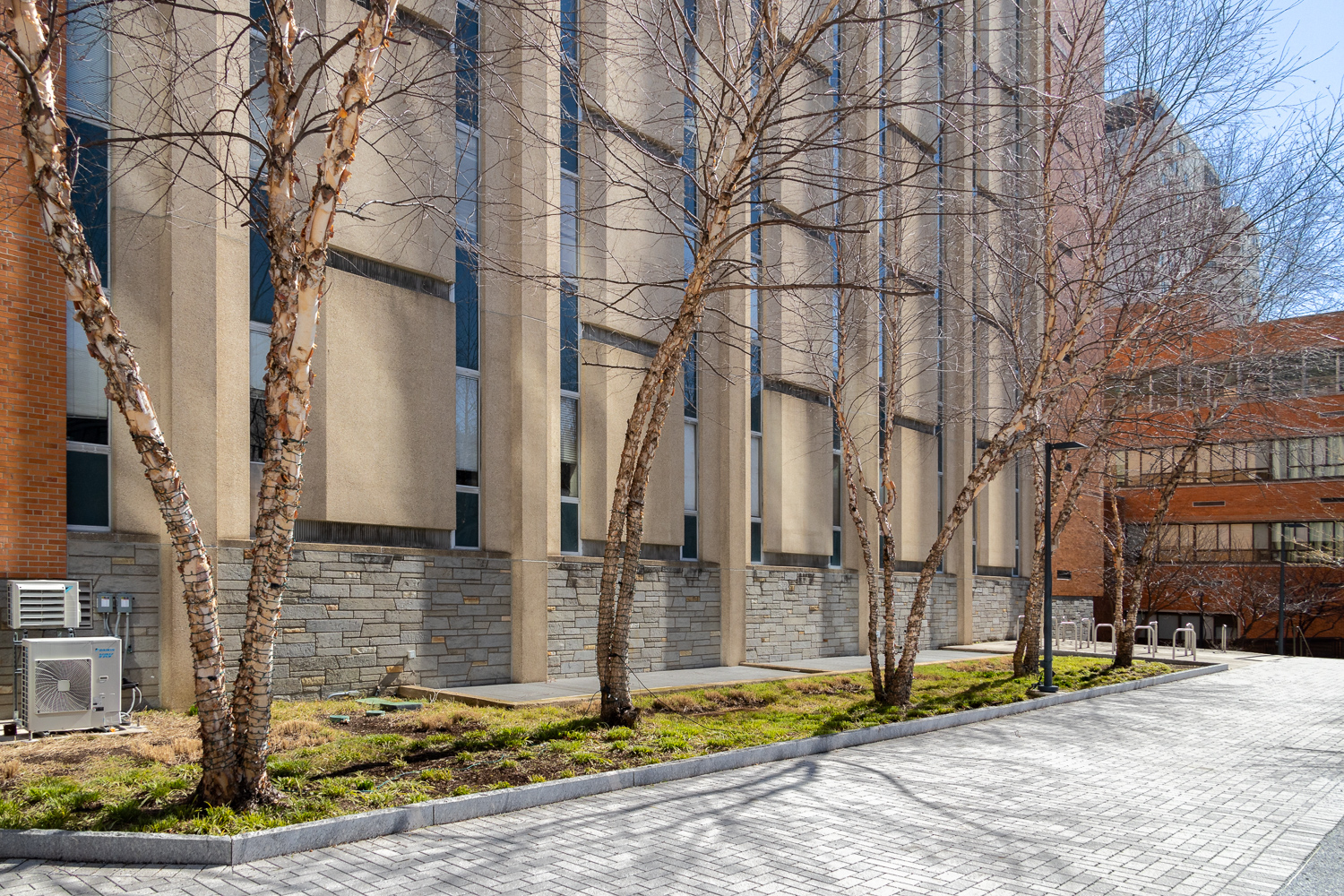
There are some lovely river birches along the buildings, followed by another beautiful building at the easternmost point in our walk.

The Paul Peck Center was built in 1876 as the Centennial Bank Building by noted Philadelphia architect Frank Furness.
Now it’s time to cross Market Street and turn left onto Lancaster Walk! As you do, see if this tag by one of the funnest names in graffiti is still there. Can you read it?

It says PANCAKE!
As we approach the end of our walk, stop and smell the flowers on the corner. (Metaphorically—I don’t think crocuses have much of a scent.)


Continue down the walk and you’ll see a pop-up installation from the Neon Museum of Philadelphia. I initially thought that this usage of vacant space was a revival effort launched after the museum closed, but it appears that these pieces have been on display in this location since 2017. So I guess it’s just another piece of the collection that’s on semi-permanent display!
More sculptures are on display down Lancaster Walk, but this one caught my attention since I’m pretty sure the same artist has a piece on display at Woodmere.


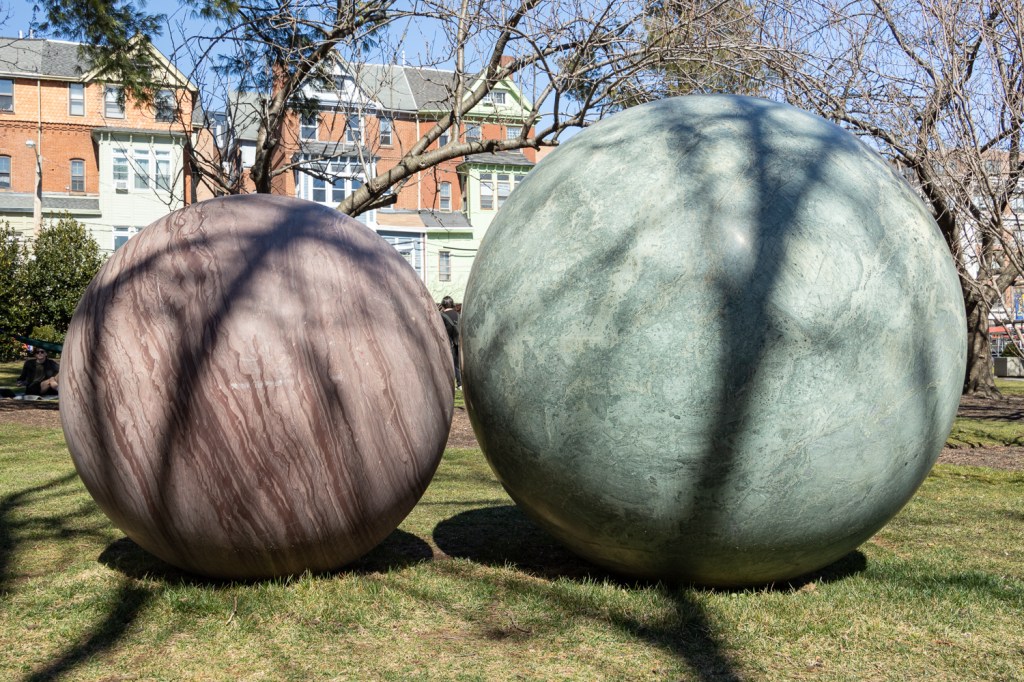
Your journey comes to an end as you reach the Drexel University Alumni Garden and observe how old you are compared to the college students all around. Distributed throughout this green is one last set of sculptures that captured my attention: giant polished spheres of many different types of rock. As a one-time geology major, I’m biased towards appreciating these objects, but they’re so beautiful that non rock-nerds will surely love them too! Run your hand against them—you’ll be surprised at how smooth they are.
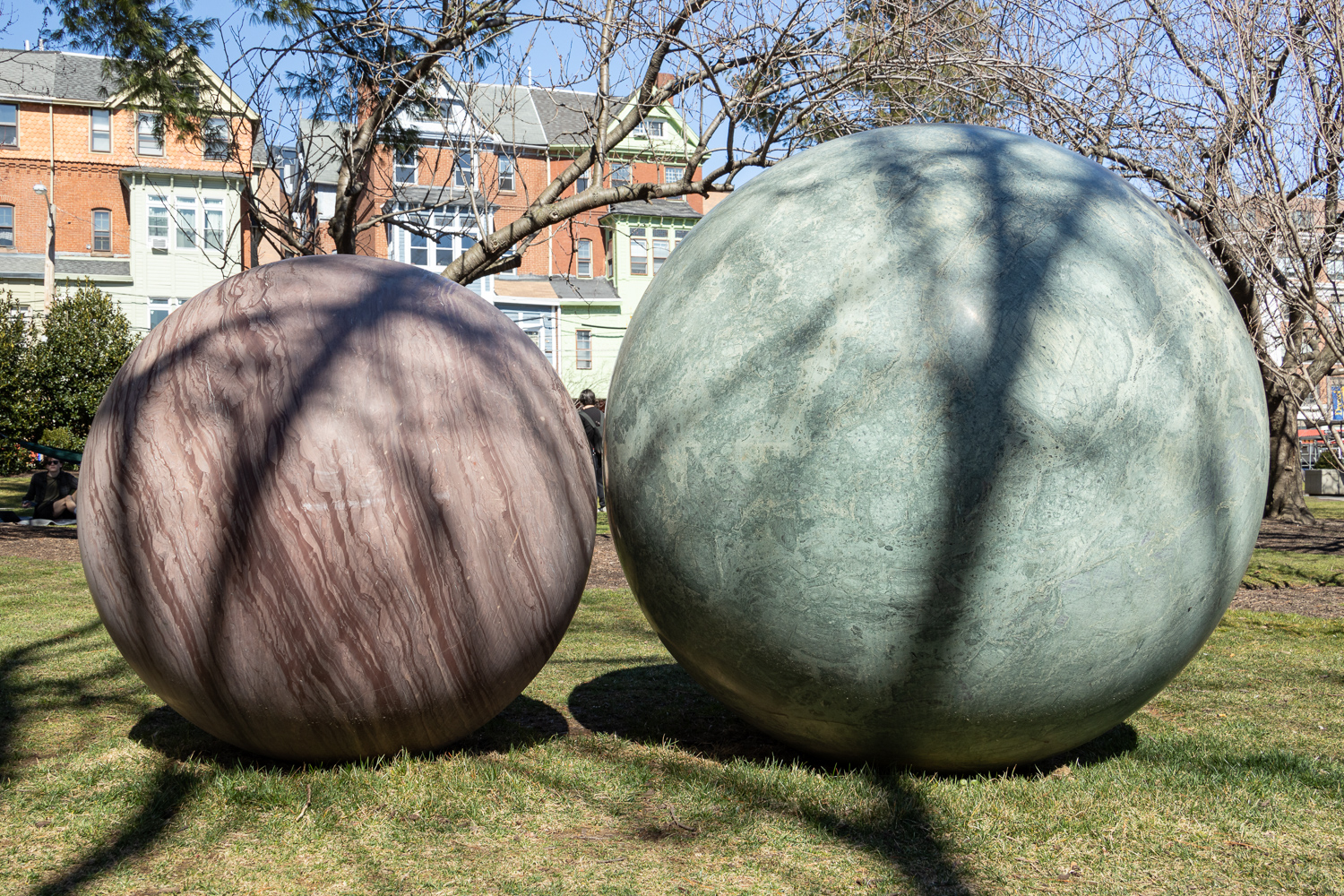
Alicja Kwade’s Pars Pro Toto, which means “a part or aspect of something taken as representative of the whole,” is on a three-year loan from Forman Arts Initiative, so get out there soon! It really is an awesome sight to behold.

Alright, that brings me to the end of this V-shaped walk! To get back to the start, you can wend your way back through the campuses, or make a perfect triangle by continuing up Lancaster Avenue and down 38th Street.
If you enjoyed taking this walk planned entirely by finding an interesting route on the map, you may also like these two previous Local Tourist columns: Alleys From Broad to the Schuylkill and Alleys From Broad to the Delaware.
_____________________
Read past unlocked Local Tourist columns here: The Mercer Museum and Otherworld. And again, if you like these kinds of articles and want to support the growth of Streets Dept, consider joining our Pateron for as low as $5 here!
 Streets Dept
Leave a comment