


Words and photos by Streets Dept Lead Contributor Eric Dale. Orginally published in January 2024.
______________________
This post is a free sample of our monthly “Local Tourist” column, a Patreon-exclusive series that recommends interesting places to visit in the Philly area. Patreon is a membership platform that lets readers like you directly support the work we do here at Streets Dept (and enables us to operate without ads!) Bonus Patreon-only articles like this are one of the ways that we thank our members. If you enjoy it (and our other reporting), join our Patreon today for just $5/month!
_____________________
For this edition of Local Tourist I’m taking you to Woodmere Art Museum, in Chestnut Hill, near the northwesternmost tip of Philly. As an august building on a huge lot with a smattering of sculptures, it’s been on my list to visit for years now! And I’ve now learned that its tagline is “telling the story of Philadelphia’s art and artists.” I’m in!
Woodmere was created by wealthy Philadelphia industrialist Charles Knox Smith, who purchased the mansion that now houses the museum in 1889 with the express intent of creating a fine arts museum from his personal collection. Over the years, he expanded his home to create additional gallery space for his paintings, eventually opening it to the public in 1910. When he died in 1916, he left the property and its art to the people of Philadelphia as the Woodmere Art Museum.
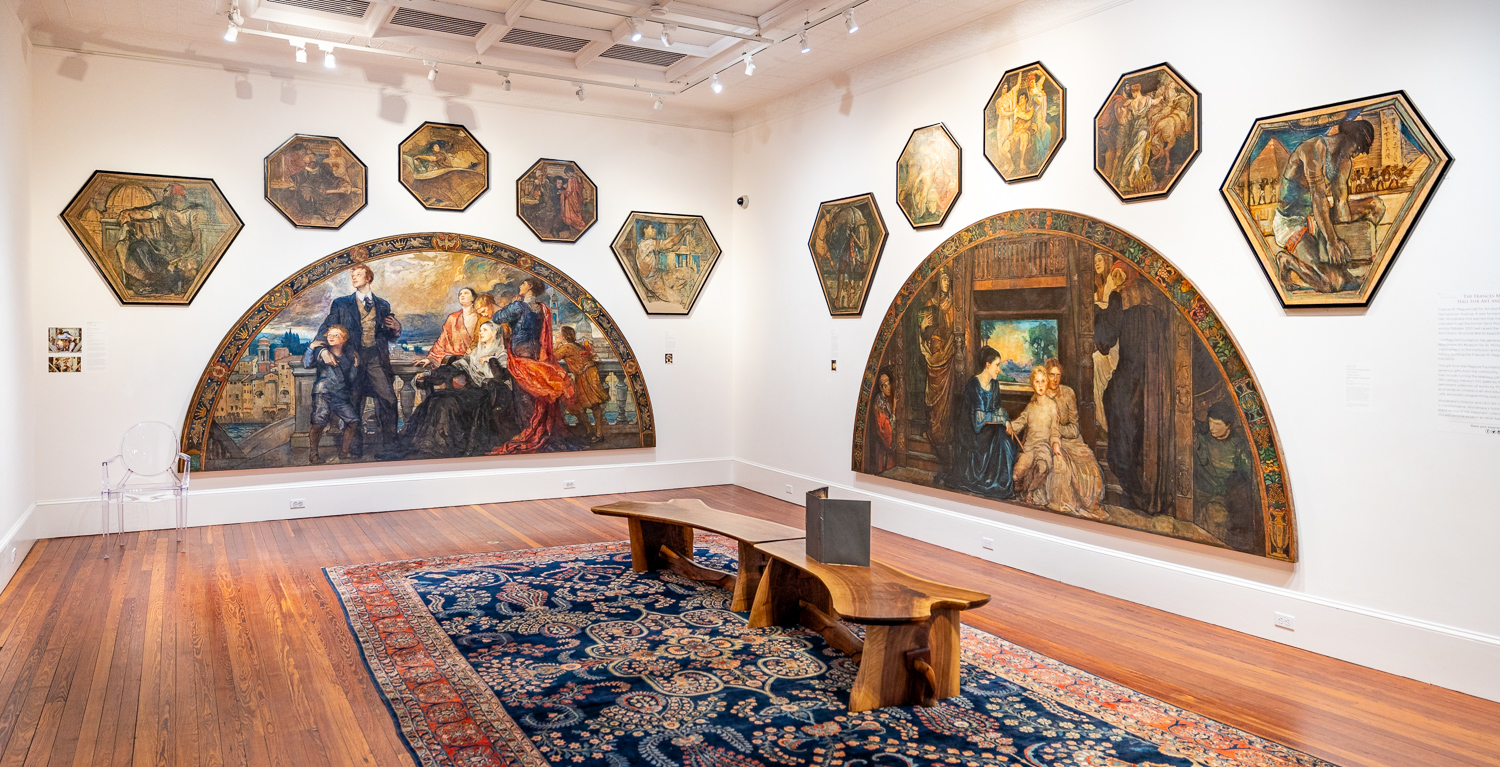
The core collection acquired by Smith focused on Philadelphia artists, and the long-serving founding director, artist Edith Emerson, honed that focus to predominantly women artists of Philly. She was evidently biased towards collecting works by her life partner, Violet Oakley, as Woodmere has the largest collection of Oakley works in the country. But it’s well-deserved: according to the placard accompanying the pieces shown in the photo below, Oakley “achieved international fame as the first woman artist to be awarded monumental and prestigious government commissions.” (The pieces in the photo were a private commission for Charlton Yarnall’s residence at 17th and Locust Streets, and were donated when the building was converted to office space.)
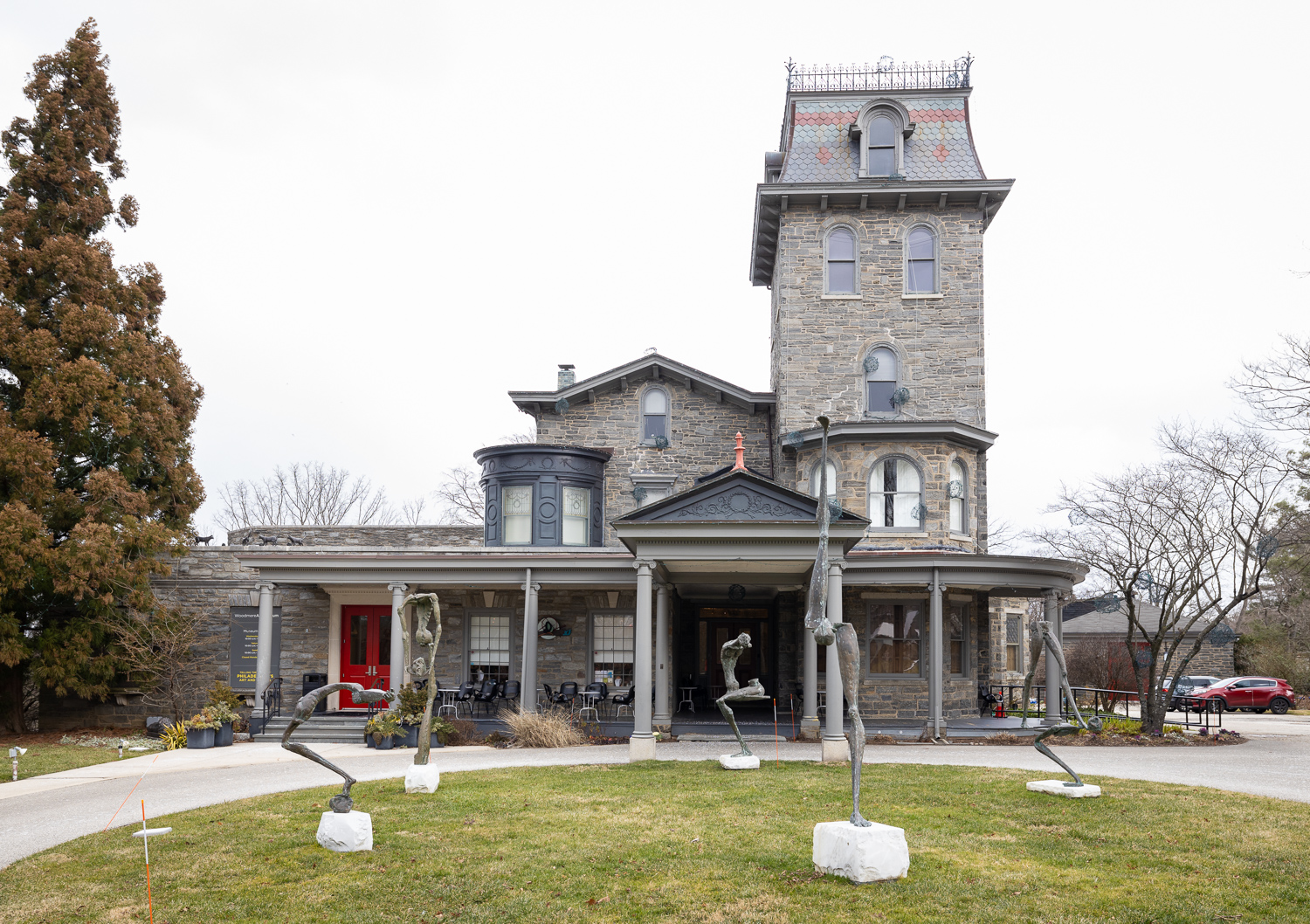
But I’m getting ahead of myself! When you first arrive at Woodmere, on your way to the entrance, you’ll pass a sculpture by Harry Bertoia that I have absolutely fallen in love with.
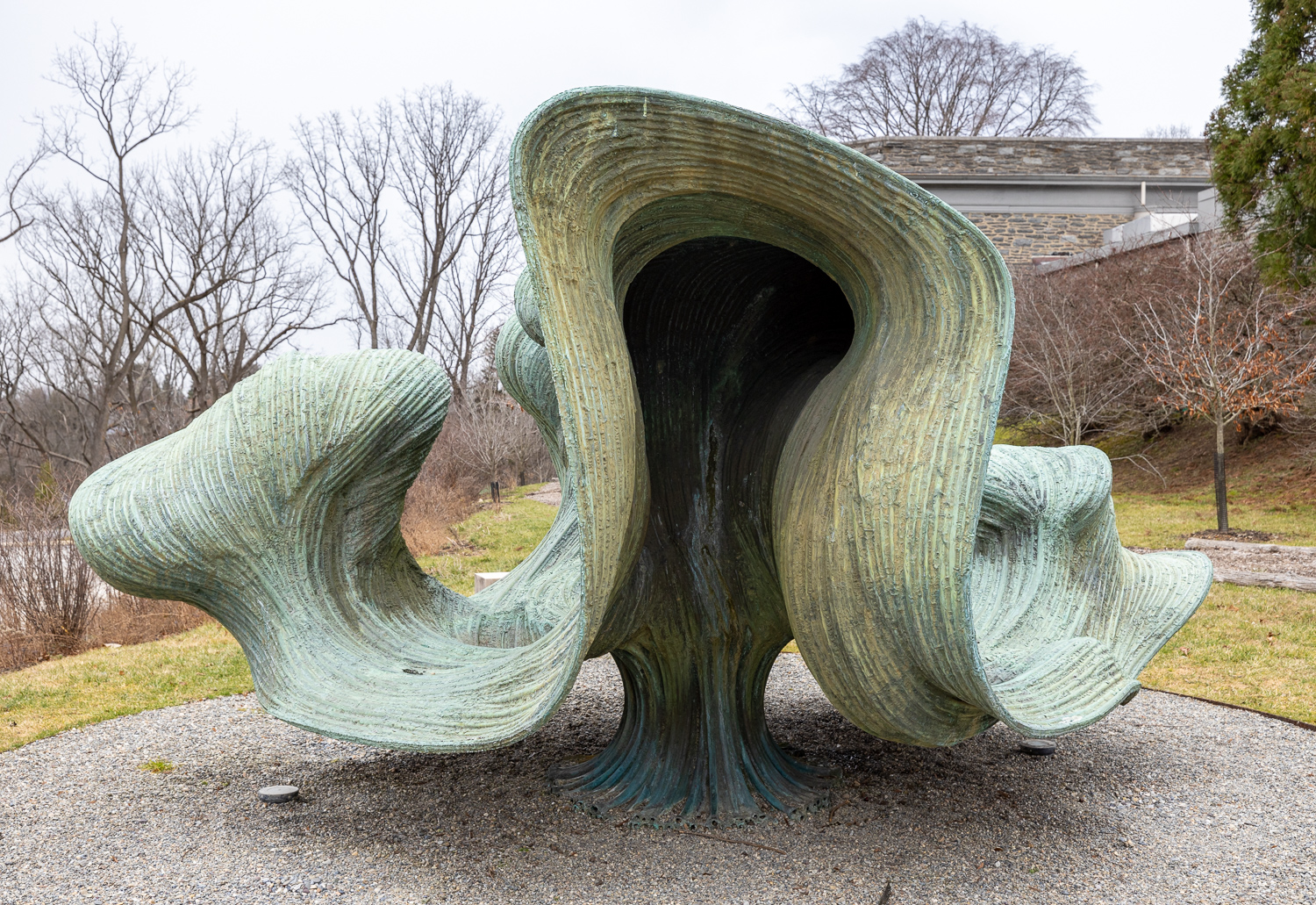
Free Interpretation of Plant Forms was originally created as a Percent for Art program project in front of the Philadelphia Civic Center. Here’s what it looked like then. When the Civic Center was demolished in 2000, the sculpture went into storage, and it was such a big deal when it resurfaced in 2016 for relocation to Woodmere that The New York Times wrote an article about it!
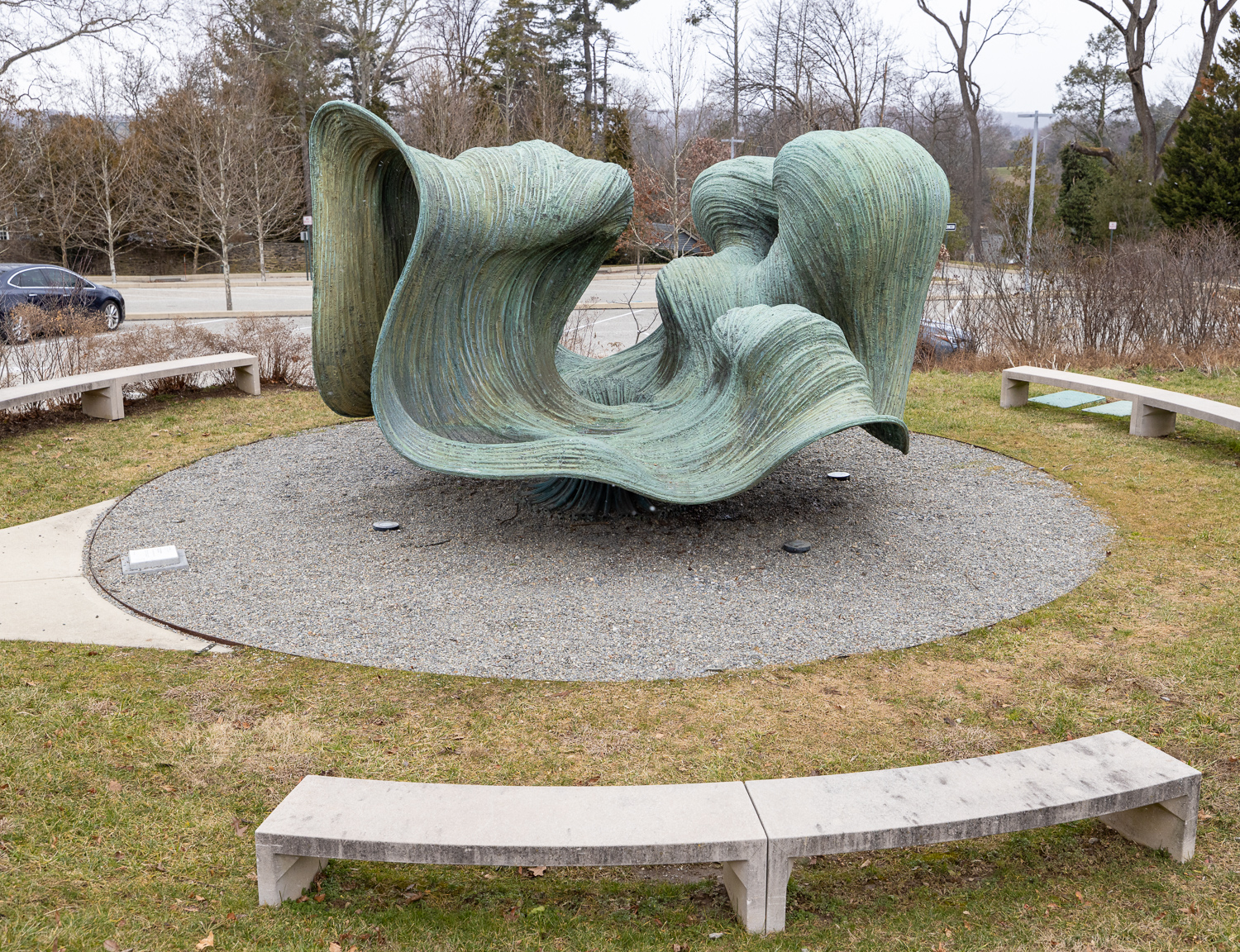
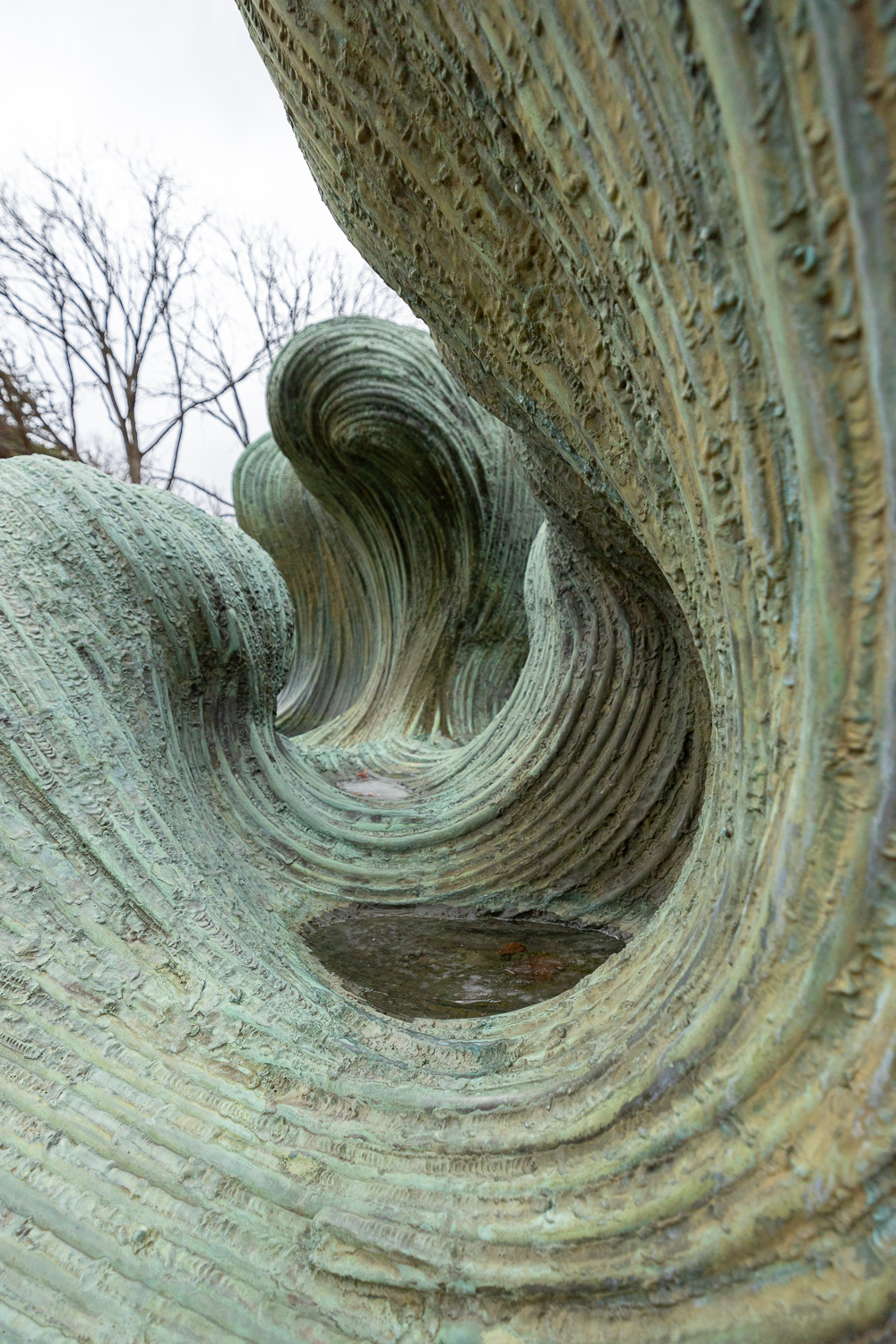
I really get it—it’s an awesome sculpture that feels very different from different angles, and was designed to invoke all sorts of natural imagery, from trees and flowers to waves and caves. Furthermore, Bertoia invented the process he used to create the sculpture!
More on sculpture later. For now, since it’s wintertime, let’s head into the museum.
Woodmere’s galleries have multiple personalities. One is full of rather traditional portraits in a historically preserved room. But it also has a dollhouse and some object art.

Another, the largest, has two levels, and serves as an event and performance space. But it still has architectural charm in its odd shape and delightful spiral staircase used to access the upper level.
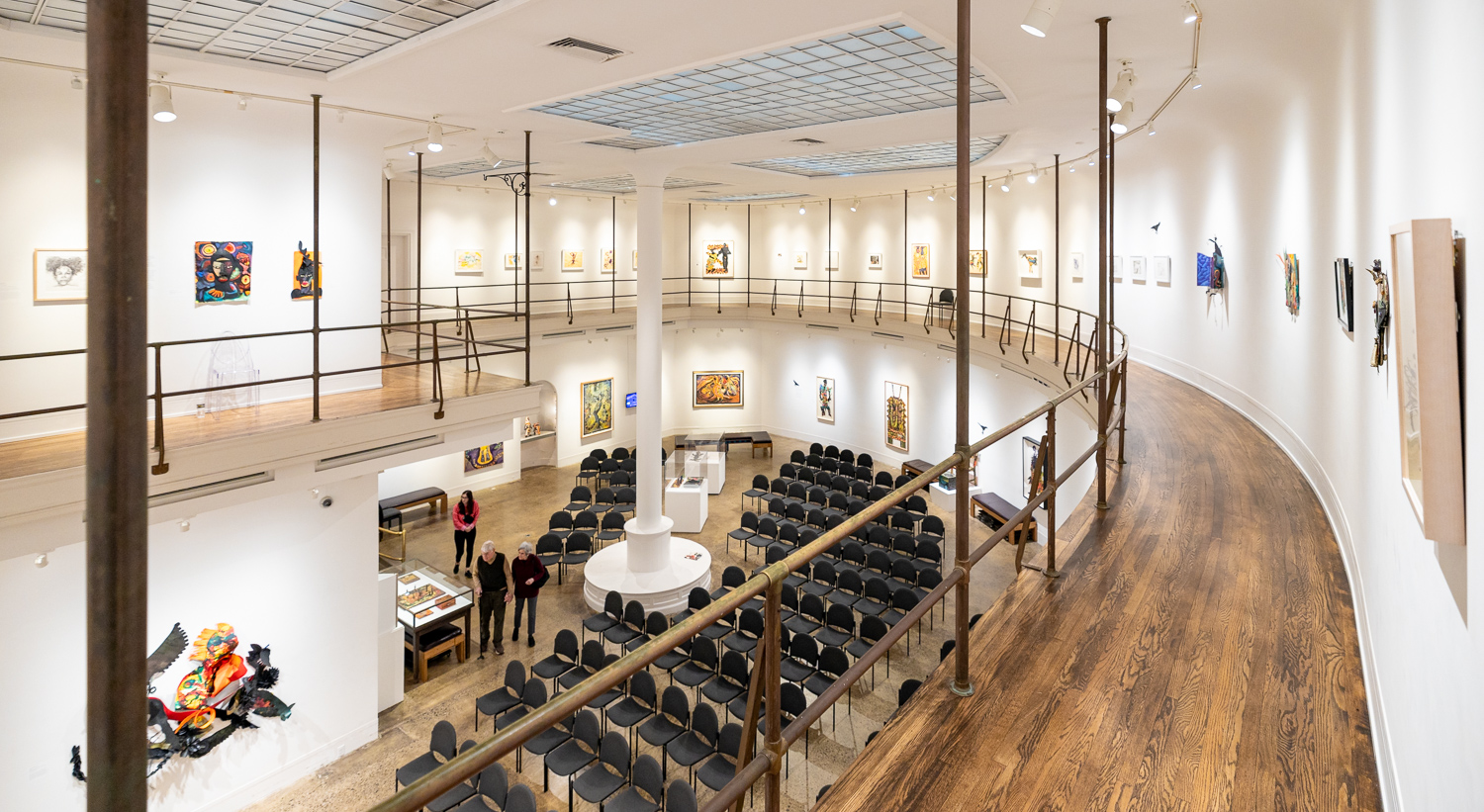

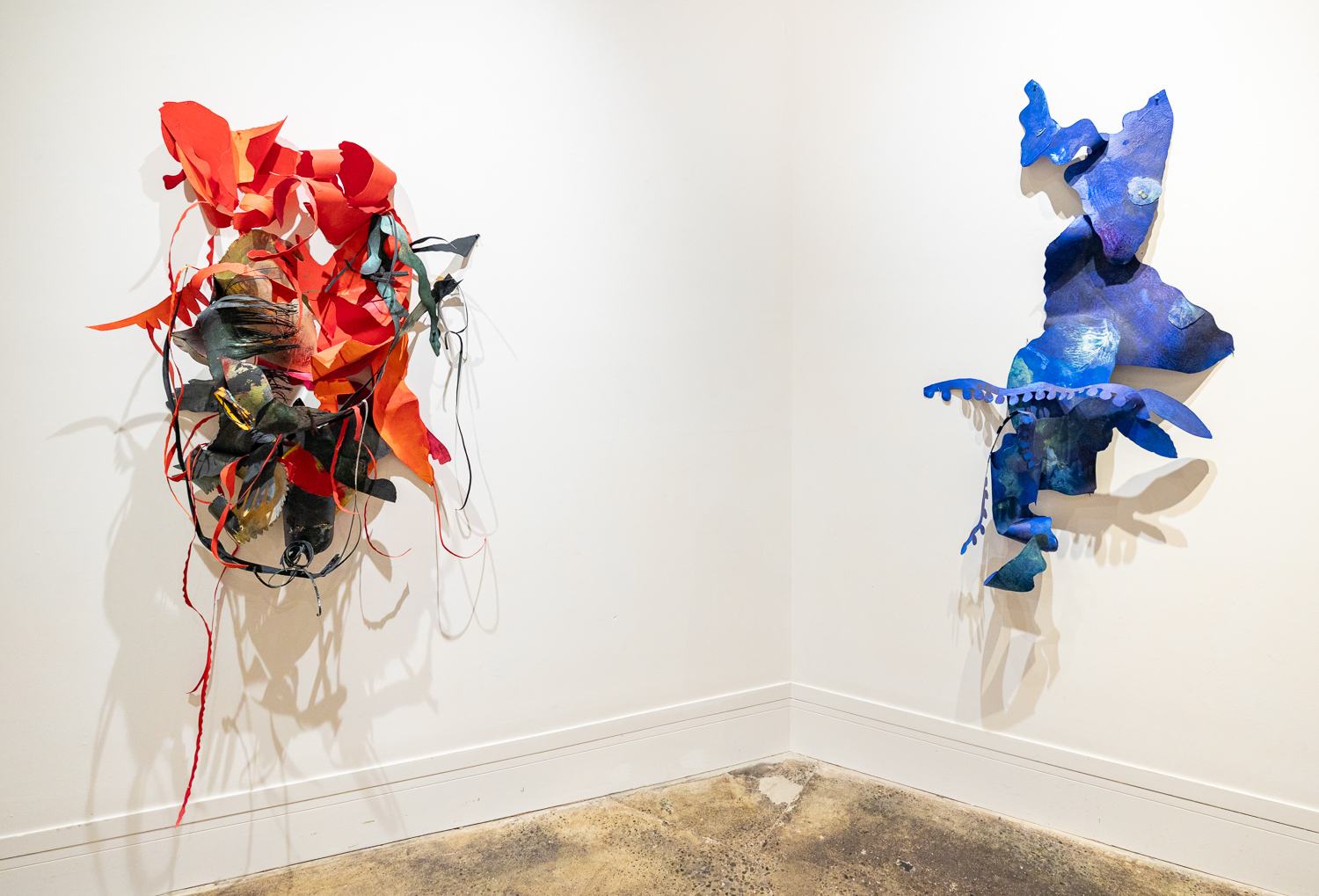
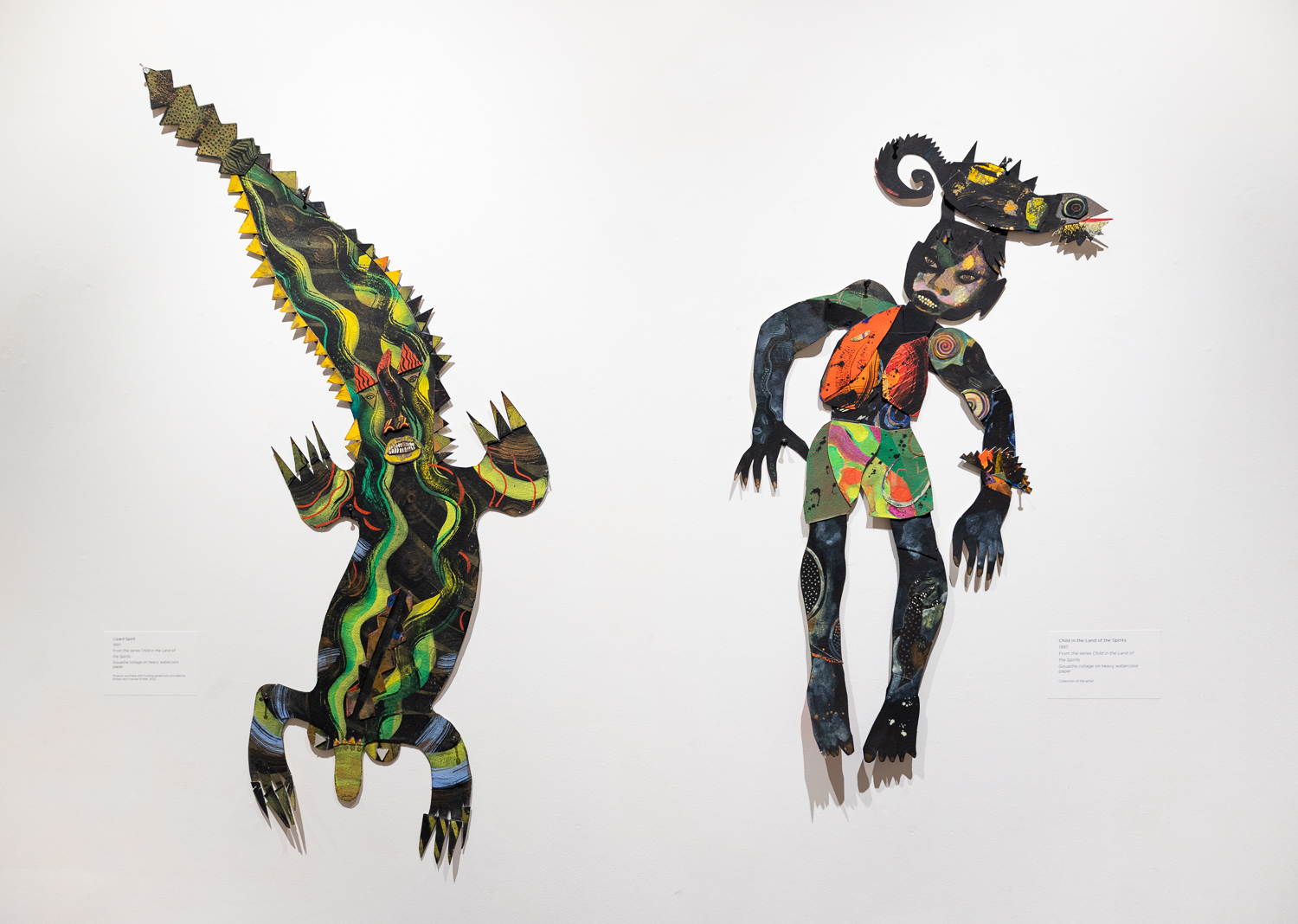
Personally, the current exhibition wasn’t doing it for me, but I did like a few of the pairings.
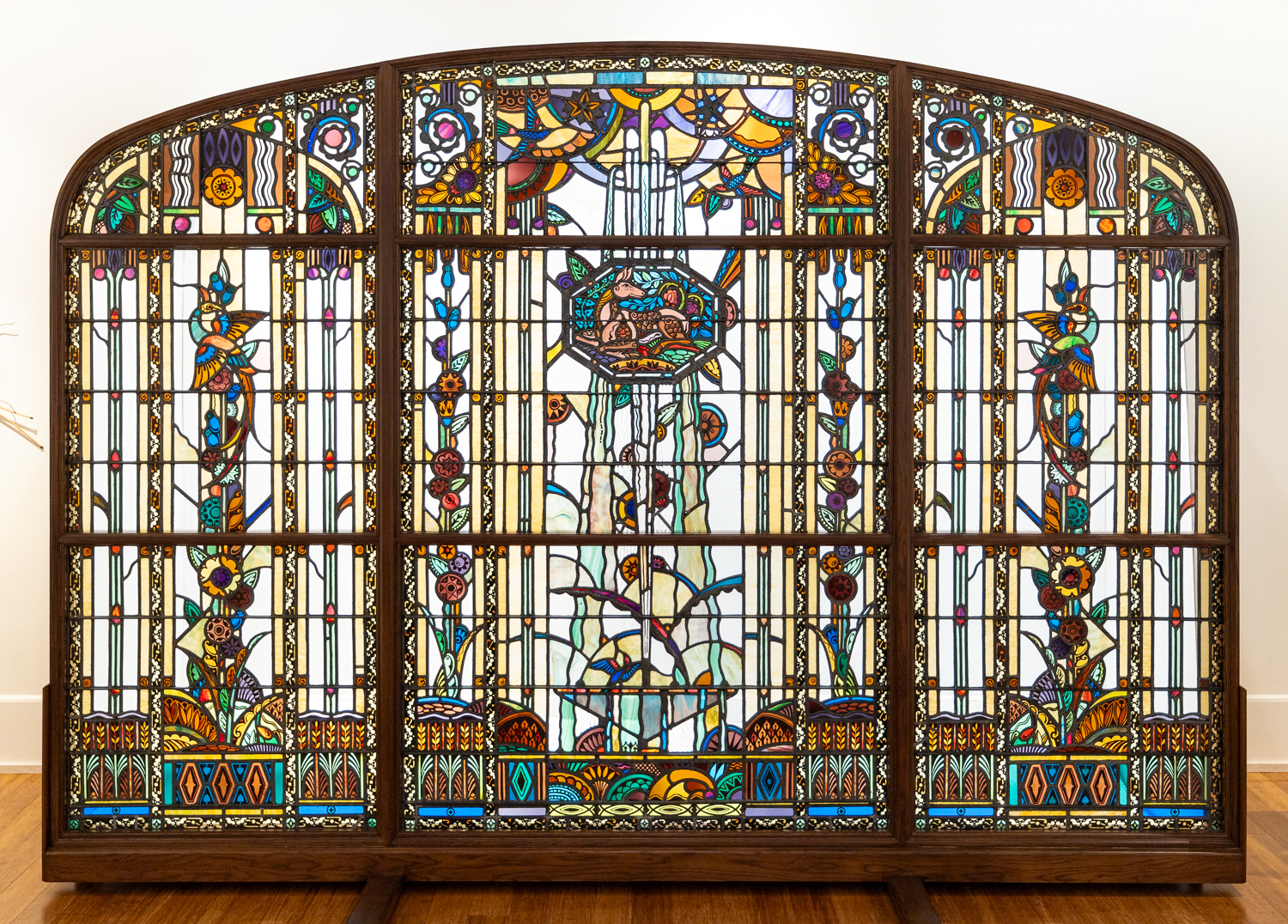
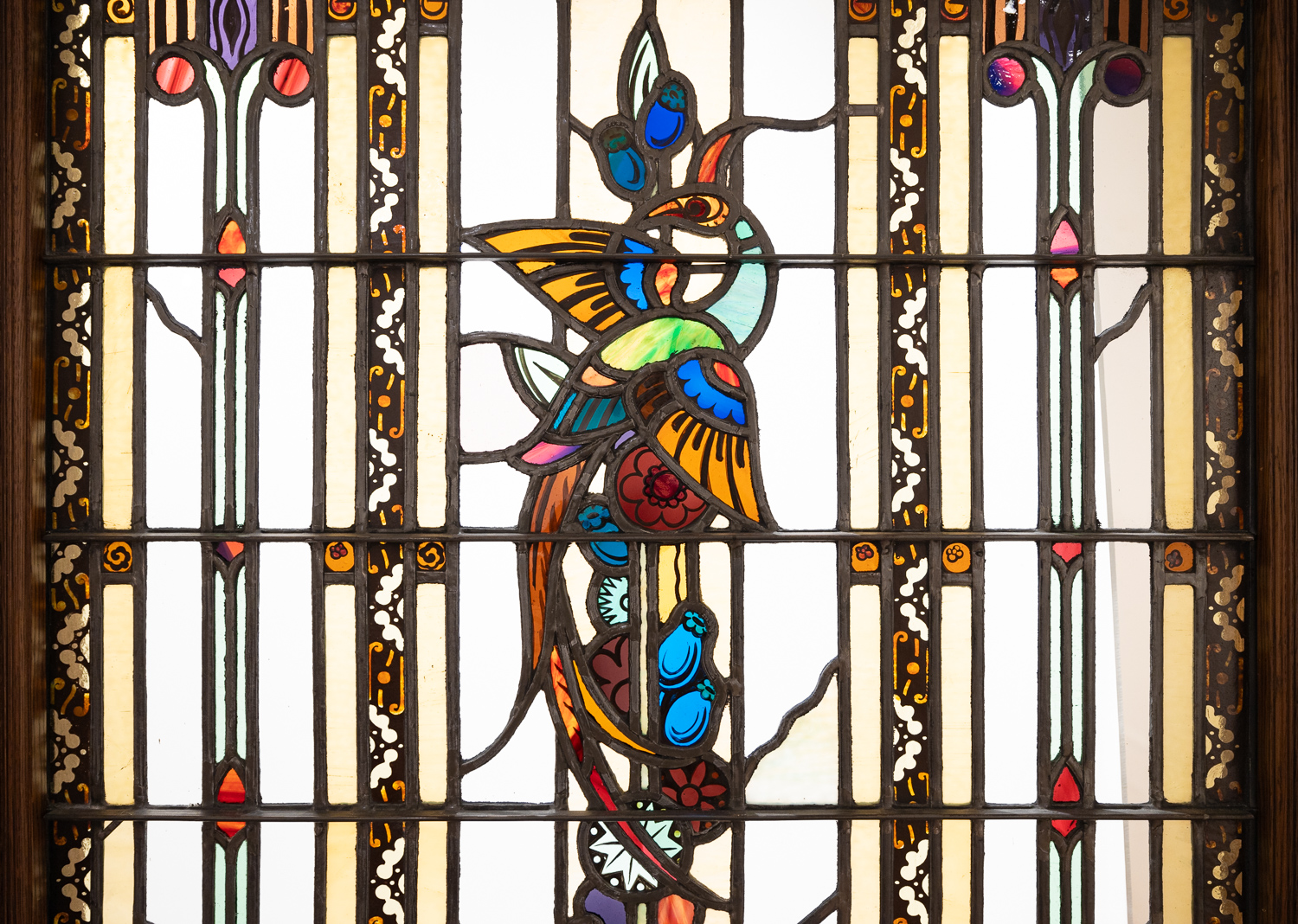
There’s also a small gallery with this amazing stained glass window. It was originally created by Nicola D’Ascenzo for a Horn & Hardart at 16th and Chestnut Streets.
Yet another gallery is devoted to the works of student artists at Wissahickon High School.
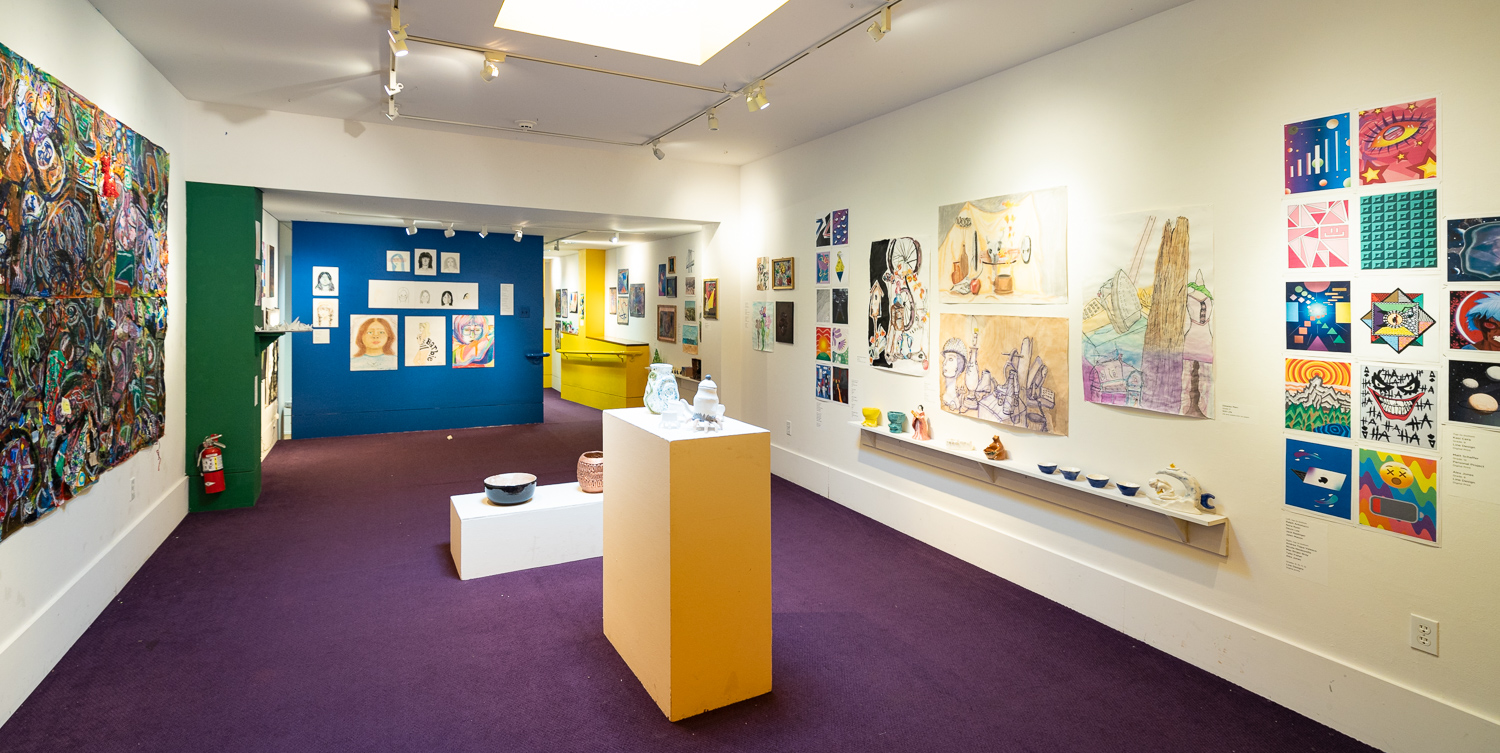
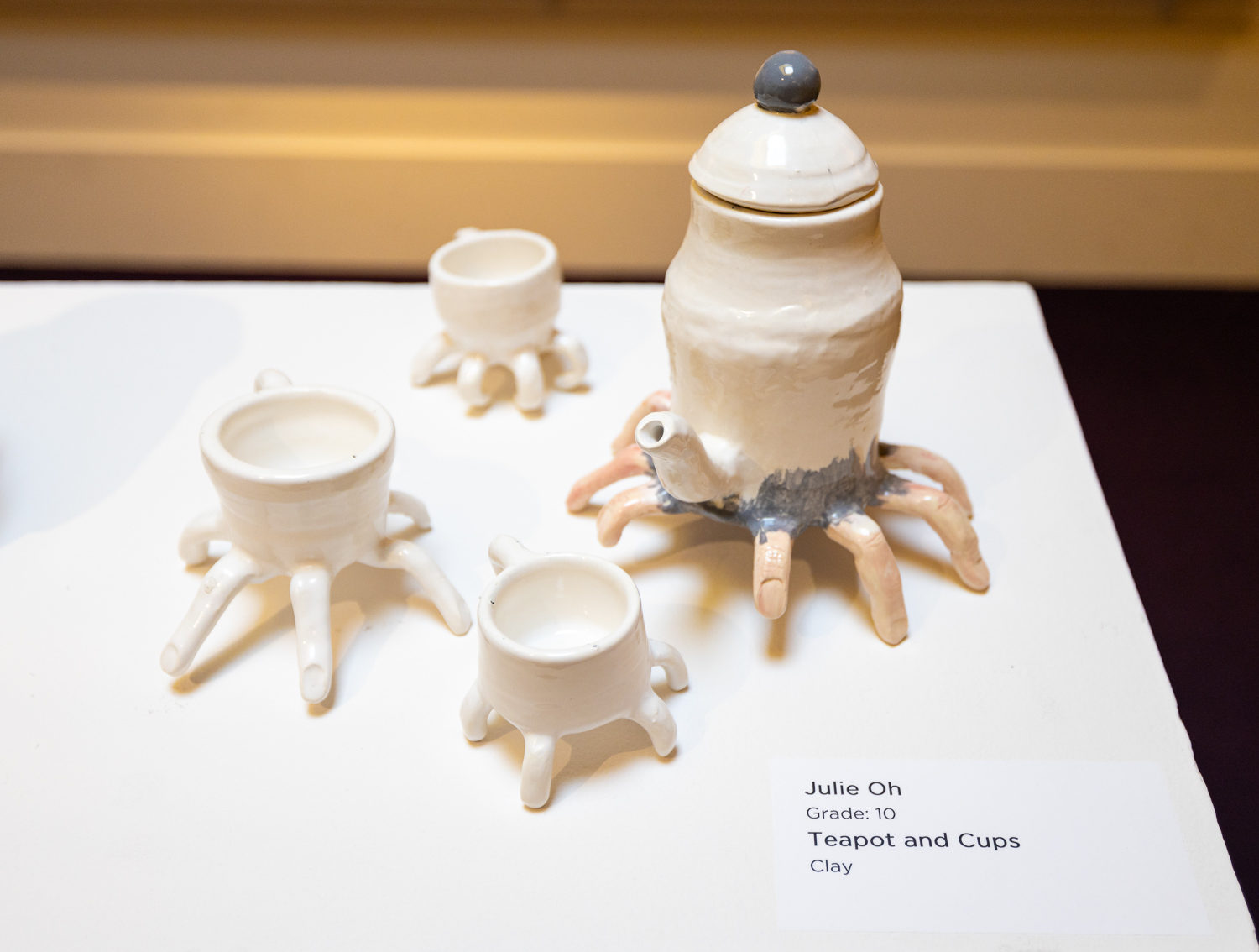
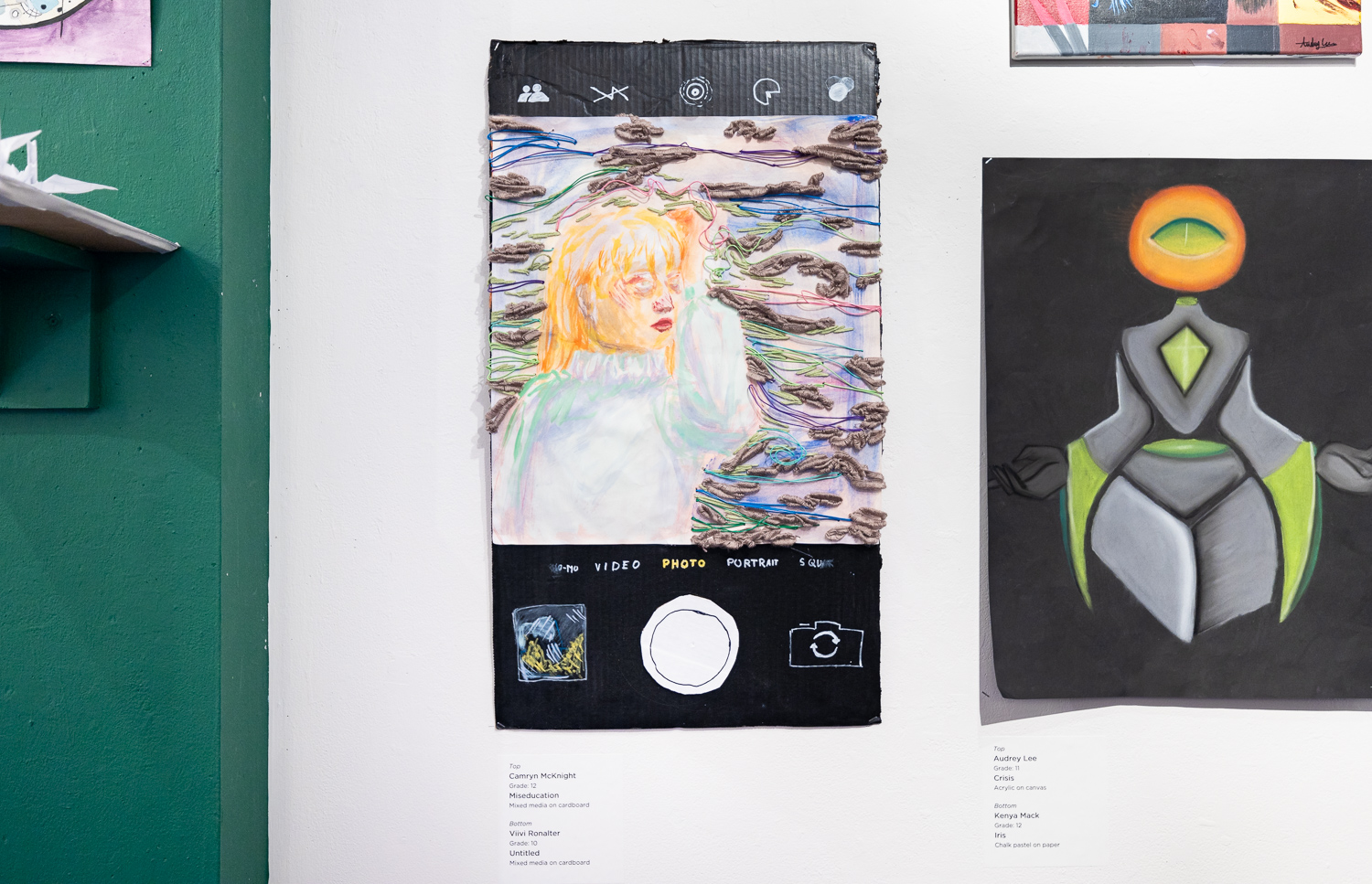
Is this what artwork by Gen Z will look like?
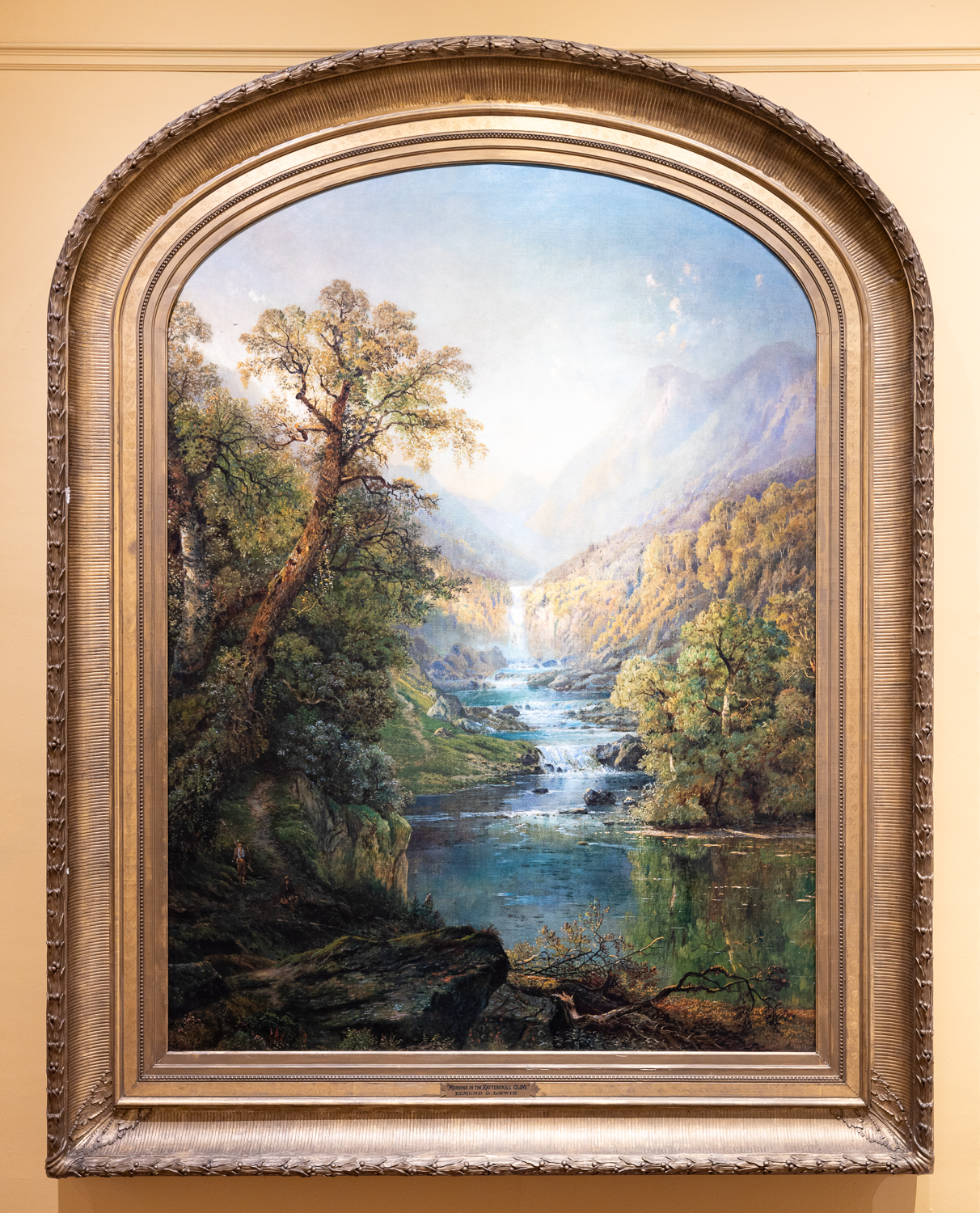
But my favorite gallery was definitely the Hudson River School parlor. Woodmere describes it as Philadelphia’s best collection of this art movement, and I’m inclined to agree. I mean, one of the pieces in their collection has a companion piece in the National Gallery of Art in D.C.! Also check out the audio tour of this room.

Before you exit, there’s a small gift shop with wares by local artists.

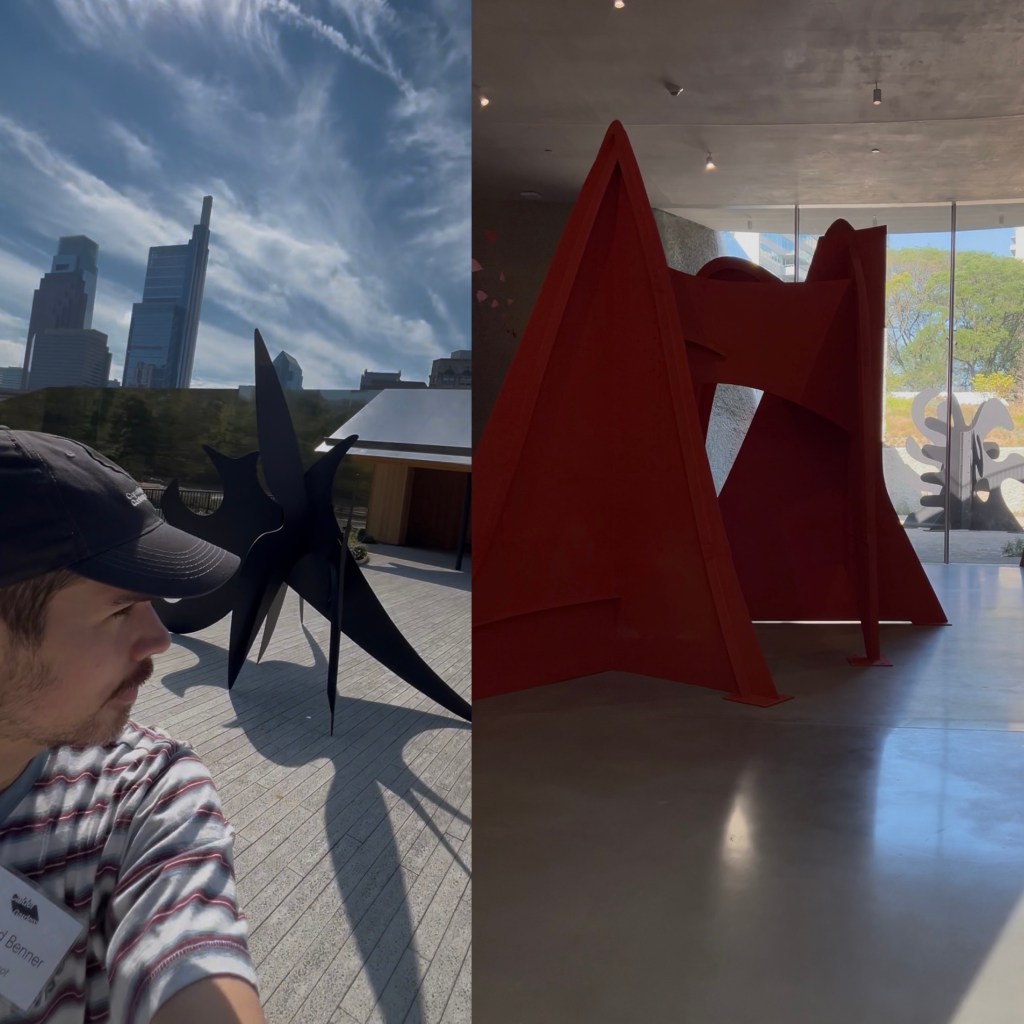
As we transition back outside, indulge me with these two artsy photos I took.
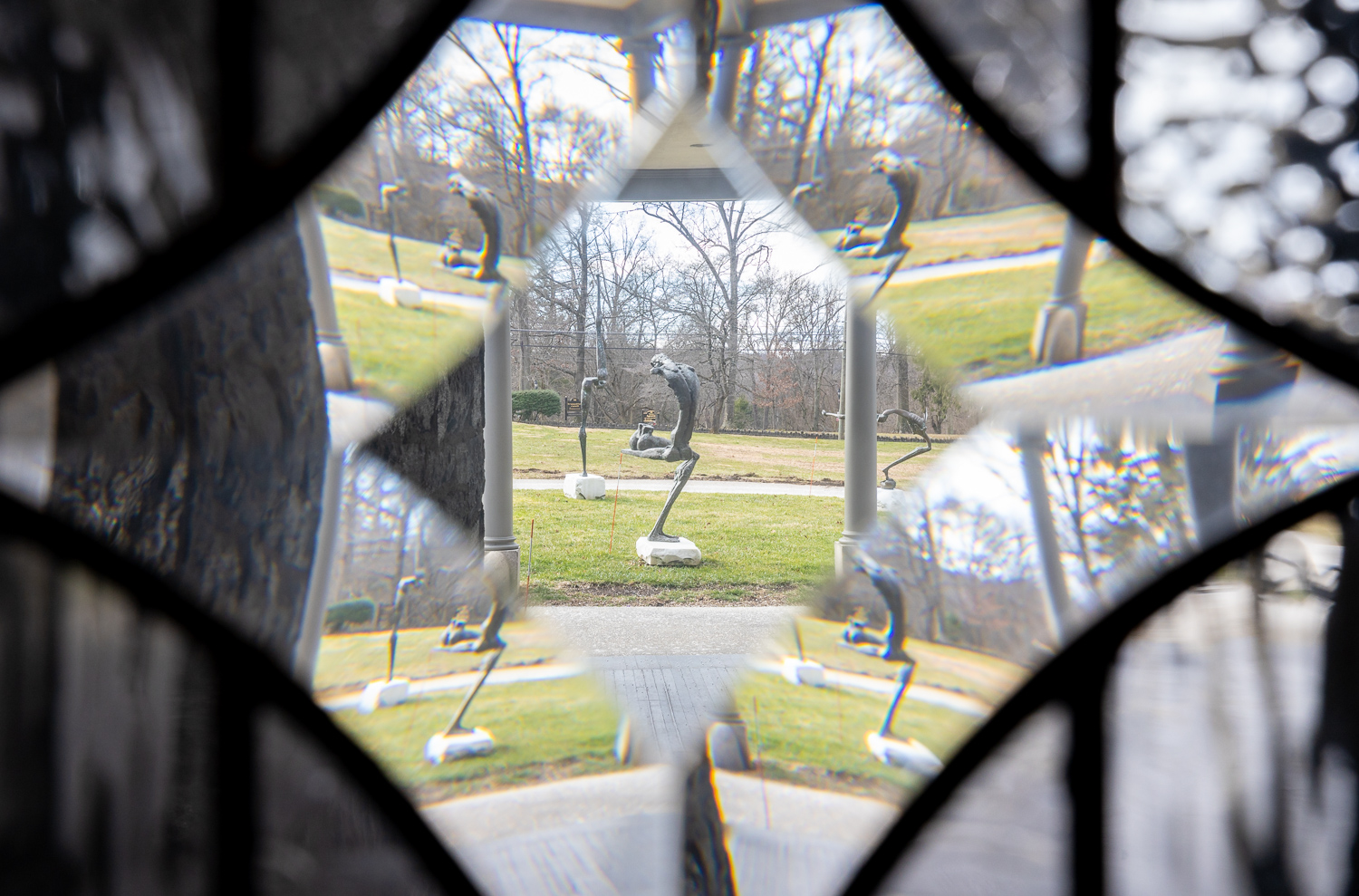
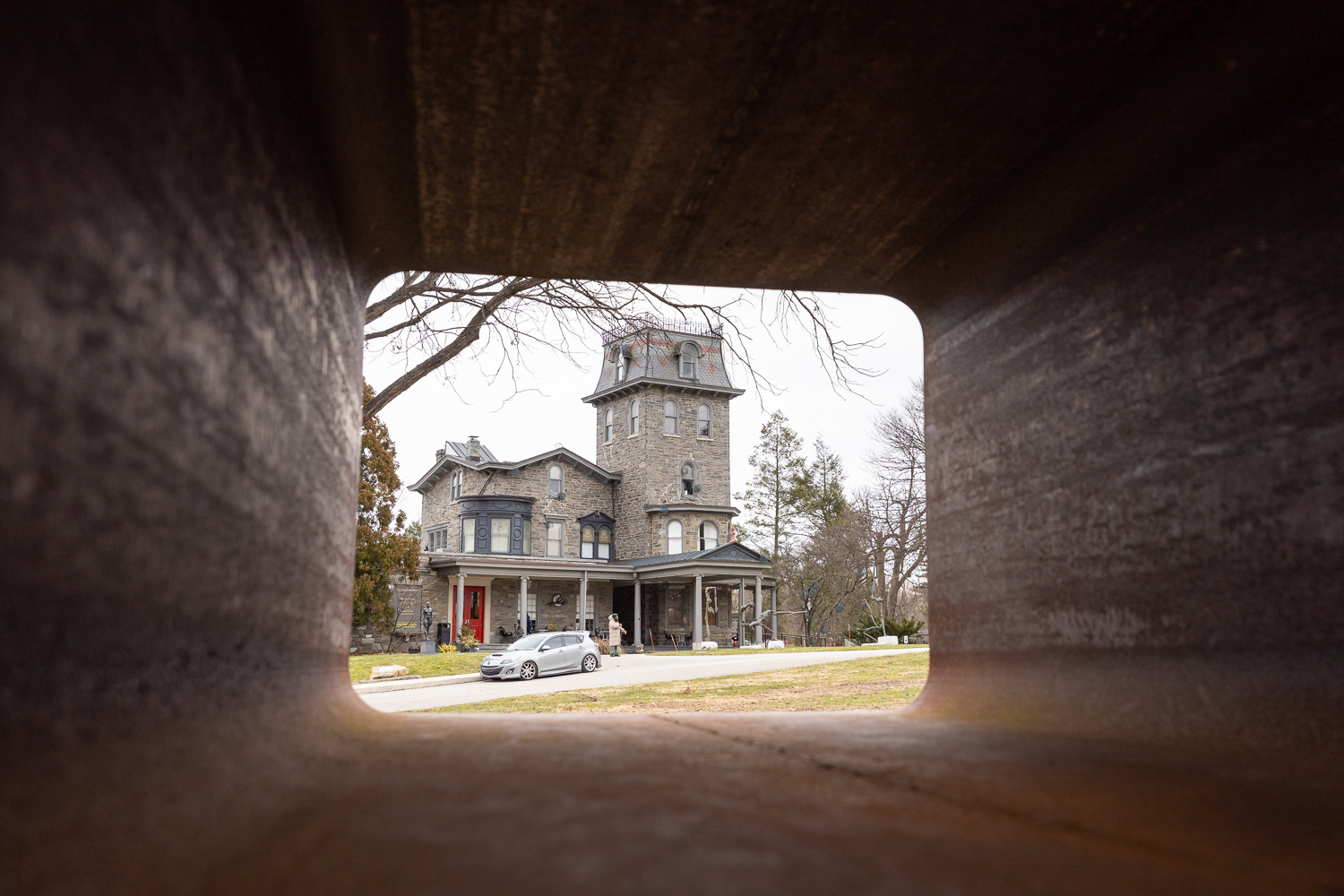
So yes, Woodmere has a number of large sculptures on their grounds. They also have plenty of room to grow this collection, which hopefully they do! All of Woodmere’s outdoor sculptures can be found on an interactive map hosted on their website, and it’s one of the best virtual guides of this nature I’ve ever seen. There’s well-written information about each piece, and suggestions for appreciating it and experiencing it in a different way. Highly recommend! Like, there are even videos showing the installation of some of the massive sculptures.
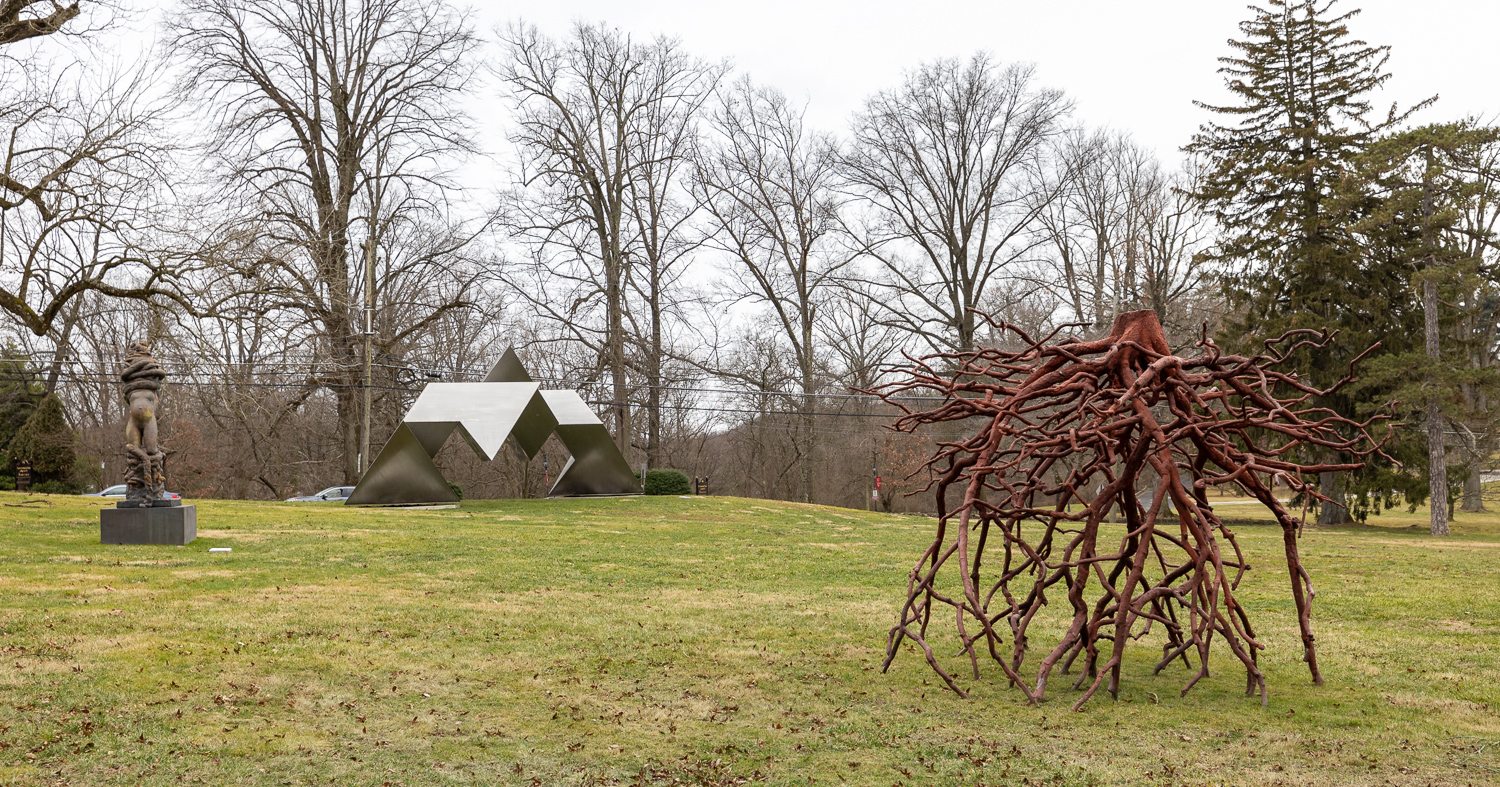
It’s clear that connecting to the natural world is important to Woodmere. Nearly all of their sculptures draw inspiration from nature in some way. One of them, which can be found down “Rot Road” on the Bells Mill side of the property, is more permaculture than art!

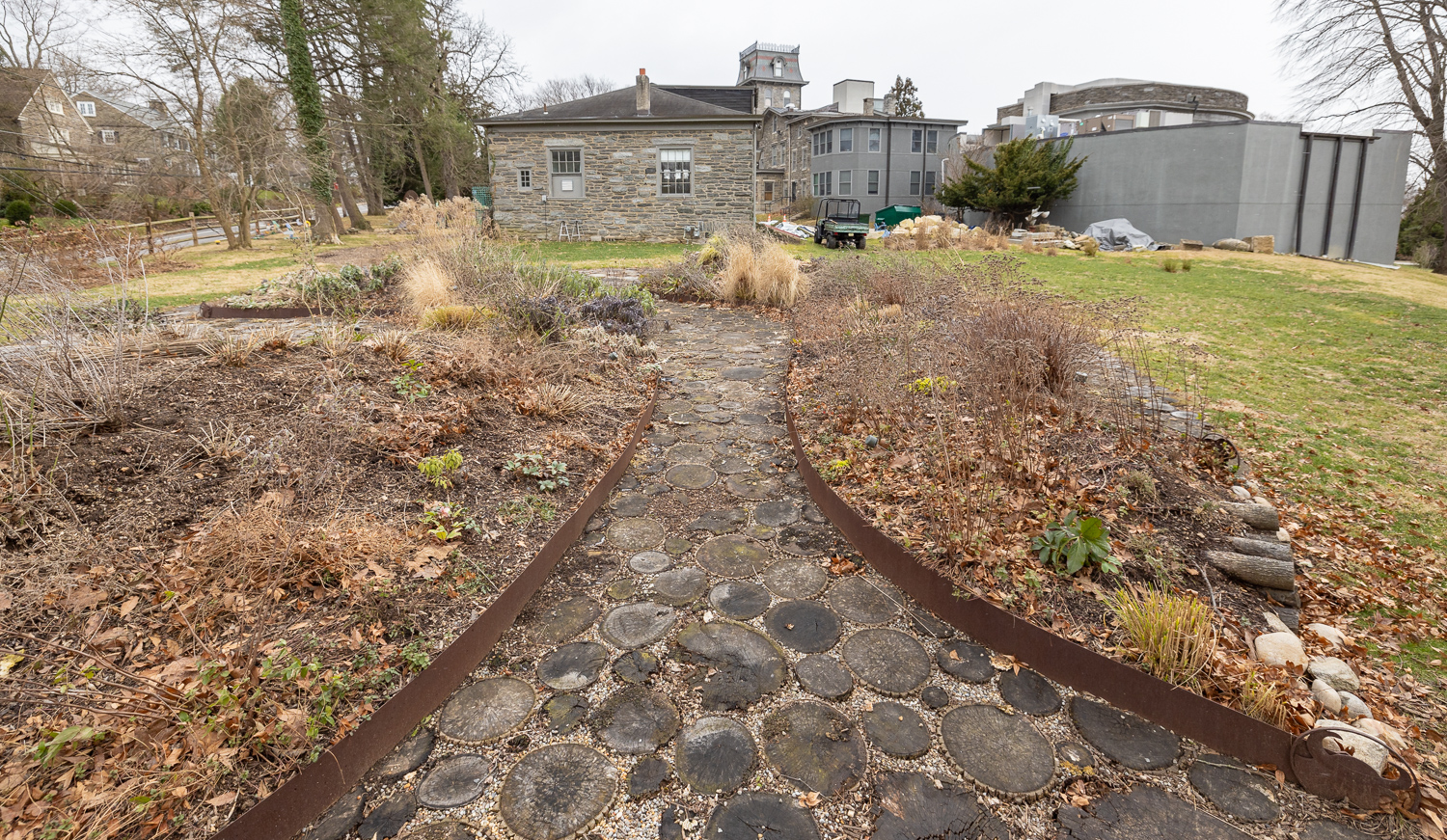
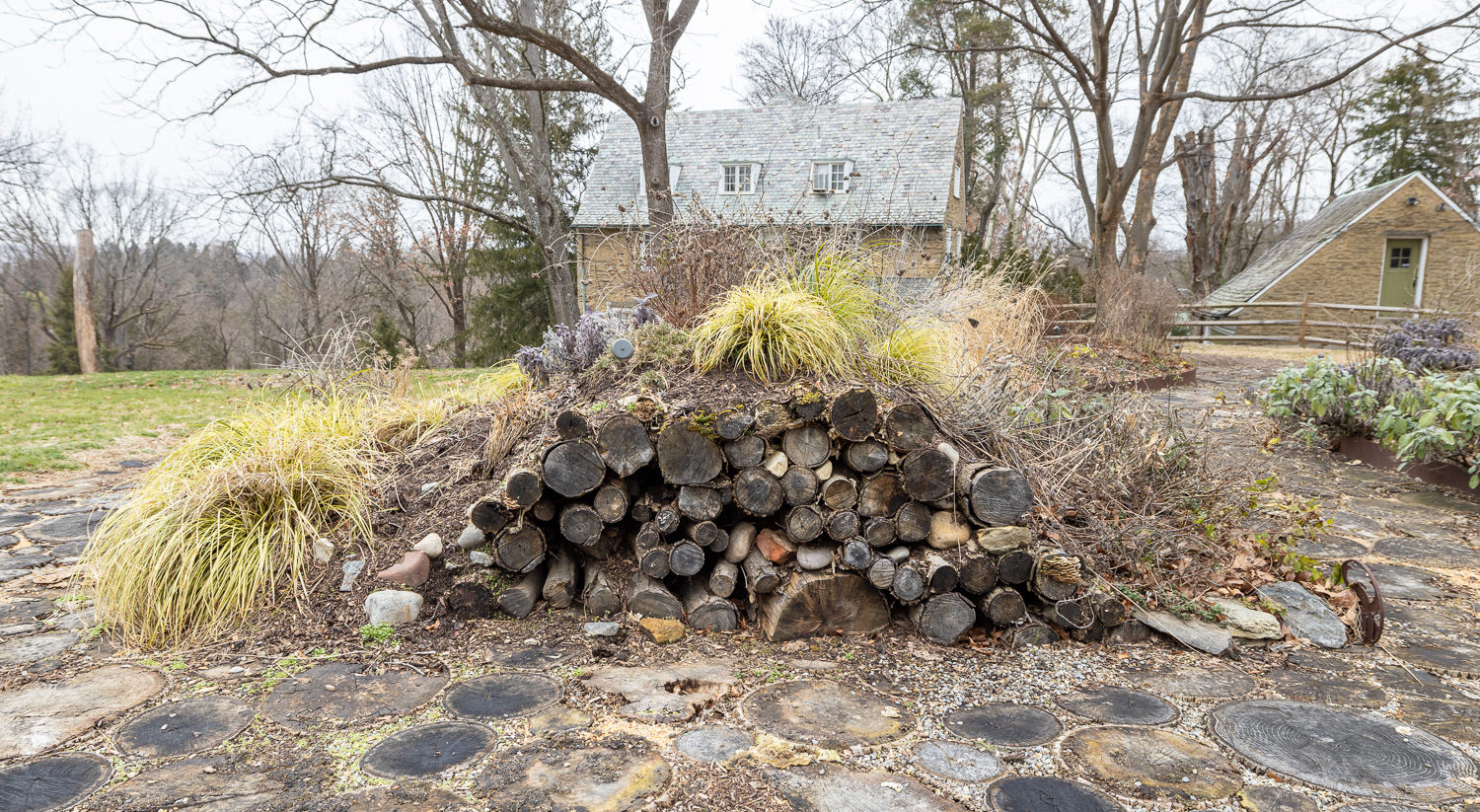
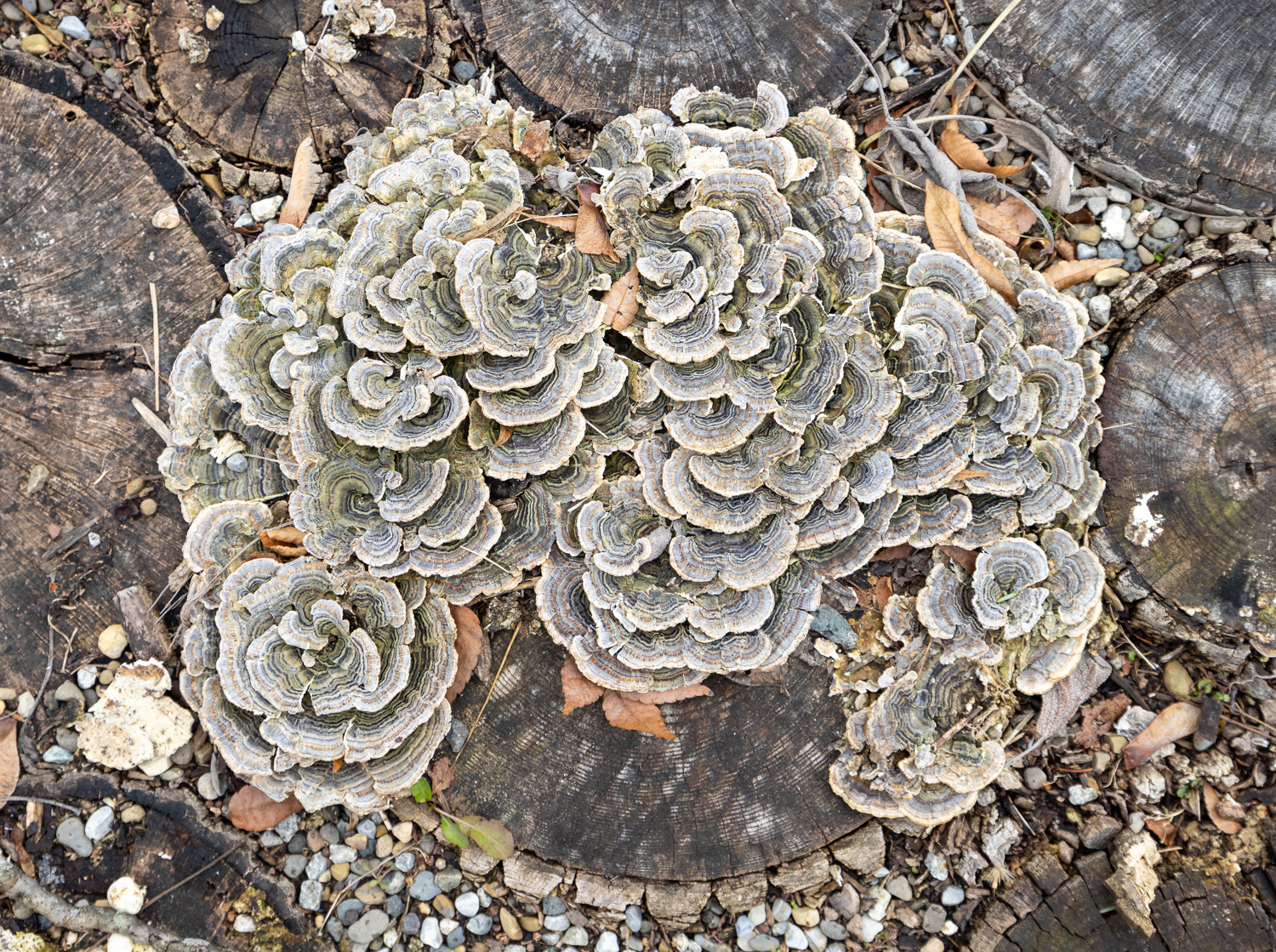
La Cresta is a pair of hügels (piles of logs covered with soil) planted with native species. As the logs decay, they unlock nutrients for the plants above, and also produce heat, which can extend the growing season. Syd Carpenter and Steve Donegan, the creators, left one end open so you can see the hügel cross-section. As you walk around, look down so you don’t step on the beautiful turkey tail (or perhaps false turkey tail) fungus growing on the paving blocks, which are also intended to decay.
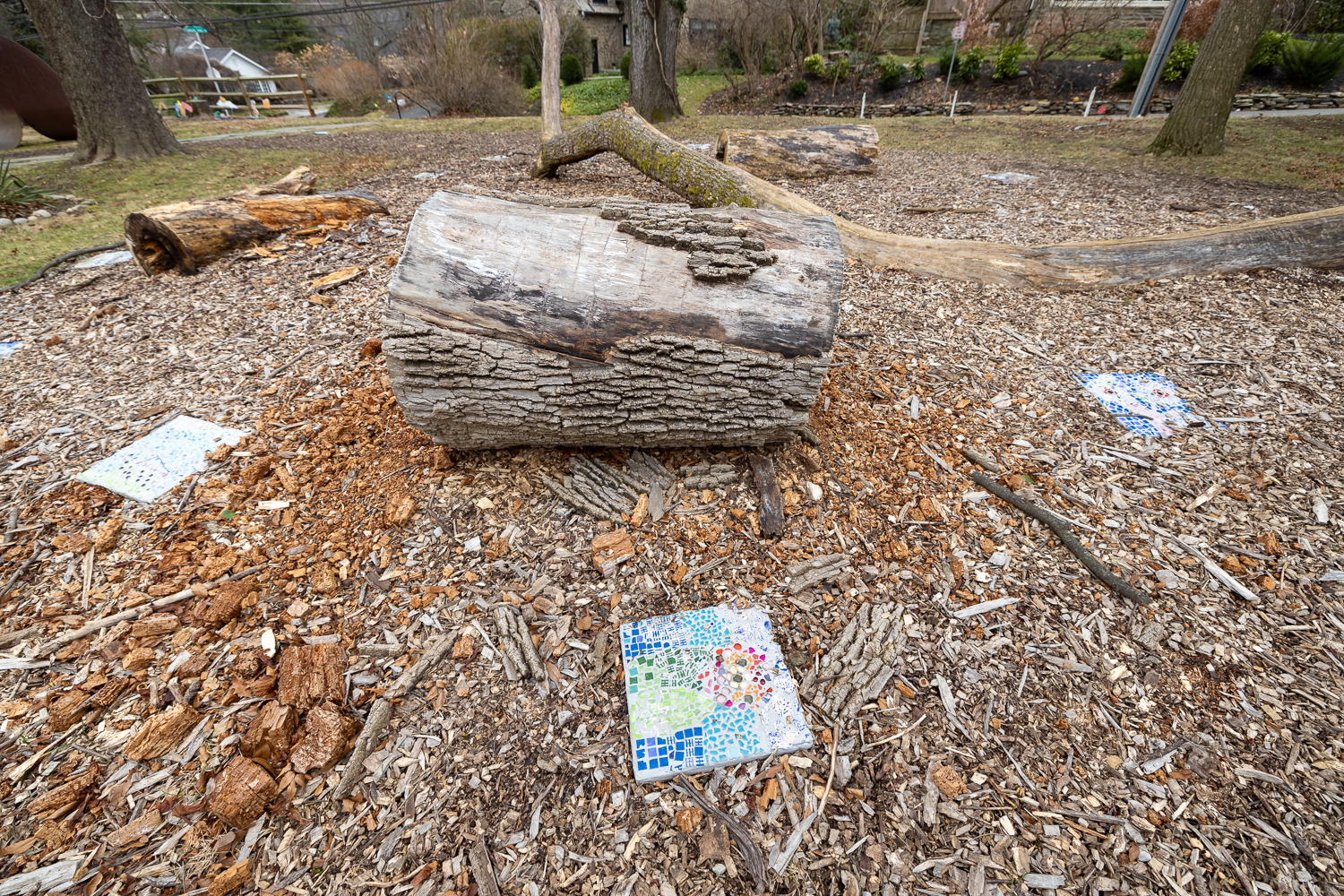
More natural decay can be found elsewhere, from a stand of dead trees to a log-based play area with mosaics on the ground.
Woodmere even has a stormwater retention pond and locally-quarried runoff-slowing stones behind their parking lot to reduce their burden on Philadelphia’s combined sewer infrastructure. There’s also an accessible outdoor amphitheater for warm-weather classes. Classes, lectures, and performances for both adults and children are actually a major part of Woodmere’s programming, even all through the winter (indoors, of course).
That’s Woodmere in a nutshell! I was impressed. This museum really cares about Philadelphia and is doing a great job of welcoming young people into the world of art, displaying and interpreting the art in their collection, and simultaneously engaging in environmental preservation. One last note about that—in 2022, Woodmere was able to purchase another large, historic mansion just a block down Germantown Avenue, saving the four-acre property from being razed and turned into 23 tightly-packed homes. So not only will they soon be able to expand their gallery space to display many more of the 8,000 works in their collection that are mostly in storage, they have also saved another open space from development.
Enjoy your visit if you decide to follow in my footsteps! Admission is just $10 for adults and is free on Sundays!
P.S. What is going on with this elevator?

_____________________
Read past unlocked Local Tourist columns here: The Mercer Museum, Otherworld, and a Road-free Stroll Through University City. And again, if you like these kinds of articles and want to support the growth of Streets Dept, consider joining our Patreon for as low as $5 here!
 Streets Dept
Leave a comment