
Words and photos by Streets Dept Lead Contributor Eric Dale. Orginally published in September 2023.
______________________
This post is a free sample of our monthly “Local Tourist” column, a Patreon-exclusive series that recommends interesting places to visit in the Philly area. Patreon is a membership platform that lets readers like you directly support the work we do here at Streets Dept (and enables us to operate without ads!) Bonus Patreon-only articles like this are one of the ways that we thank our members. If you enjoy it (and our other reporting), join our Patreon today for just $5/month!
_____________________
Hello and welcome to another installment of Local Tourist, your guide to places around Philly that you might not think to visit!
For this month’s column, I wandered down to a place I’ve been meaning to visit for years: the Philadelphia Navy Yard. But I’m not talking about PIDC’s Navy Yard, the massive redevelopment project that’s been transforming a former shipyard into a business center for the last 20 years.
No, I’m talking about what still remains of that former shipyard. For starters, there’s the harbor labeled “Philadelphia Navy Yard” on Google Maps, which satellite imagery shows to contain 23(!) decommissioned U.S. Navy ships. And then on the south side of League Island, which was, in fact, originally an island (shocking, I know!) there’s also an actual AIRCRAFT CARRIER. Did you know there’s an aircraft carrier in South Philly? That you can WALK RIGHT UP TO?
So let’s learn a little history. It turns out that Philadelphia is the birthplace of the American Navy, thanks to the Continental Congress, which leased land along Front Street in 1776 for naval defense. When Congress and President George Washington ordered six frigates in 1794, a shipyard in Southwark built them, launching the first in 1797. The Navy then purchased that shipyard in 1801, and according to historical maps, this spot would have been right in the middle.
The Southwark yard couldn’t keep up with more modern shipyards that were producing superior ironclad ships, and eventually, in 1868, Philly sold League Island to the federal government for $1, so that a new naval shipyard could be built there—and Philadelphia could preserve all those shipyard jobs.
This Philadelphia Naval Shipyard at the southern tip of the City operated until 1996, producing a total of 53 new ships and repairing an additional 1,218. At its peak during WWII, it employed 40,000 people, and was at one point home to the world’s largest crane. It also produced one of the most famous battleships in the country, Battleship New Jersey, which now resides in Camden, just up the Delaware River, and serves as a history museum. (Future Local Tourist column material for sure!)
The Shipyard eventually grew to be much more: a base, training center, and Marine Corps Reservation were added on the eastern end of the site, and an aircraft factory specializing in seaplane construction was built in 1910. It produced some 500 planes, and you can still see the remains of some of the runways in present day satellite imagery.
One other claim to fame for this Navy facility is its role in the development of the atomic bomb. Some of the Manhattan Project uranium that was stored there actually exploded in 1944, killing two people, and nuclear researchers working there contributed to both Oppenheimer’s work and the development of the Navy’s first atomic-powered submarine.
The Navy still has a small presence today, operating the Naval Ship Systems Engineering Station, the Propeller Shop and Foundry, and the Naval Inactive Ship Maintenance Facility.
So let’s take a look at those inactive ships, shall we? First though, let me just say that I’m no military nut. In fact I’m quite anti-military. But in the same way that I said “I’m a car guy who knows absolutely nothing about cars” when I wrote about visiting The Simeone Foundation Automotive Museum, I find these massive old ships kind of interesting. It’s really impressive the things that human ingenuity has produced—it’s just too bad that so much of our ingenuity has been applied to death. By writing this post, I in no way mean to glorify violence, so let’s call it “looking on the bright side” as we appreciate the scale, strange beauty, and astonishing proximity of these old vessels of war.
I began my journey going counterclockwise around the basin. If you’d like to visit yourself, I recommend doing this on a bike, for two reasons. First, the total distance around the edge of the basin, staying as close to the water as possible, is about 2.8 miles. (Sadly, despite the existence of Google Street View imagery, Constitution Avenue between 16th and 19th Streets is not currently open to the public, and the alternate route lets you see a whole lot of nothing.)
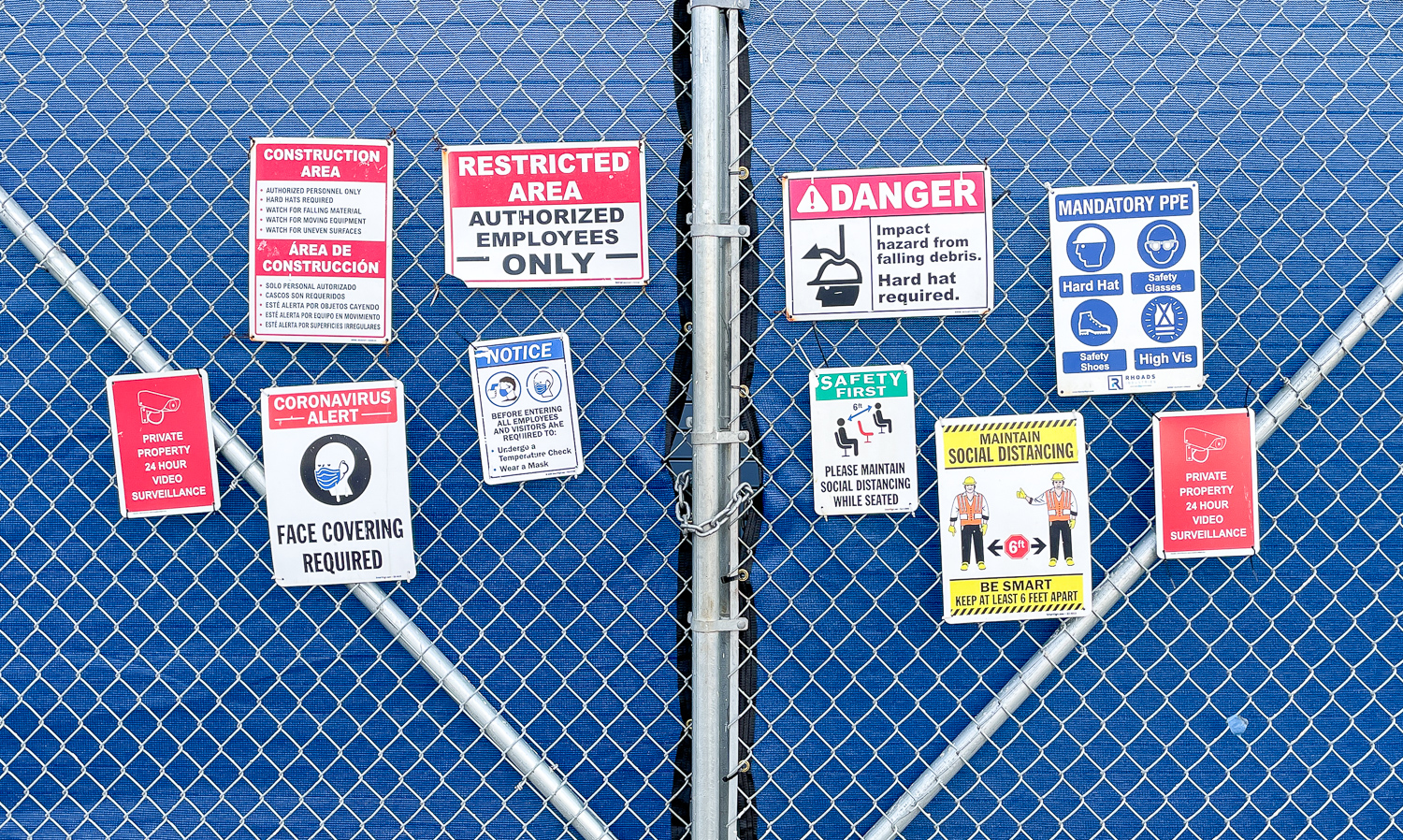
Second, in addition to the portions of the waterfront that are strictly closed, there are other portions that are… “closed,” let’s say, where access isn’t necessarily encouraged, but isn’t prevented. If I hadn’t been moving through these areas rather quickly on a bike, I wouldn’t have been surprised if someone had stopped me to ask what I was doing. So just keep these factors in mind if you strike out on an adventure of your own.
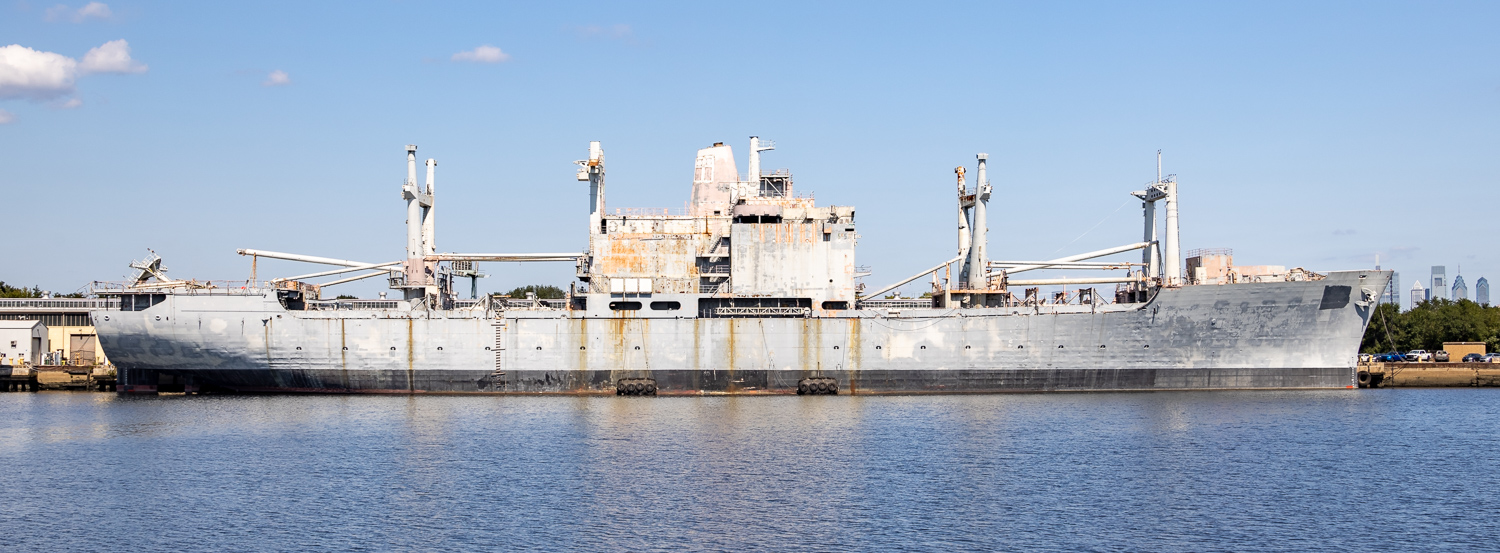
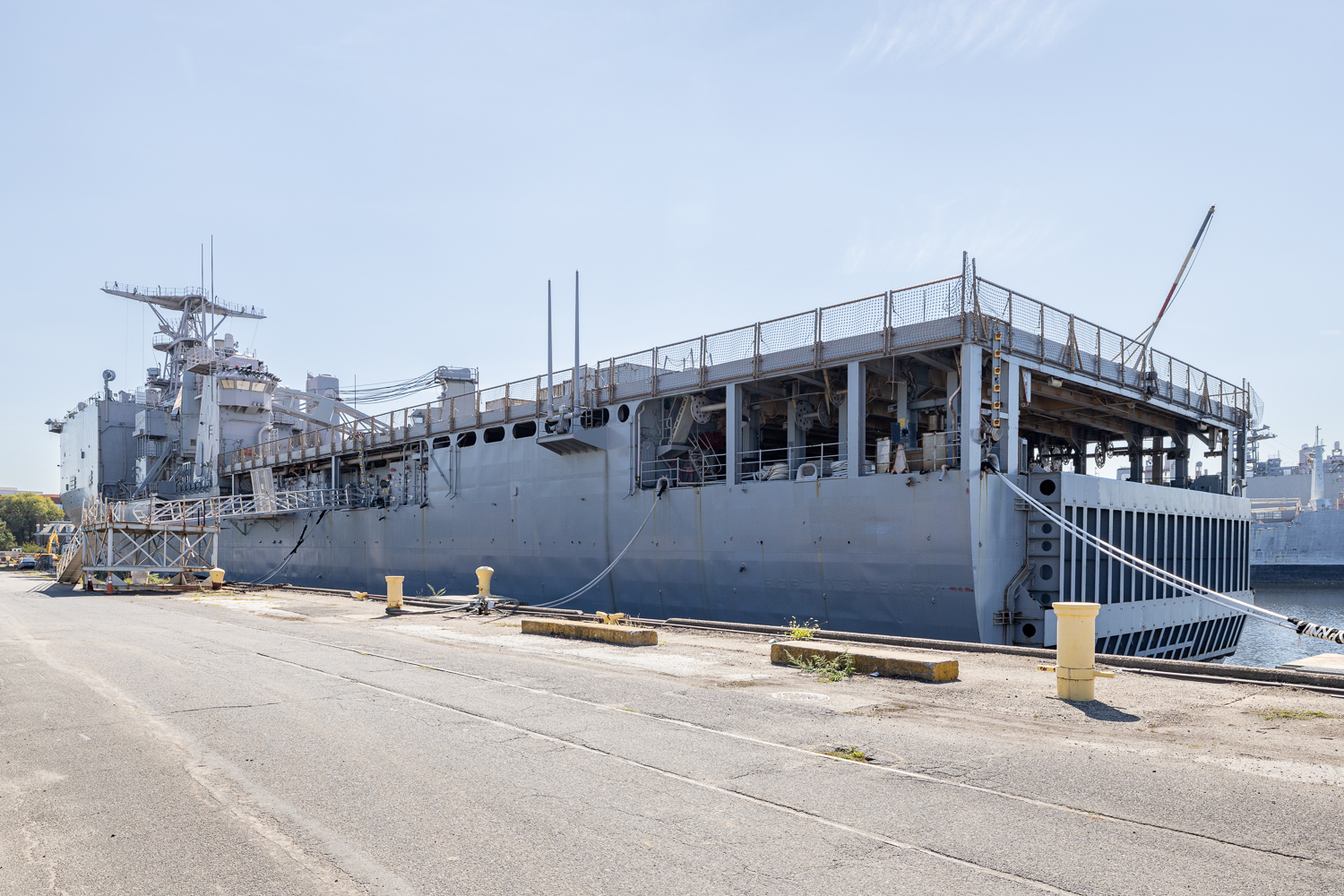
Ok, so, the first ship I encountered was the USS Fort McHenry—which also immediately presented a mystery. On Street View imagery from August 2022, you can see the number and name on the side of the back of the ship. But on my visit this month, the number and name have been painted over. I don’t care enough to try and find out why, but how strange that this ship’s name has been “buffed” (haha) in the last year!
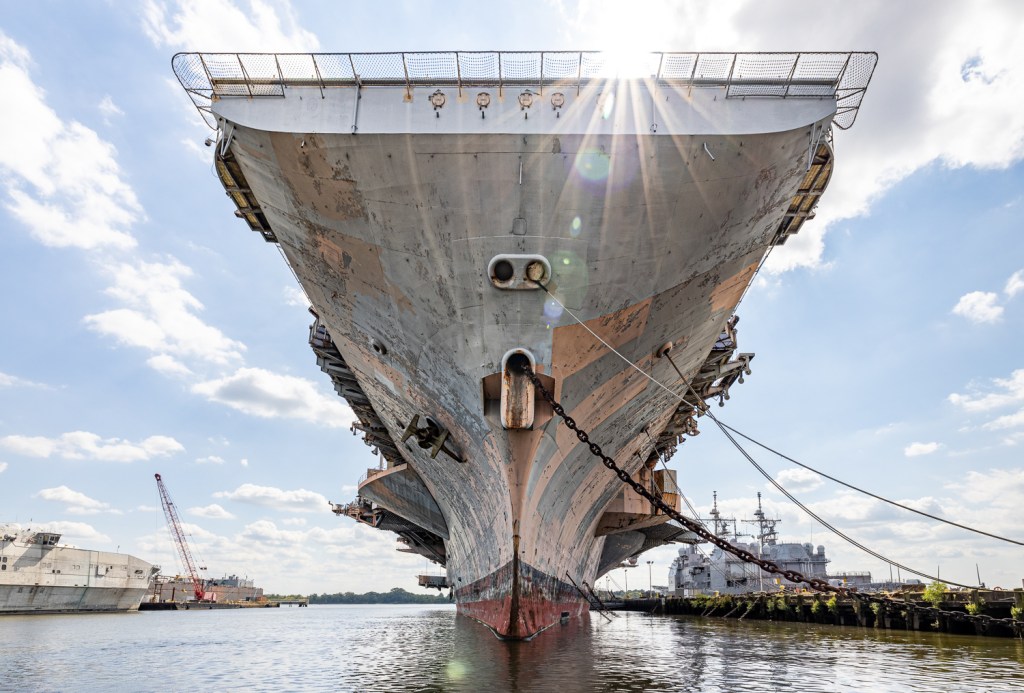
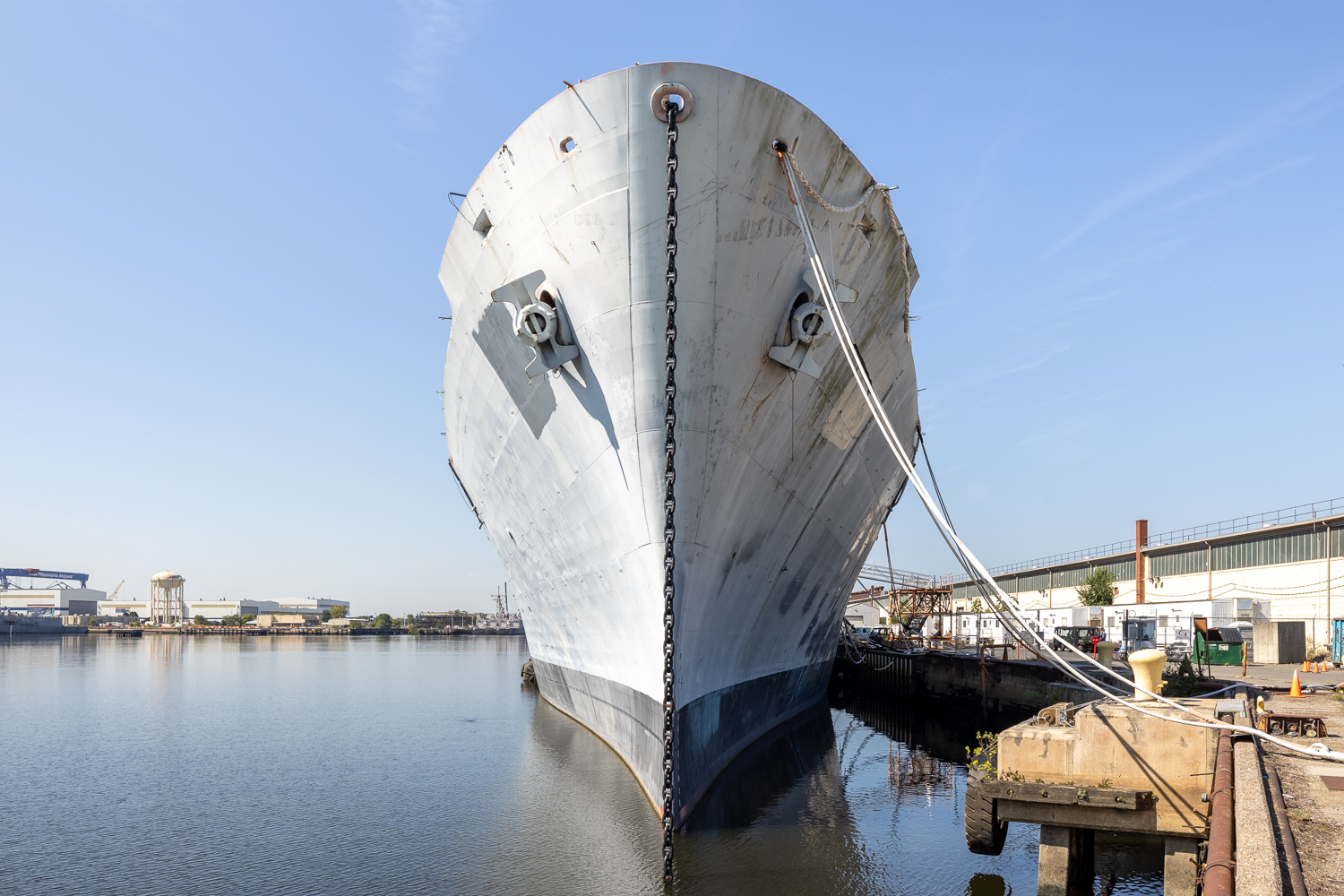
You can get a very cool view looking straight onto the bow of the ship just to the west of the McHenry, but after that, the north side of the basin is inaccessible to the public.
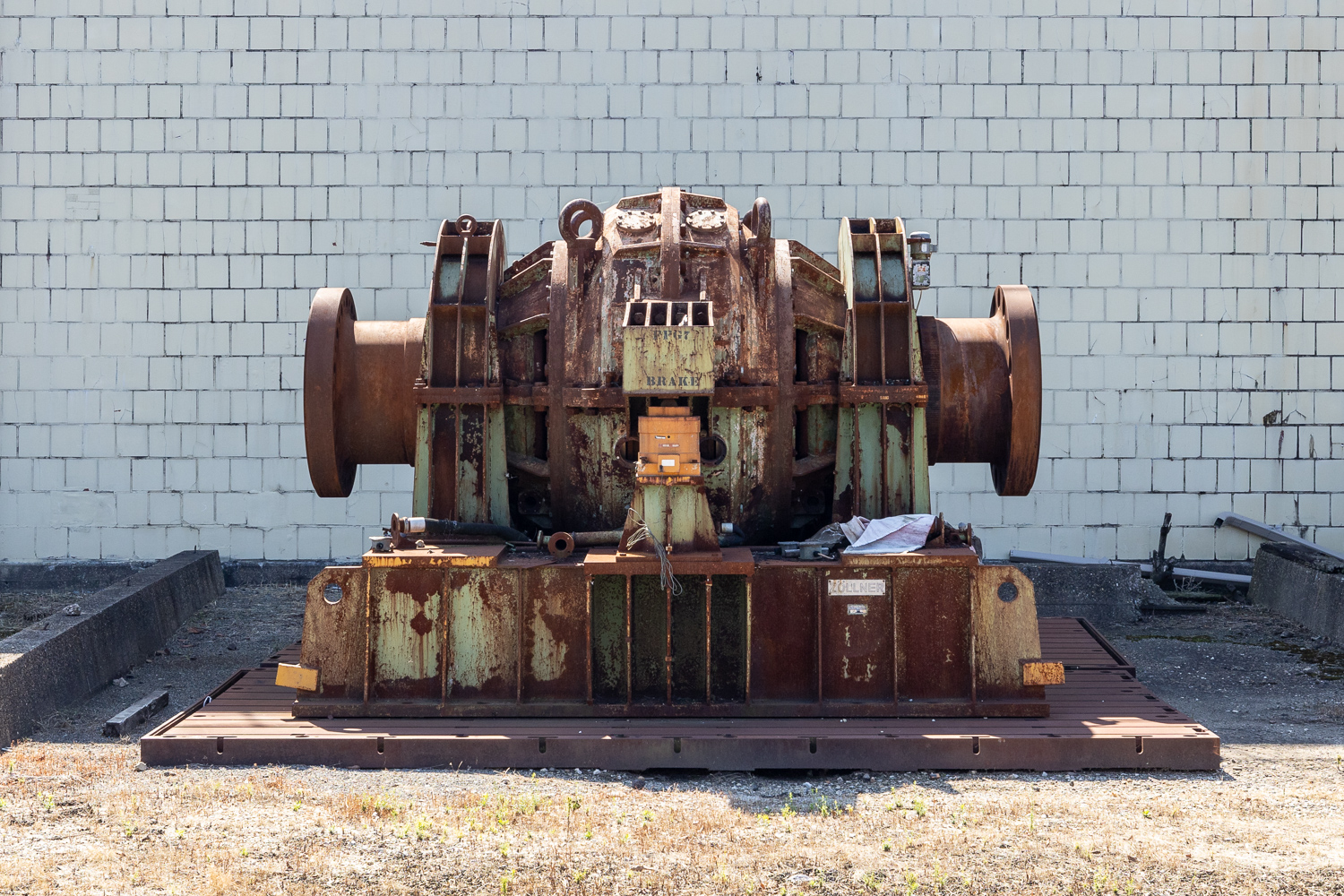
The trek along League Island Blvd. to the next site of any interest is a long one. On the way, perhaps you can ponder the functions of the old equipment that’s strewn about.
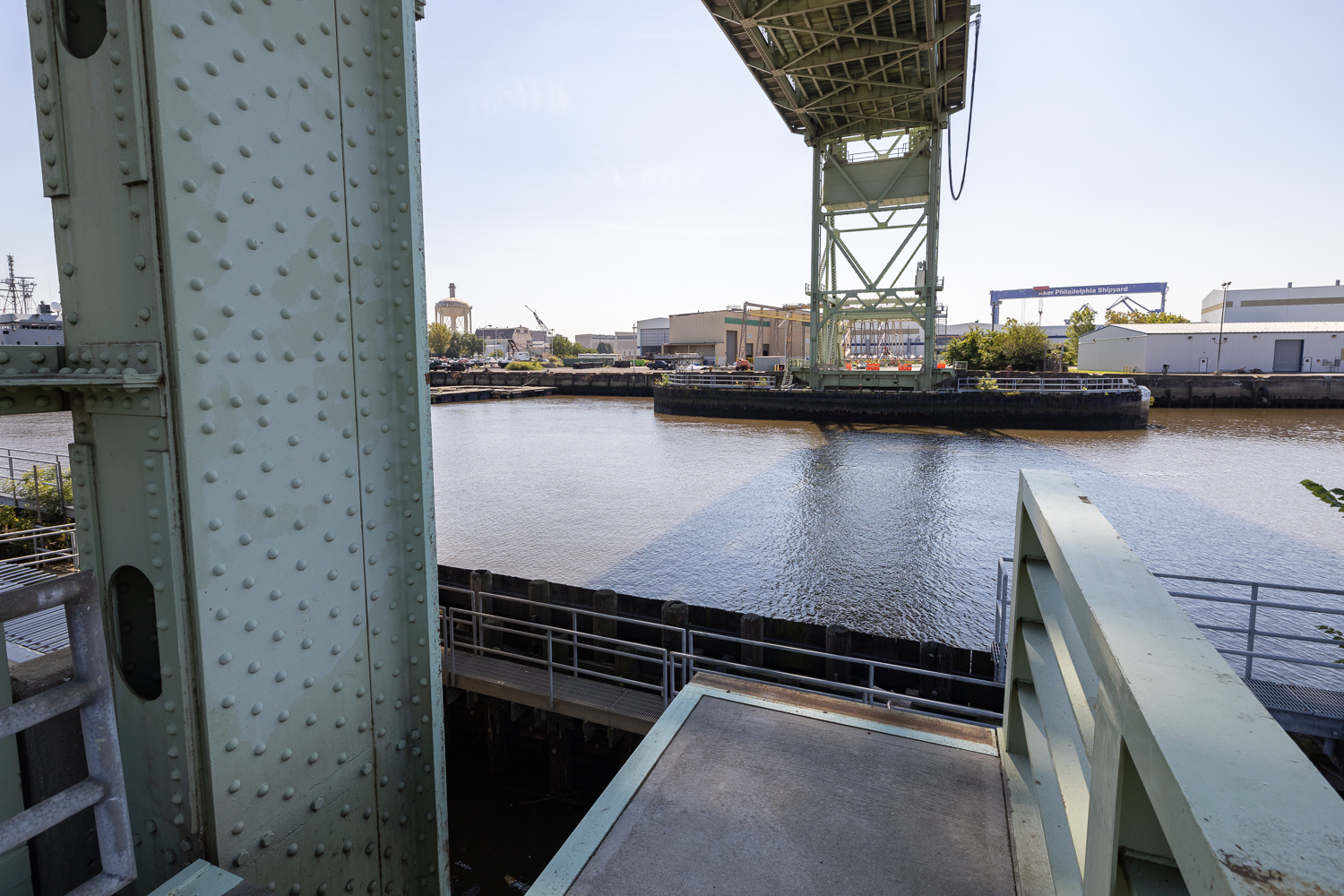
But the next site of interest is pretty cool. It’s the apparently unnamed vertical-lift bridge on 26th Street, which exemplifies a very unusual way to construct a drawbridge. There appear to be fewer than 200 major lift bridges in the world! This one was actually rehabilitated and renovated to increase the clearance from 135 feet to 150 feet in—wow, I actually could not find out what year this happened. But this $20 million project is apparently what allowed the modern shipyard (formerly known as Aker) to open here.
Unfortunately for me, the bridge was raised when I got there! It was cool that I could walk right up to the edge, but I had to backtrack in order to get to the other side. But I did get a great view of the basin and its ships.
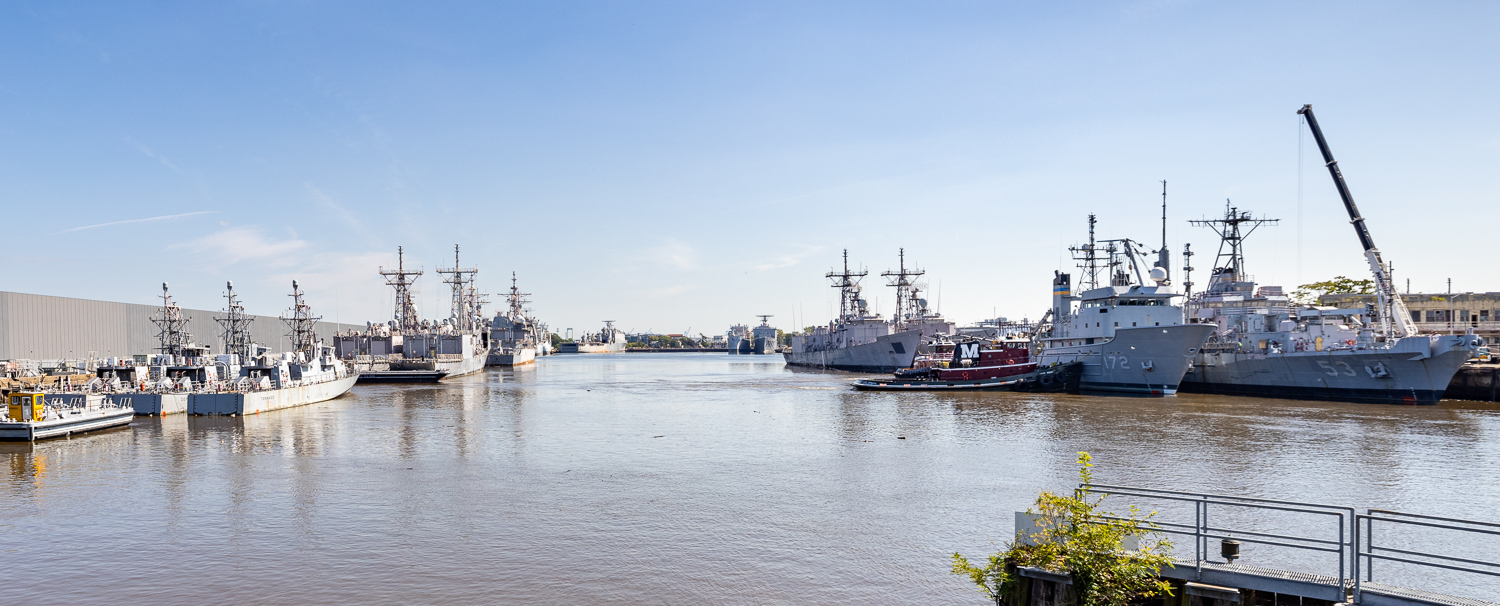
They appeared to be maneuvering one of the naval ships with a tugboat, so I assume this is why the bridge was raised. And it was at this point that I realized just how often these ships are still being moved around. From my vantage point at the edge of the bridge, I could see that the current position of the ships does not match the most recently available satellite imagery, from July 2022—and at least three were missing entirely.
And when I got home and looked at historical satellite imagery on Google Earth, I saw that these massive ships are constantly bouncing around all over the place! The total number of ships in the basin is also constantly changing, with 51 docked in April, 1999 and just 15 present in October, 2006. What on earth are they moving all these ships around for?
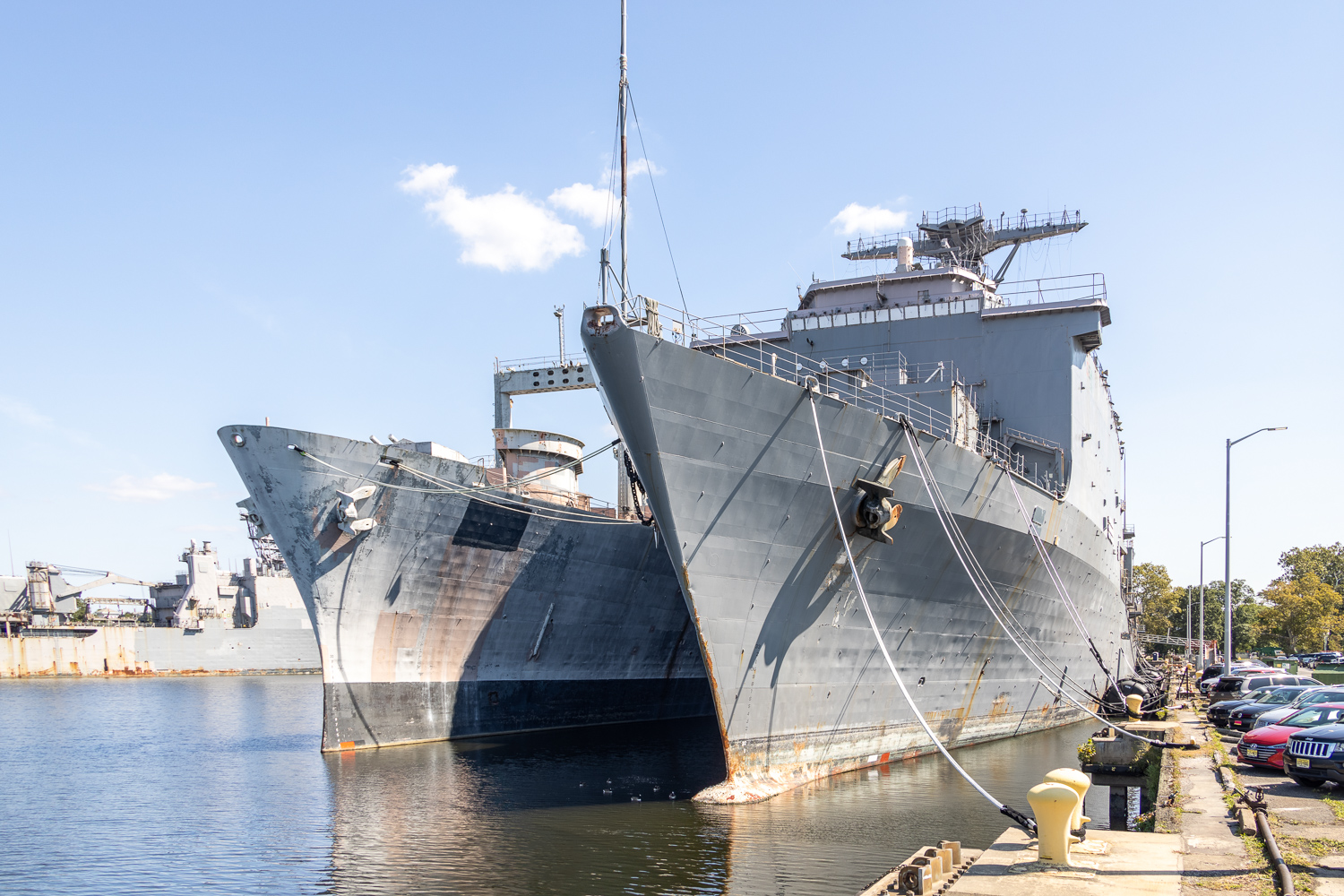
So since I could not cross the bridge, I biked all the way back around to the Fort McHenry, further detouring around the Quay Wall project that’s currently reconstructing the 120-year-old timber structure beneath the section of Broad Street between Crescent Dr. and Intrepid Ave. I was then able to bike right past two ships rafted together along Intrepid Ave.
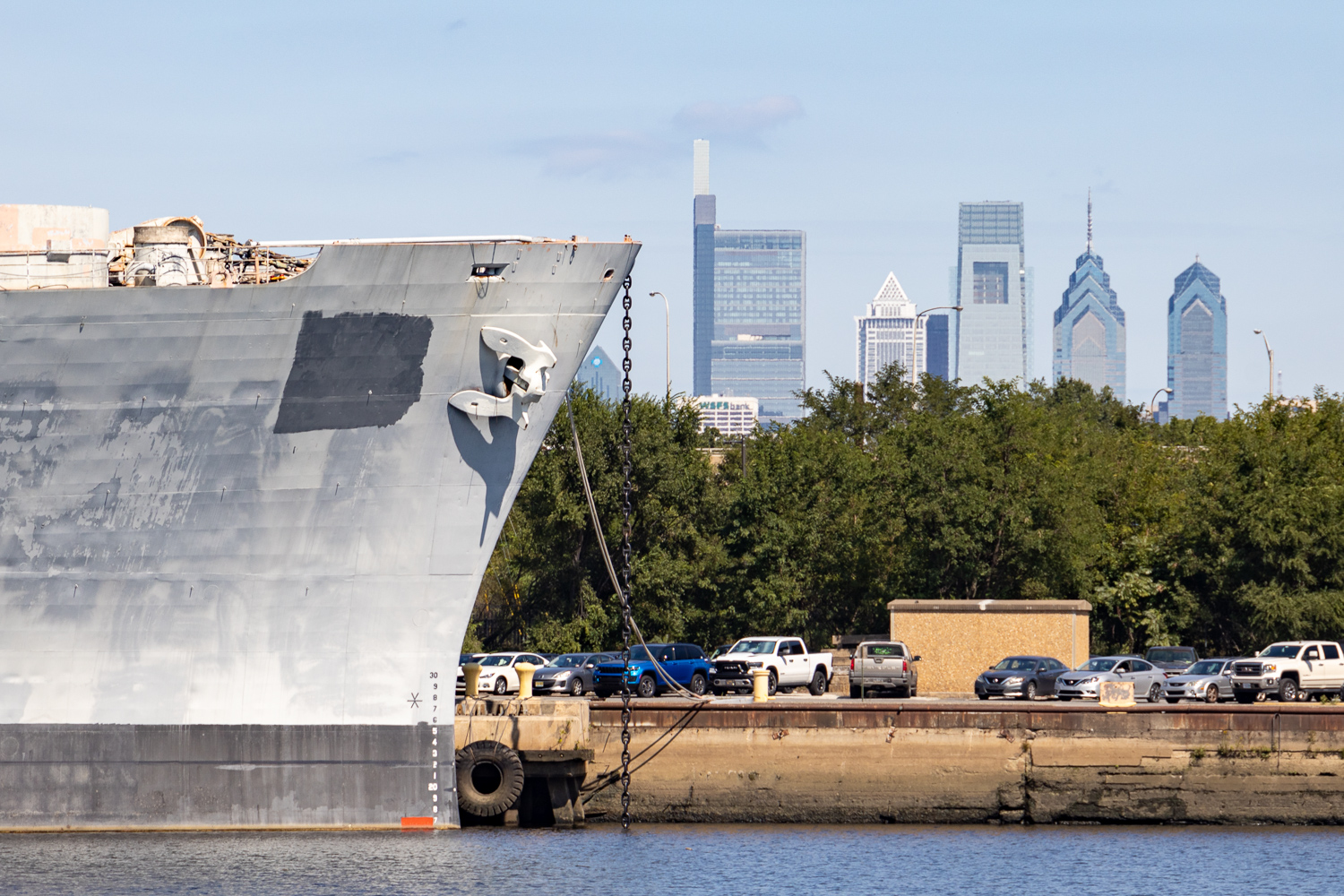
Once at their bows, I got a pretty unique perspective on the Philly skyline!
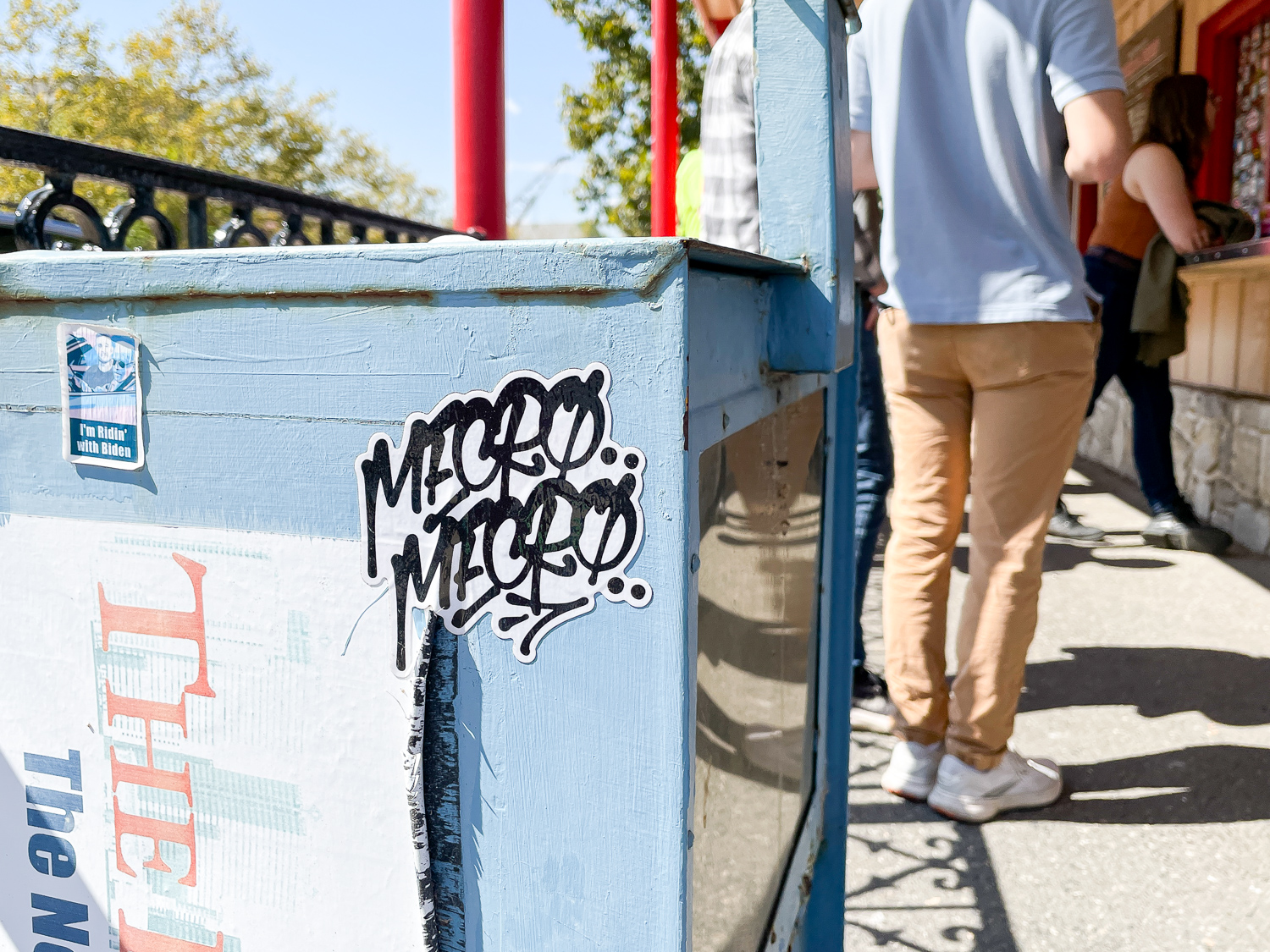
I next stopped at DiNic’s Pork & Beef for lunch—for the first time ever! (I can’t believe it either.) I got their classic sandwich, and it was… fine, honestly. The taste was good, but the bread was soggy from the very first bite. Woodrow’s does it better. Just sayin’. At least I spotted a sticker by legendary graffiti writer MECRO on the news bin there!
After lunch came the questionable portion of my journey, where it’s unclear whether I was technically allowed to be where I was. The two highlights were seeing the sterns of three identical ships and this crumbling wooden structure that I can only assume once had to do with ship repair and maintenance.
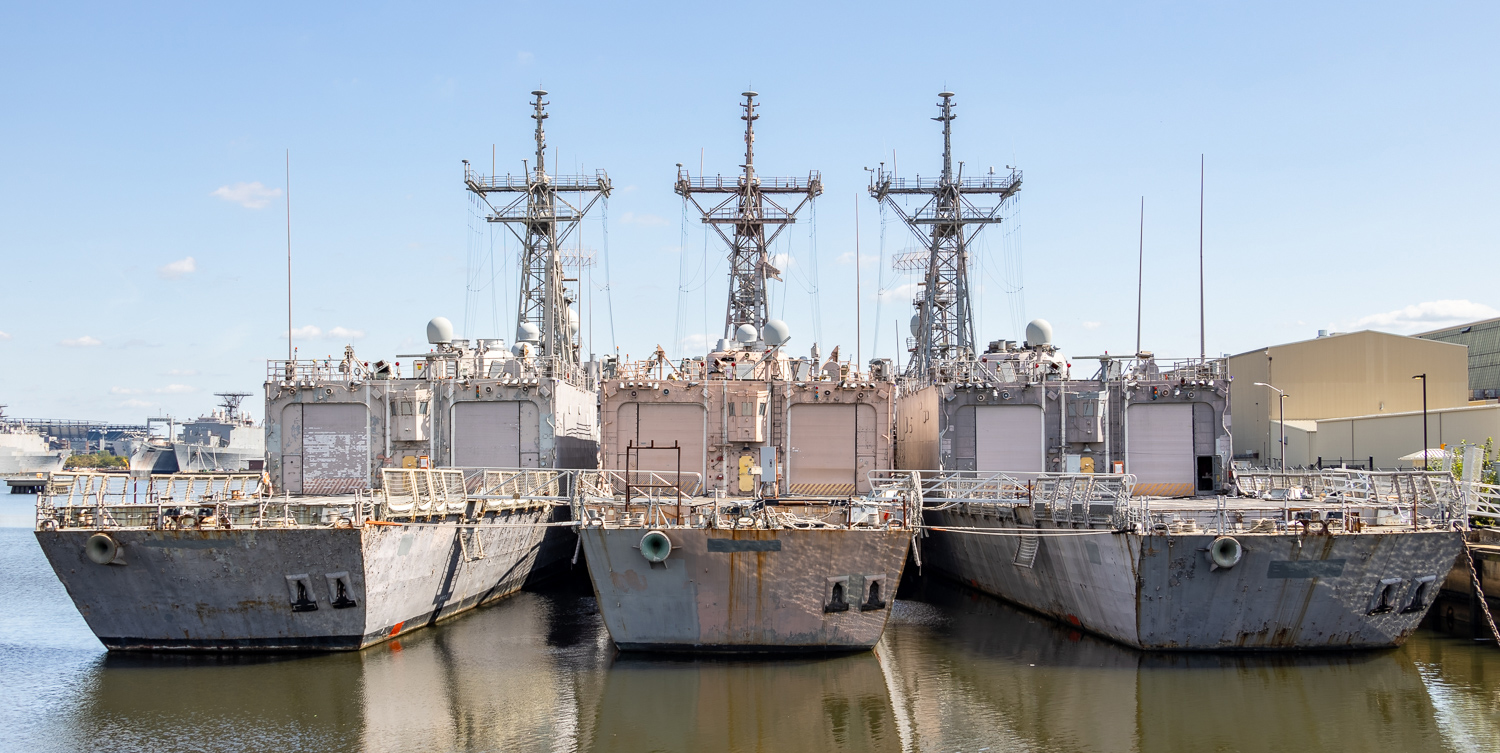
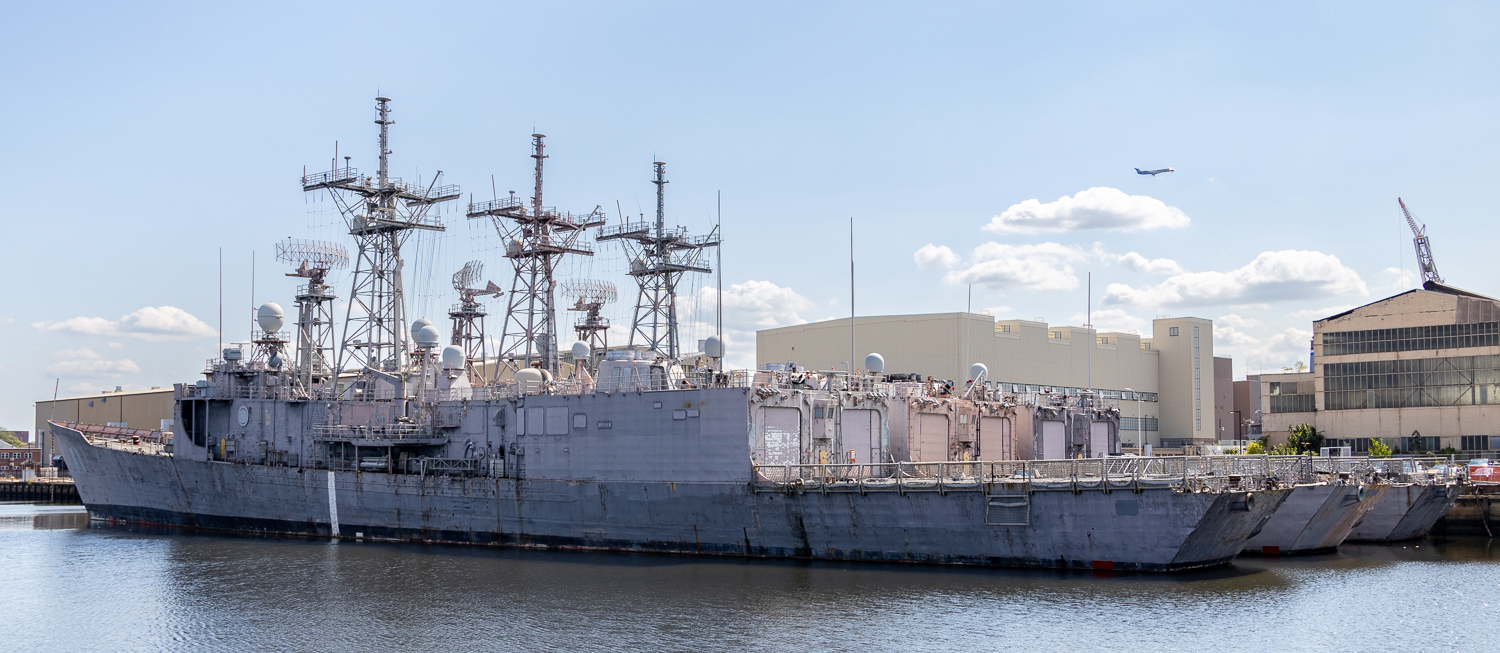
I’m pretty sure that somebody, somewhere, would definitely not have wanted me to be at the spot I took these photos from.
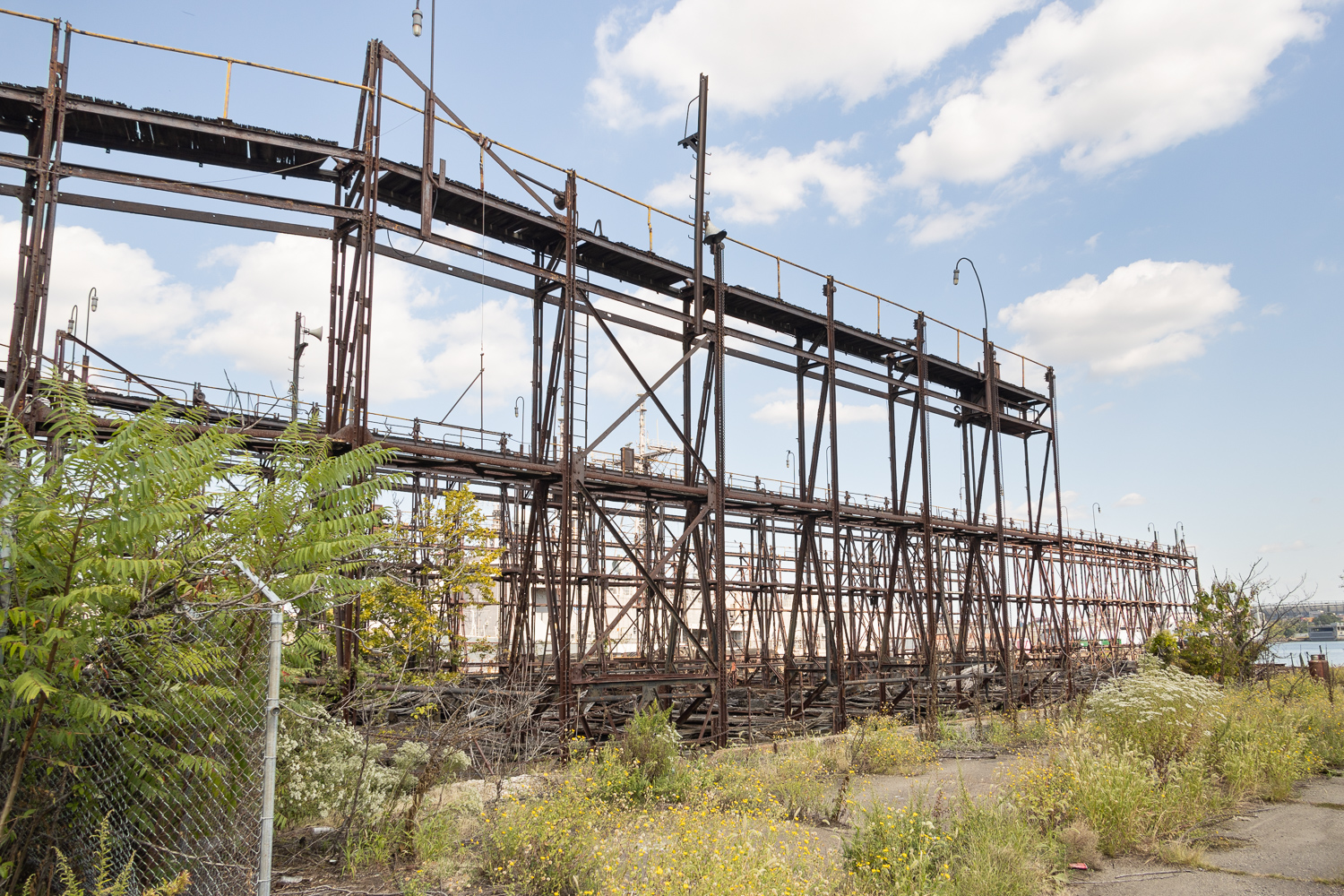
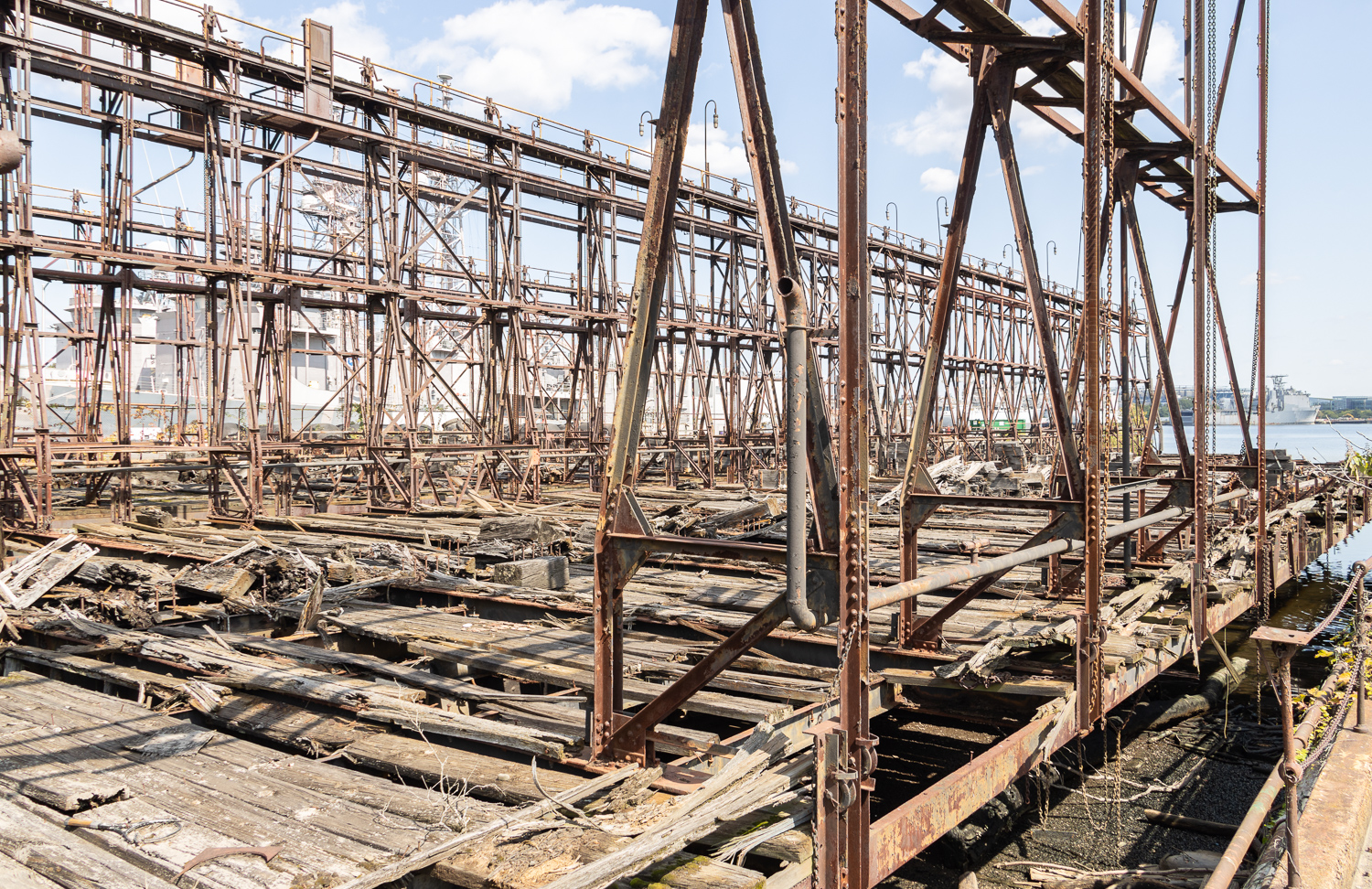
I proceeded on my way, eventually making it back to the other side of the lift bridge—which was now closed again! Yay!
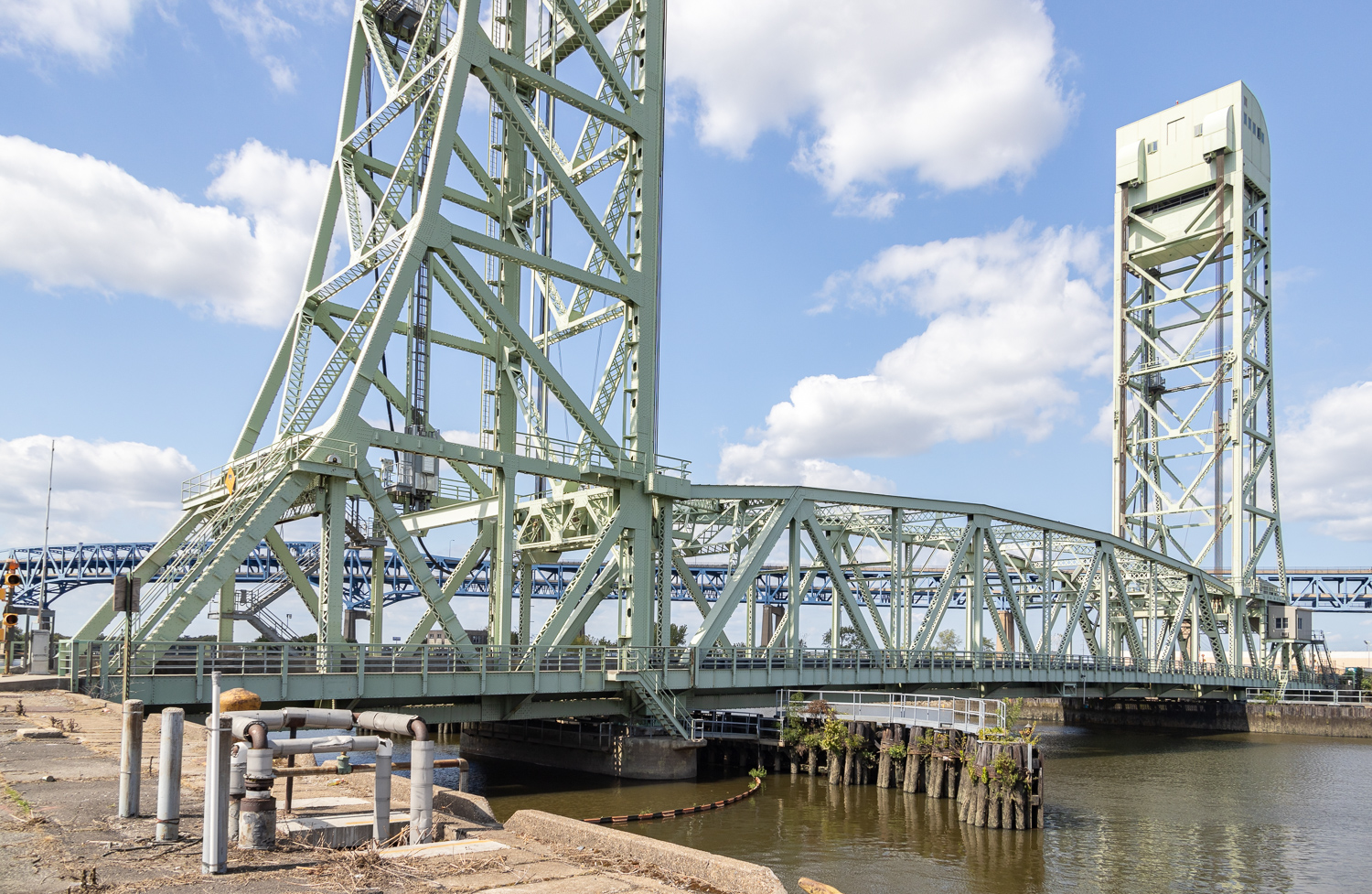
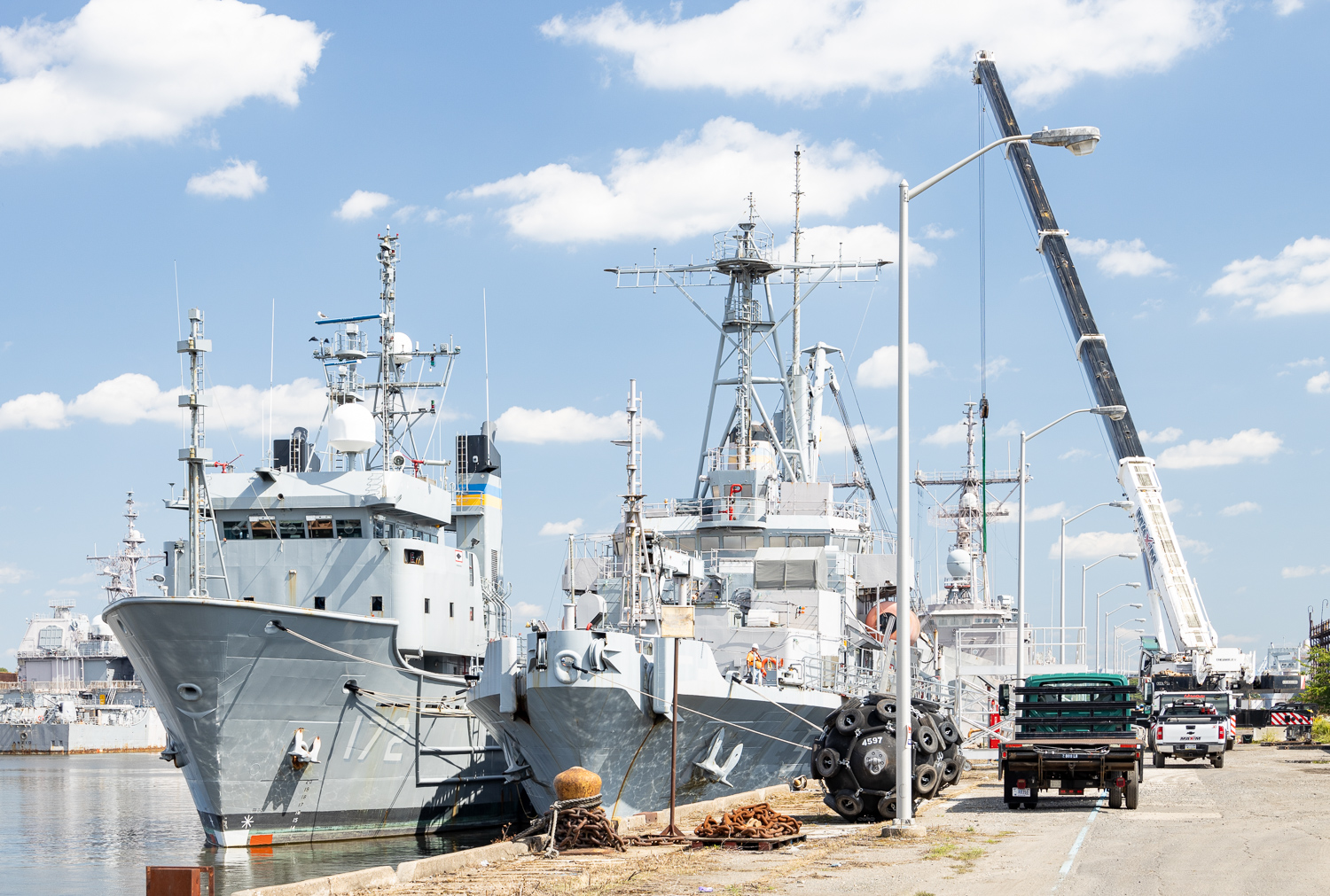
From here, I saw that work was actively happening on two ships near the bridge. And in the distance, I could see people on a ship on the north side of the basin. There’s clearly so much going on here despite this being part of the “mothball fleet.” I guess it takes a lot to keep these things afloat and ready to activate in an emergency.
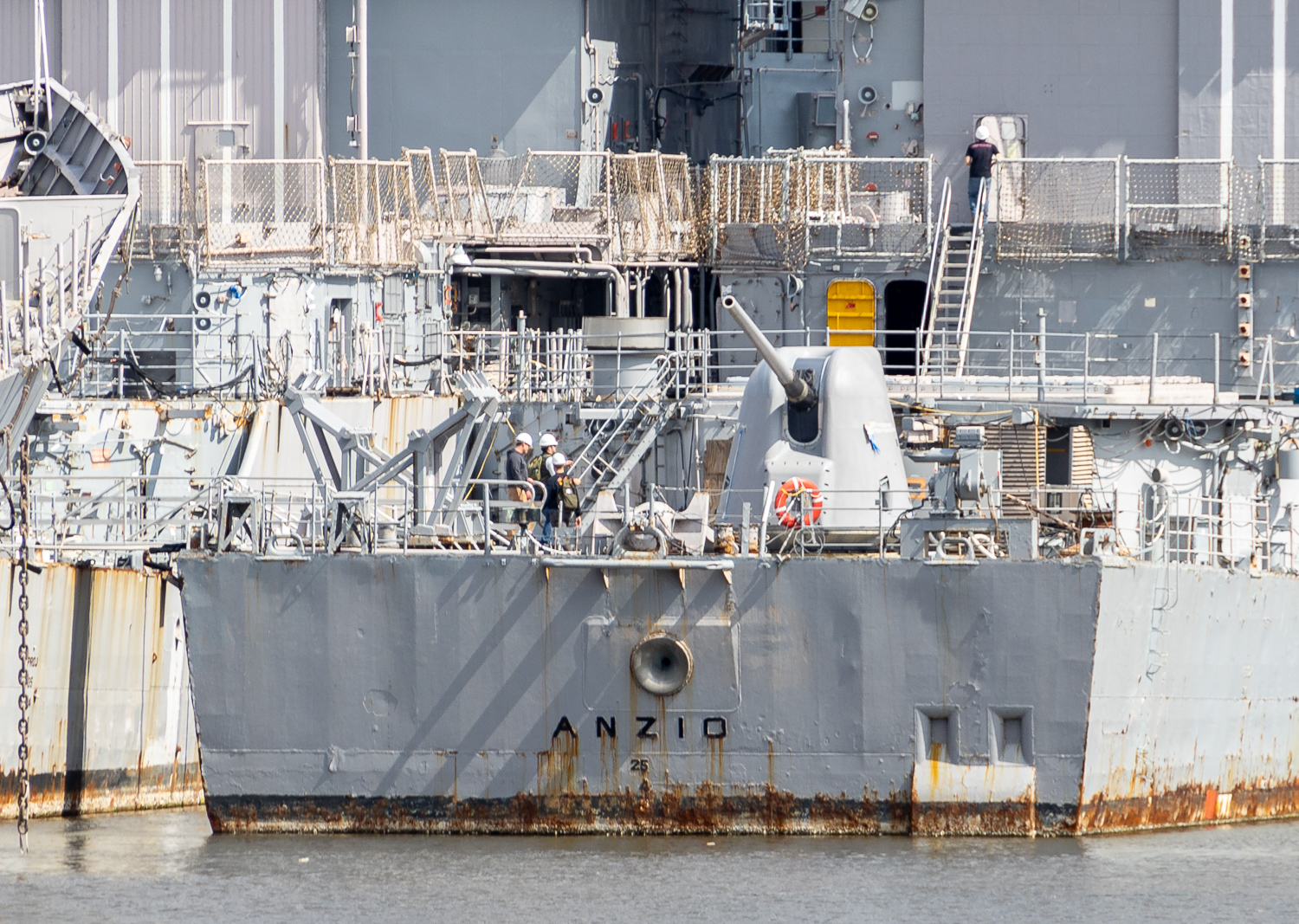
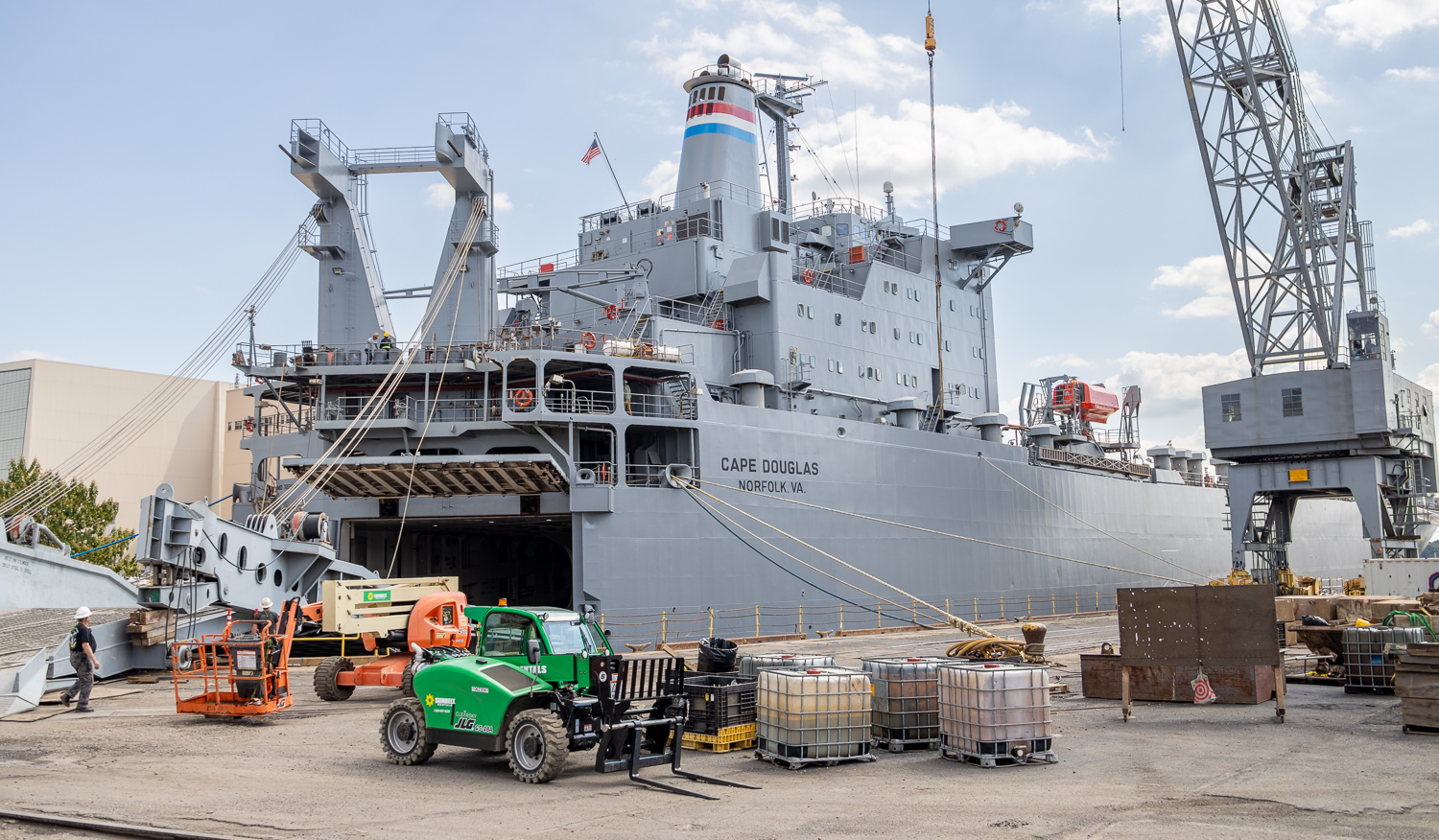
I then turned south and began heading eastward, where I discovered that two modern naval ships are currently docked along the Delaware, apparently for repairs or other maintenance. Only one was really visible from publicly accessible areas, though.
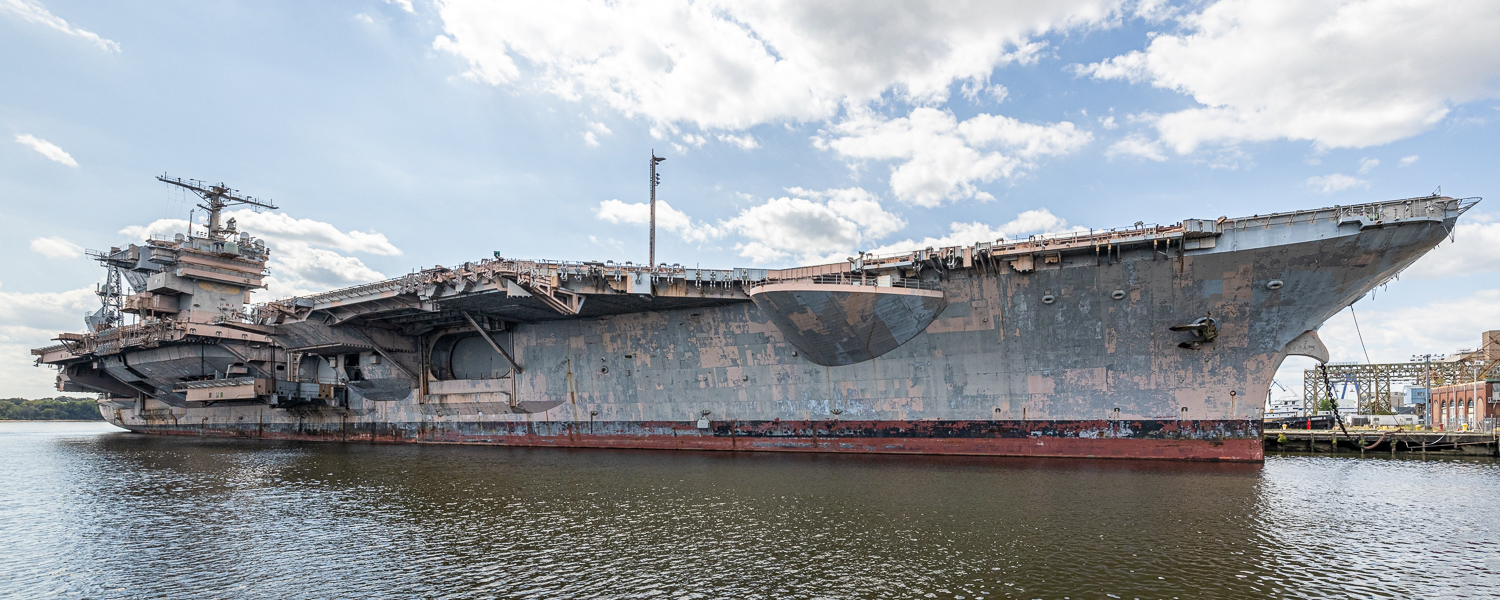
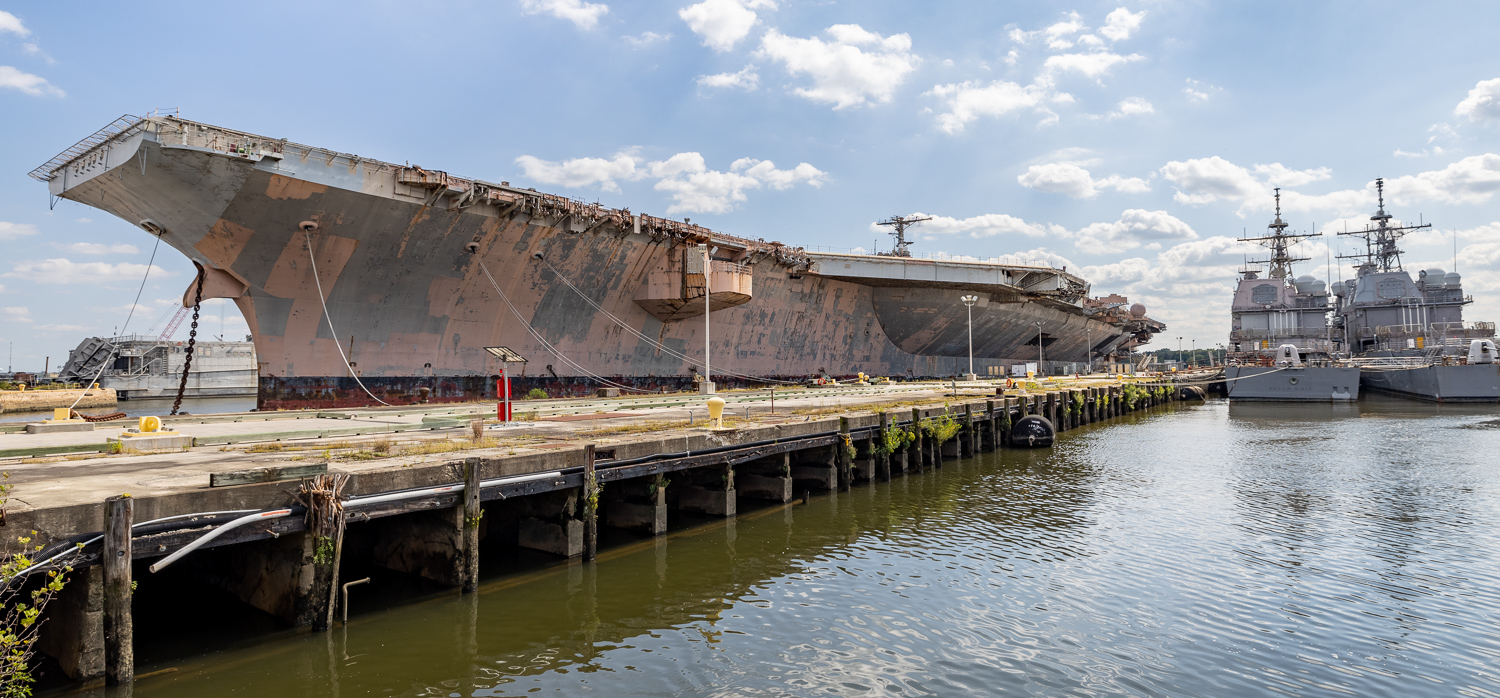
Finally, I approached what I suspected from the start would be the highlight of the day: the aircraft carrier USS John F. Kennedy! It’s so crazy that this thing is docked here, and it’s so crazy how close you can get to it. In my opinion, it’s worth a trip just to see this thing—it’s probably the closest that most people will ever get to an aircraft carrier in their life. And it’s right behind Anthropologie’s headquarters!
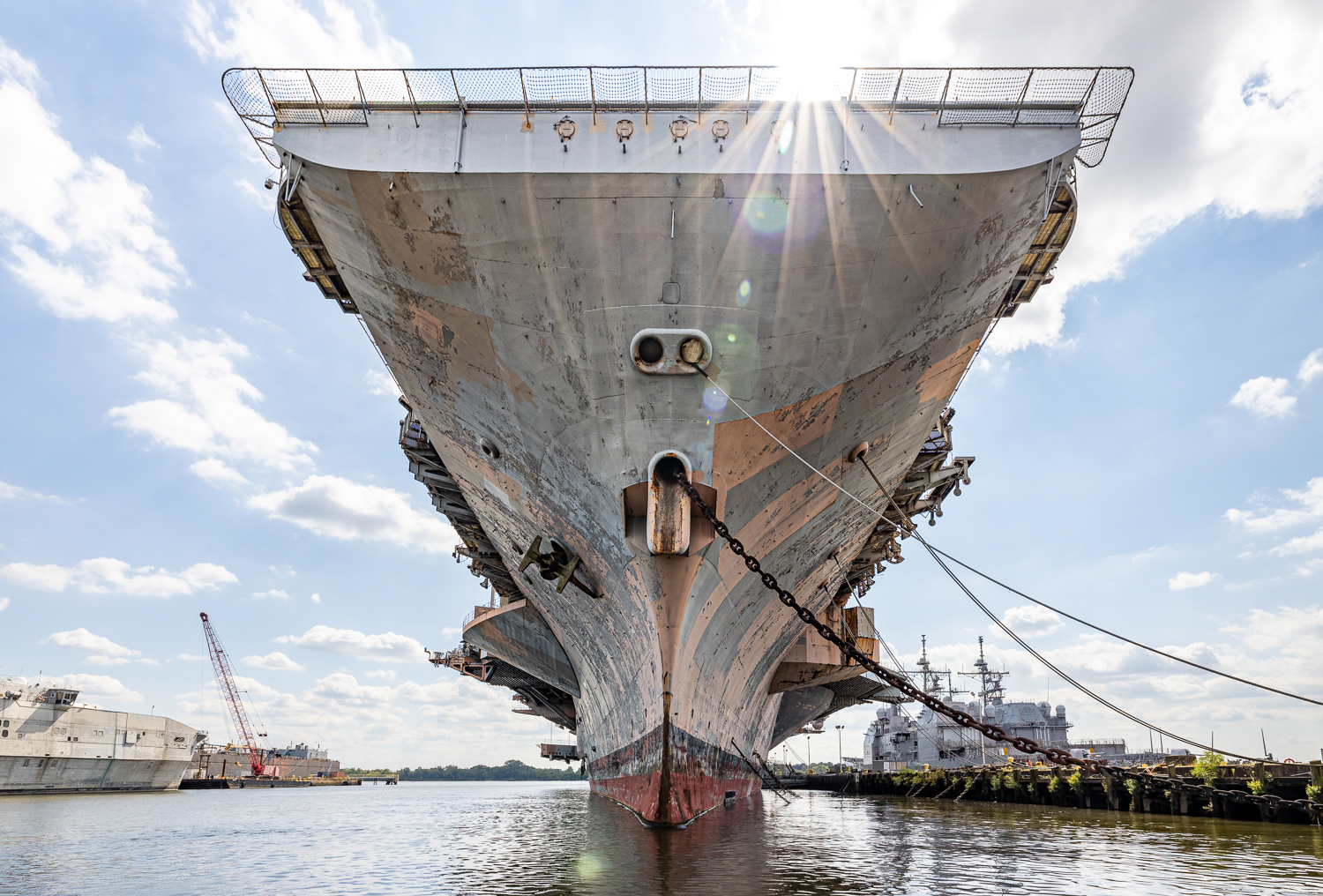
In case you’re unfamiliar, an aircraft carrier is a ship that PLANES LAND ON AND TAKE OFF FROM. They’re insane, and look like they should tip right over and capsize.
This particular carrier had an 80-plane capacity, and is the last conventionally powered (meaning non-nuclear) carrier built by the U.S. Navy. She was only decommissioned in 2007, but time is actually running out to see this hunk of steel. For a while, she was on a “donation hold” status to potentially be turned into a museum, but the astronomical costs of doing that are insurmountable for most organizations. So in October, 2021, the Navy sold her and another similar carrier to a scrap company in Texas for one cent apiece… and that other carrier is no more.
So get down to the Navy Yard soon if you want to see this monstrosity. There’s no telling when it will be towed to Texas for scrapping.
_____________________
Read past unlocked Local Tourist columns here: The Mercer Museum, Otherworld, Road-free Stroll Through University City, and the Woodmere Art Museum.
And again, if you like these kinds of articles and want to support the growth of Streets Dept, consider joining our Patreon for as low as $5 here!


 Streets Dept
Leave a comment