

This is the [first] post in our fifth season of Philly Street Art Interviews! This season is sponsored by Philadelphia International Airport (PHL) and its @PHLAirportArt program, which curates museum-quality art exhibitions that introduce millions of visitors from around the world to the vibrant artistic culture of the region. PHL proudly supports Philly arts and culture/365! Interview and photos by Streets Dept Lead Contributor Eric Dale.
Street and fine artist Lami Tolla emigrated from Ethiopia to the United States with his family when he was 10. After starting college at Temple in 2015, Philadelphia’s world-class graffiti scene drew him in and began opening up completely new directions in his work, including the “ghuls” characters he’s now known for.
For Lami, art is nothing short of a way of life. It’s his therapy, his protest, his journal, his career, his pastime, his chores, his survival. Nevertheless, he sometimes doesn’t even consider himself an artist—that’s how deeply ingrained his urge to create is. He just follows where the art leads, so don’t worry if you haven’t seen much of his work on the streets lately—he’s just working on whatever’s next for him. Not that he knows what that will be yet!

I sat down with Lami in his home studio in North Central Philly to see some of his canvas works and learn about his artistic journey. And of course I had to start with the ghuls!
Streets Dept Lead Contributor Eric Dale: So tell me about the “ghuls!” Where do they come from, and what do they represent?
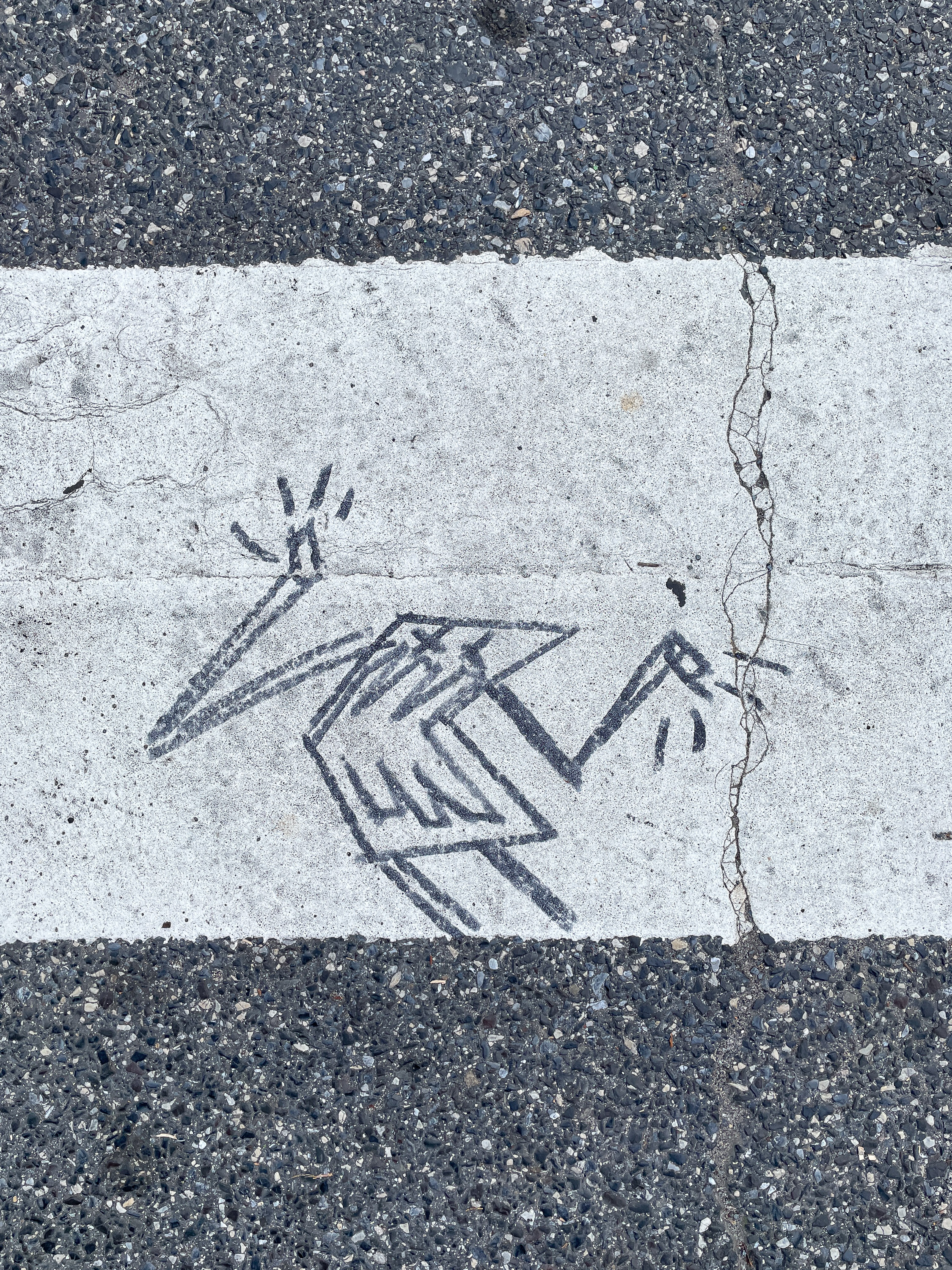
Lami Tolla: The ghuls, for me, represent what it means to be human. And I get to put them in different scenarios to express different feelings human beings go through. They represent all of us, so if you see a ghul that’s causing destruction, they’re just representing the assignment that I give them to represent those emotions.
So I’m just using them to express myself, I guess, in a more playful way, given the subject is hard to talk about. But they came about when I first moved to Philly, just sketching different things, not really being an actual graffiti artist—whatever that means. They helped me get ideas out in a more playful way, and [served as] guerrilla marketing to bring people back to the work I’ve always been doing.
SD: Do you feel like they would have arisen in your work if you hadn’t moved to Philly?
LT: That’s hard to answer. But I would say they just helped me compete in this graffiti world, because they’re so unique to me, and they’re so original. So it was almost like the rebellious [work] that I’ve always created on canvas—they helped me create the same energy and disperse it.

SD: Kind of like speaking Philly’s language.
LT: Yeah! They’re rough when you look at them—just the fangs and the shape… And with the graffiti, I’ve always wanted to create some sort of character, and they just kind of happened organically.
SD: And why do you spell “ghuls” without the O?
LT: Because I know the original name “ghouls” was, like, Islamic folklore. They rob graves and this and that. But I feel like using the O in there wouldn’t be parallel to how organic my characters are. They’re not demons; they’re not robbin’ graves; [they’re not] the original “ghouls” definition. So that was just a little twist that I decided to try and throw out.
And it’s easier to write with four letters! Less letters is easier!

SD: You work anonymously, without showing your face, yet you attach your real name to your art. How does that work?
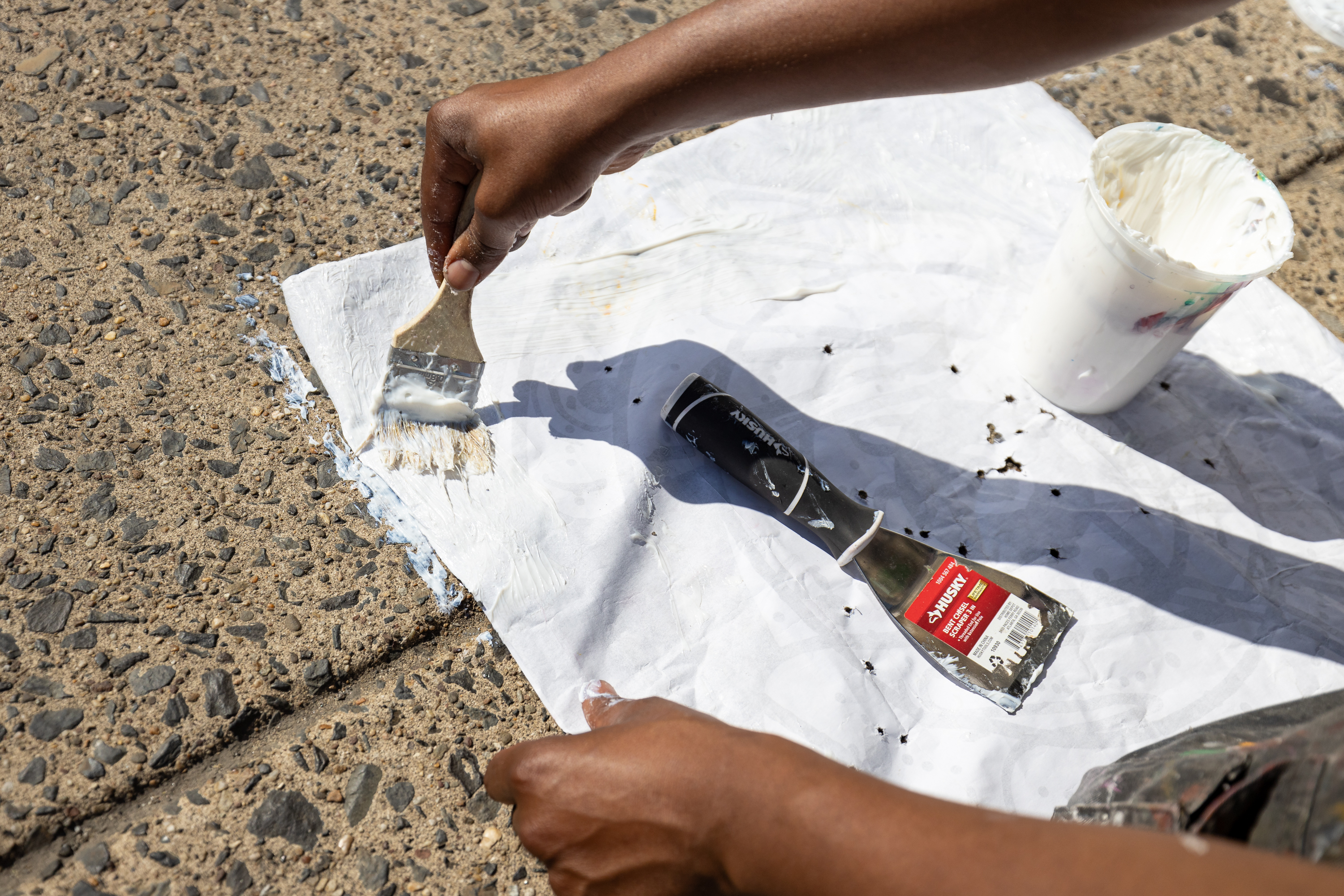
LT: I feel like as long as I don’t show my face, I’m not really putting myself out there—but my face isn’t really needed, as far as my artwork, I believe. It’s almost like my art kind of has a life of its own, especially through the characters’ moves. They’re out there bringing people back to me. So it makes meeting in person even more anticipated. I feel like it creates a more organic conversation when I do meet people face to face. But yeah, I’ve always felt like my face isn’t really needed. It’s not about my face.
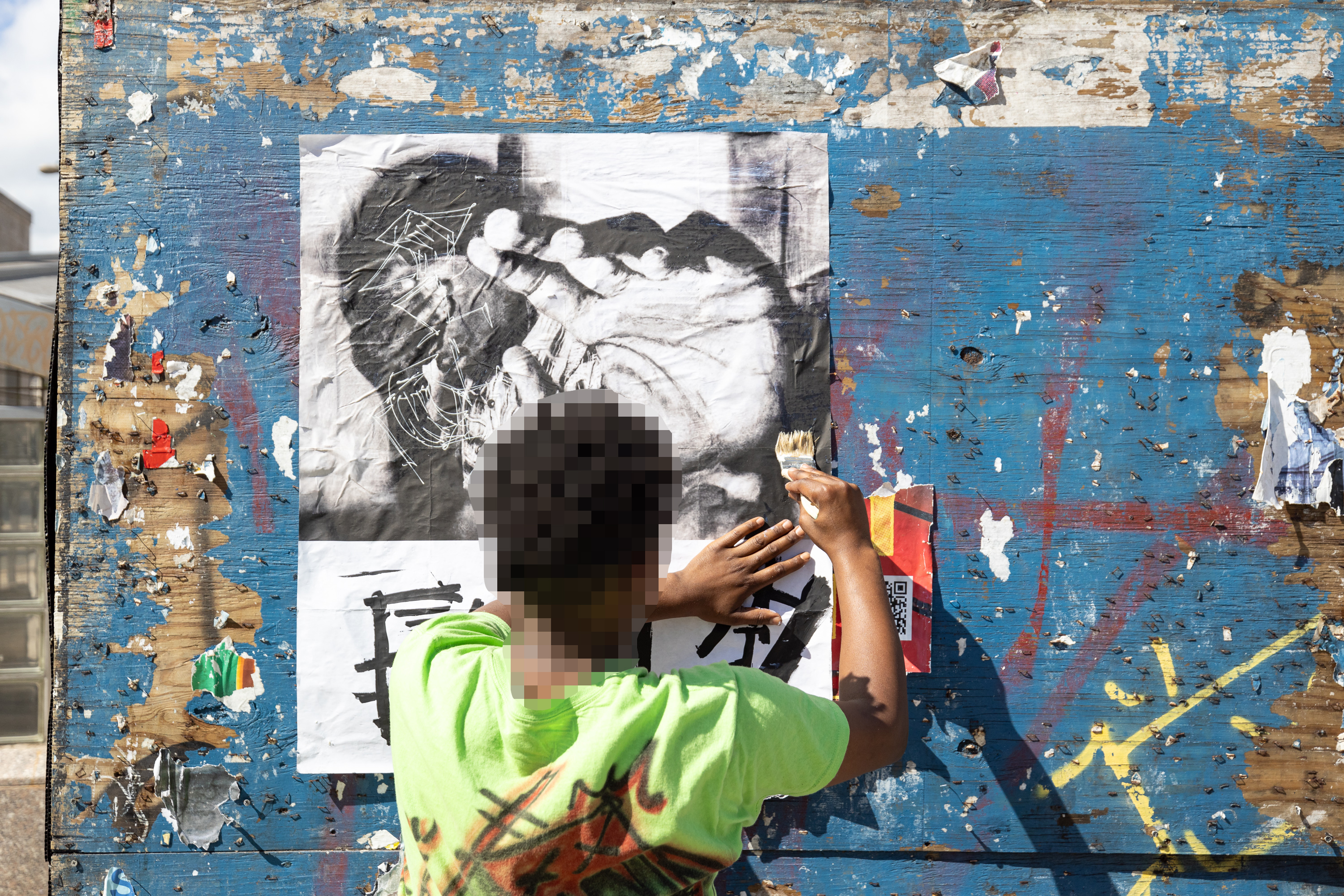

SD: From the standpoint of creating non-commissioned works in the public space, do you not worry about getting caught using your own name?
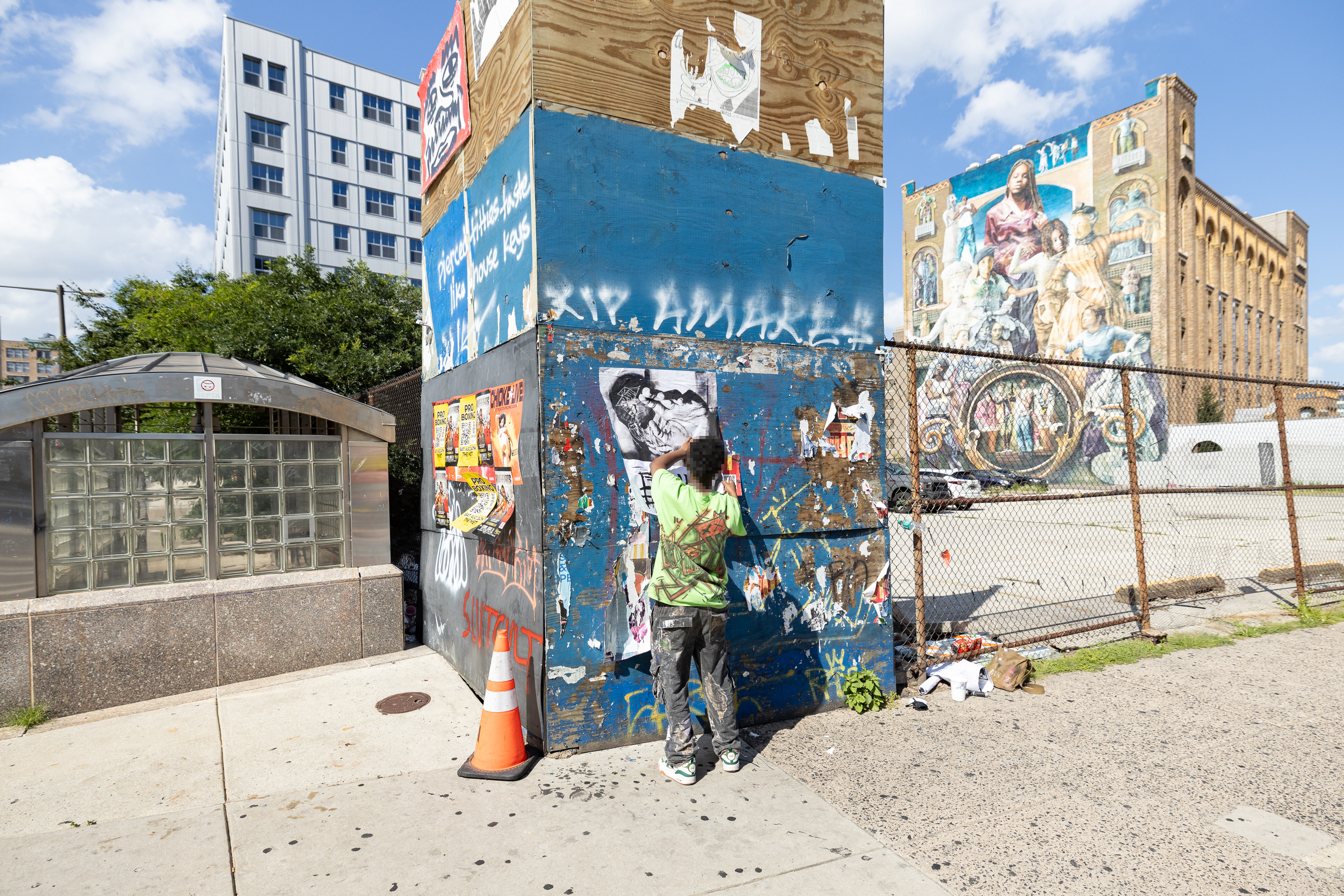
LT: I think that’s a risk I’m taking. I’m also not doing that much damage. I’m still rebellious when it comes to art, but I don’t think I’m causing that much ruckus [to the point] where someone’s looking up my name. But if they do, I guess I’m—whatever comes, it comes, you know?
I’ve always done fine art; I was always self-taught—graffiti didn’t start until I moved to Philly. I came to Temple University, and my art just transitioned. I wasn’t really thinking about oh, I’m gonna get caught. That side of graffiti never really hit me, as far as hiding and all that. I just feel like my art transitioned. I just gained a whole different medium to express myself, as far as I’m concerned.
But yeah, the name stuff… I mean, I’ve been in Philly since 2015; it hasn’t gotten me into trouble. Just because I guess how I was introduced to graffiti and street art. Like, I’ve been doing art with the name already, so it didn’t feel beneficial to me to change it. And I wouldn’t know what to make up! So I just went with that, for longevity purposes.

SD: So let’s talk a bit about your background. You grew up in Ethiopia—what was your relationship with art like back then?
LT: Thinking back now, I was always around artists, but they were all, like, tailors—they were all making clothes. Even though they didn’t look at it as art—it was just a way of making ends meet; running a business. They never really thought they were creative. And art was never really a separate thing. It was always infused into everyday life. I’ve always drew, I’ve always sketched. But no matter how good you are, [art didn’t] have its own [identity] when I grew up—up until when I first moved here. [Here], you have the time, and people backing you up; just getting feedback that kind of helps you harness all of that and make it its own thing.
Back in Ethiopia, when I was a kid, we did have art classes. It was a lot of clay-making, so we would go to the actual—I don’t know if it was a lake or a river—but there’s a clay part of town where we go and scoop it up. So it was a lot of the clay-making, and we used to make ropes, like knotting ropes and whatnot. And obviously drawing, just the basics of drawing.
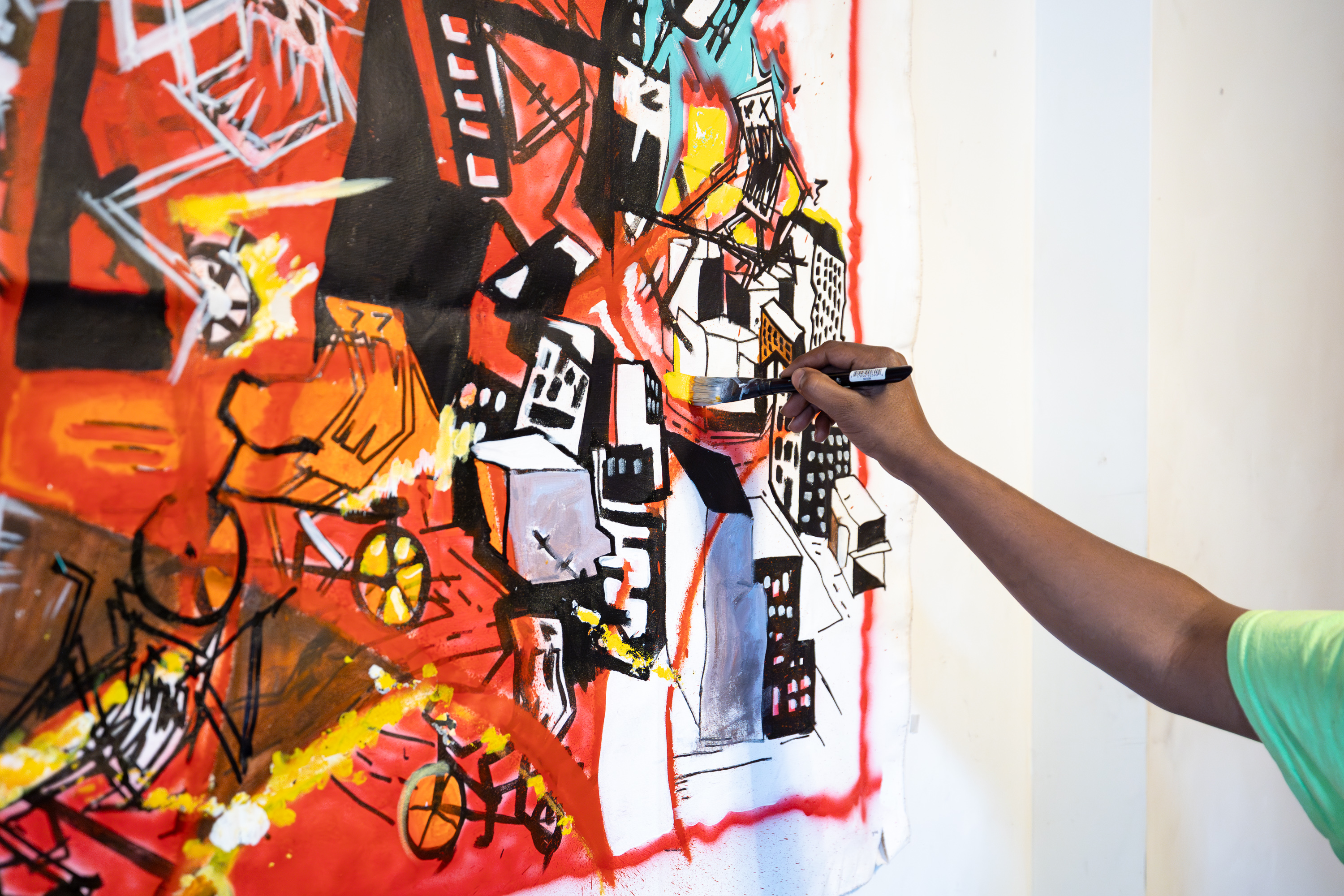
SD: What sort of art were you drawn to back then?
LT: I would say every style, or any art that I would see—I always take something from it. When I was a kid, realism was a big thing to me, ’cause I thought that’s what art was at some point: doing people’s portraits, and making things that are appealing; not saying everything you want to say on canvas. That was basically what I was drawn into as a kid. But now it’s almost like I’ve ripped the flesh off of it, and it’s just gnarly. But it’s still peaceful and organized.

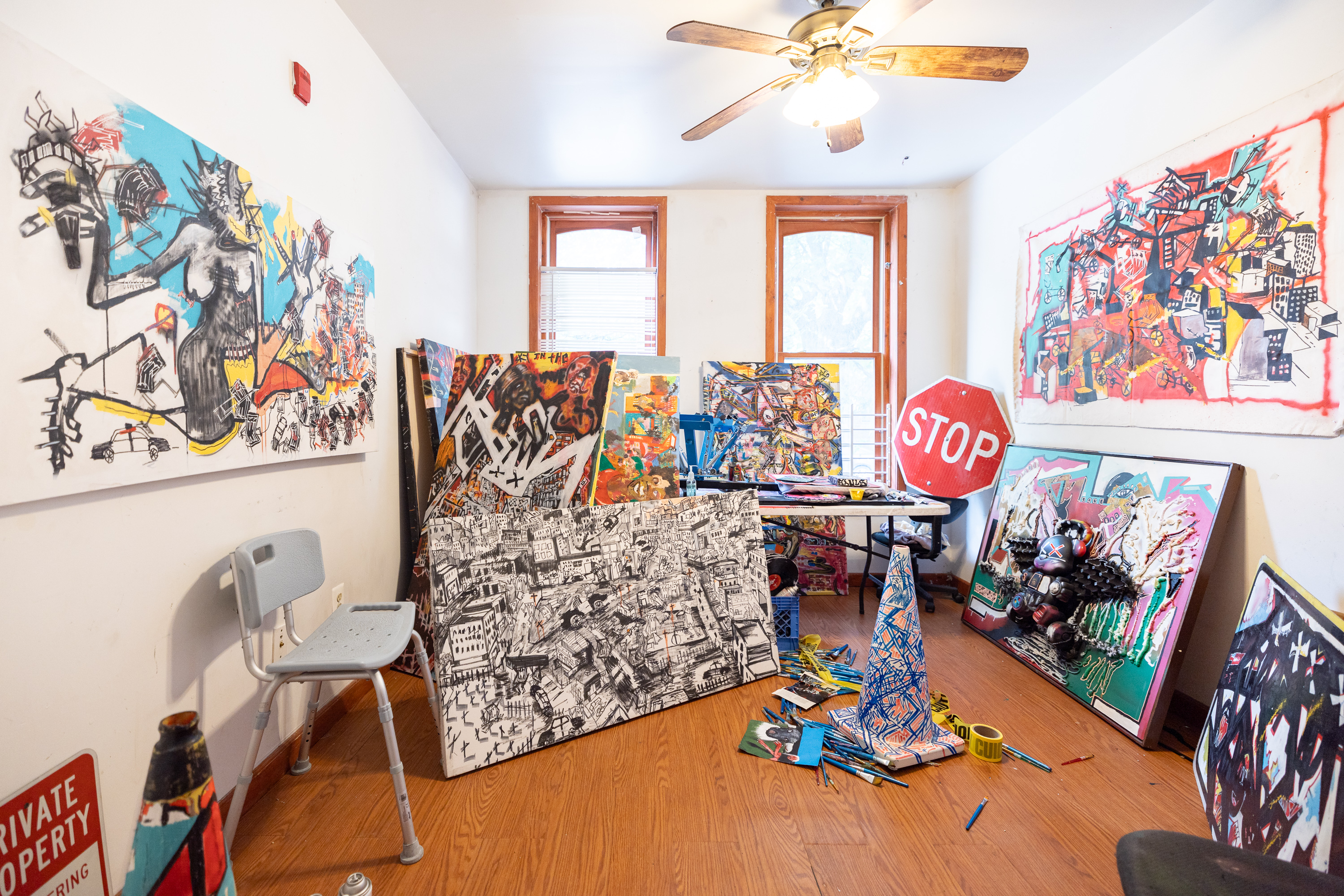
SD: And then when your family moved to the US, you’ve said that that opened doors for you. What doors did that open?
LT: I mean I can’t even begin to count, because moving to a whole different country is in itself opening a bigger door. A large door. And then I got here and it’s just endless amount of doors that I could open. So just as far as taking art serious, and knowing that if I give everything to this thing, that it would also take care of me in return.
Because I do put a lot of energy into it, and the raw feelings and emotions, and what it means to be a human. Just in every sense of what that means, basically. Just mentally having the peace of mind to really take care of my creative side and being able to feed that. And it also opened a few bad doors, because being here isn’t really as easy as it seemed. It was a fantasy, but then here, it’s really hard, but it’s just a challenge, and I do love the challenge.
Most of my art came from that transition almost. Just getting used to a whole different environment, and then thinking about what I’m letting go of. Because, obviously, that naturally just happens, regardless. So, it’s a lot of looking back and looking ahead at the same time and those are just colliding all the time.

SD: You can see that in your paintings!
LT: Yeah. But I’ve got to the point where I just naturally let it out. I don’t plan this at all. It just happens.

SD: It’s amazing how many artists describe making art that way.
LT: Yeah, no, literally, because I don’t know what my next piece looks like. I really can’t wait to see it myself. And so I’ve become the viewer, to be honest. And so I’ve always looked at it as a journal book, only this time it’s not words; it’s really something you could feel, but it’s not straightforward. But I do put everything—the beautiful; the ugliness… And some do really get shocked when they see it. It does look overwhelming. And I feel the same way when I look at it.

SD: How did you end up majoring in architecture? Is that a direction that you want to go in?
LT: I know a lot of immigrants have the same kind of story, where it’s really tough for your family to push you towards this thing that might not work ever—because it took so much sacrifice to be here, and for you to not do something that’s guaranteed, at the end of the day, is a tough decision to make for them. And so I kind of understood that, and decided to do architecture because it’s versatile, and it’s a practical side of art. And I could still fully indulge in my art. It definitely has influenced a lot of the stuff I do, just thinking about architecture and different spaces; perspective. Even the floor plans that I created at the time influenced my art.
Even though I knew if I went to fine art, I would still make it work. But at the time, architecture was like the only thing I could bring up to my family.

SD: So how do they feel that you’re now an artist?
LT: Not all of ‘em agree. Not everyone in your family is going to be on the same page. But you just need that one person. And my grandma’s been that person, really. She’s very religious, so she would always pray for my hands, ‘cause she knew there was something there. It wasn’t that she understood art; she just knew that being gifted takes different shapes. And she just has faith that I’m putting all this energy into something that’s God-given—like, talent. And so she always knew something was right, without knowing about art, or if I’m going to sell art, or how to sell it, or gallery this and that—she doesn’t know any of that, but she knows I’ve always had something.
SD: So I know the vast quantity of graffiti in Philly is what inspired you to start writing. But were there any writers in particular who inspired you?
LT: I honestly can’t name any, but it’s almost like every Philly writer that existed made this energy happen, whatever it is. So I’ve always looked up to the Philly hand, the wickets. I can’t really say off the top of my head that this person inspired me, but it’s moreso traveling throughout the city and just seeing it. Doesn’t matter if it’s bad; good—someone took the time to walk up to that wall with a can and that did something. And so it’s that side of graffiti that really inspired me. And just how different art exists in little crevices of the whole city. So the whole city inspired me.
SD: Do you remember when and where you painted your first street piece?
LT: I would say Graffiti Pier.
SD: Oh, okay, classic starting place!
LT: That’s where everyone started, to be honest. Because when I first started going to Temple, I was afraid to venture out, and then I went to graffiti, and then I met people at Graffiti Pier that introduced me to doing it outside of Graffiti Pier. And so I befriended them, and they kind of showed me around.

SD: As a primarily character-based graffiti writer, have you gotten any flack from the graffiti community for not focusing more on letters?
LT: Oh man, yes! And that’s [why I don’t] really even say that I’m a graffiti artist, because I did go through a time where graffiti artists were like… When they see you selling, or trying to sell stuff, or present yourself in any professional manner, you’re, like, banned.
So that’s why I say Philly inspired me as a whole, because I’ve never paid attention to them. Because I owe so much to my art, and I know how true and organic it is. So if I do hear comments like that, it really just reflects who’s saying it, you know? But you can’t avoid it—it just naturally exists in graffiti. There’s just a lot of emotions that collide, to be honest.
But I just always stuck to—even, like, the wickets—I always try to make the ghuls into wickets, instead of me learning how to do wickets. Because it was never organic and I never wanted to be like oh, it looks like graffiti. If it’s not natural to me, I’m never really not doing anything art-related. I could easily learn new styles and things like that, but it needs to all come from me.

SD: So, in your art, what is your main focus right now?
LT: My main focus is surviving! I can’t really differentiate my everyday life from art or canvas or whatever it is. It’s almost like I use it to think. I don’t usually have a moment where I’m like okay, I’m gonna paint this today. Because there’s so much going on in my head that a quick thought comes into my head and then it just starts the whole thing. And I usually have no control over it. It literally is just my thought process. Doesn’t matter if I’m sweeping the house or painting—it’s the same thing.
So yeah, I don’t mean “survive” as far as paying bills and whatnot, but just as a human being, at this time and age. Nothing physical could really ease the pain. Just surviving and just being able to withstand the pressure of hearing the news. It’s almost like a survival mode, where my purpose is to express what it really means to be a human being. So I give everything to art, full-time, and I try not to be at a job where it’s not art-related. So I’ve always spent years making sure that I spend my time making art of some sort. That kind of keeps my hands moving constantly, and so when it comes down to doing a canvas, it just naturally pours out, basically.
SD: I guess your grandma’s prayers worked.
LT: They definitely worked! Thanks to grandma—shout out to my grandma!
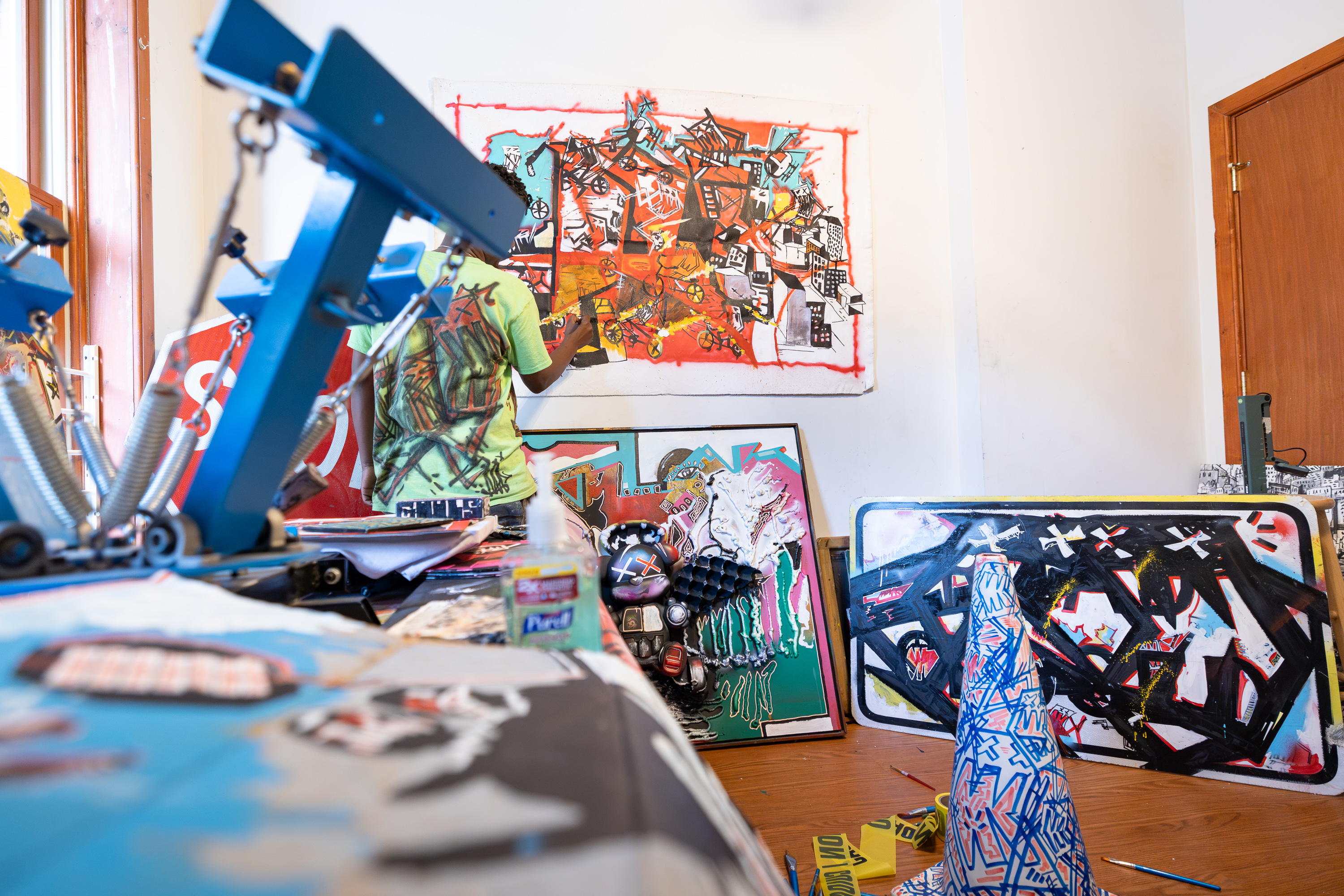
SD: I feel like I’ve been seeing fewer of your pieces in the streets and on Instagram. Have you been moving in a different direction recently
LT: Yeah, I haven’t really been active outside, as far as graffiti and bombing, and that’s mainly due to how I pivot as an artist. I don’t stay doing the same thing for very long, because if my mind really wants to show something, I usually follow that.
SD: Do you make any political statements in your art?
LT: Now that I’m [a U.S. citizen], I would like to start doing it more, but… I don’t know. I try to speak up for the injustice before it gets to anything political, because I don’t see a point in getting political if someone’s hungry in front of you. You just do what you can, almost. So I just focus on what it means to be human, to be honest. I mean, I went through a time where I made art that spoke against Trump, but to be honest, at the time, I didn’t know anything; I didn’t read anything; I wasn’t following everything—I was just like everybody’s against Trump. Oh, my art might do well, ‘cause the algorithm might—
So in the most honest way, I just care about people getting respect for being a human being. And that does not exist in politics. And it kind of limits a lot of the conversation. It limits the problems that people are actually going through. I don’t see any point in me getting political, to be honest.

SD: In the 2022 Tiny Room for Elephants audio tour, you said “my art is a protest.” What is it a protest against?
LT: So naturally, if I’m creating from the point of what it means to be a human being, it is, I guess, a protest against anything that doesn’t respect what it means to be a human. Now I’m kinda getting political, haha!
For so long, I hated art that wasn’t really coming from the heart. So I’m kinda, in a way, fighting for artists being able to fully indulge in—I know I keep saying it—but what they’re truly driven by, before their artistic skills dictate what they might want to do.
I used to put it this way: I’ve always come from the perspective of having this collective consciousness, and just expressing how I feel because we’re not that different. Deep down, every human being is craving, almost, for the same thing, and that’s just to be respected for being a human being, ’cause it’s already hard. So I’m speaking up against things that make it even more difficult, I guess. And so I just want artists to fully digest that and say whatever they wanna say on canvas, as opposed to trying to be political.

SD: You’ve also talked about making an impact—so what impact do you want to make in Philly, and what impact do you want to make more broadly?
LT: Someone that just expressed themselves to the fullest. In a way, someone that literally bled on this canvas—to give it everything that I got. I can’t force anyone to be inspired by it; I don’t even know what [my artworks] mean most of the time. Cause I’m also trying to figure out my own life! So I’m not an artist—I’m just expressing myself fully on canvas. And I want people to do the same thing.
SD: Thanks for talking with me!
LT: Of course, that was fun! Thank you.
 Streets Dept
Leave a reply to Amelie Cancel reply