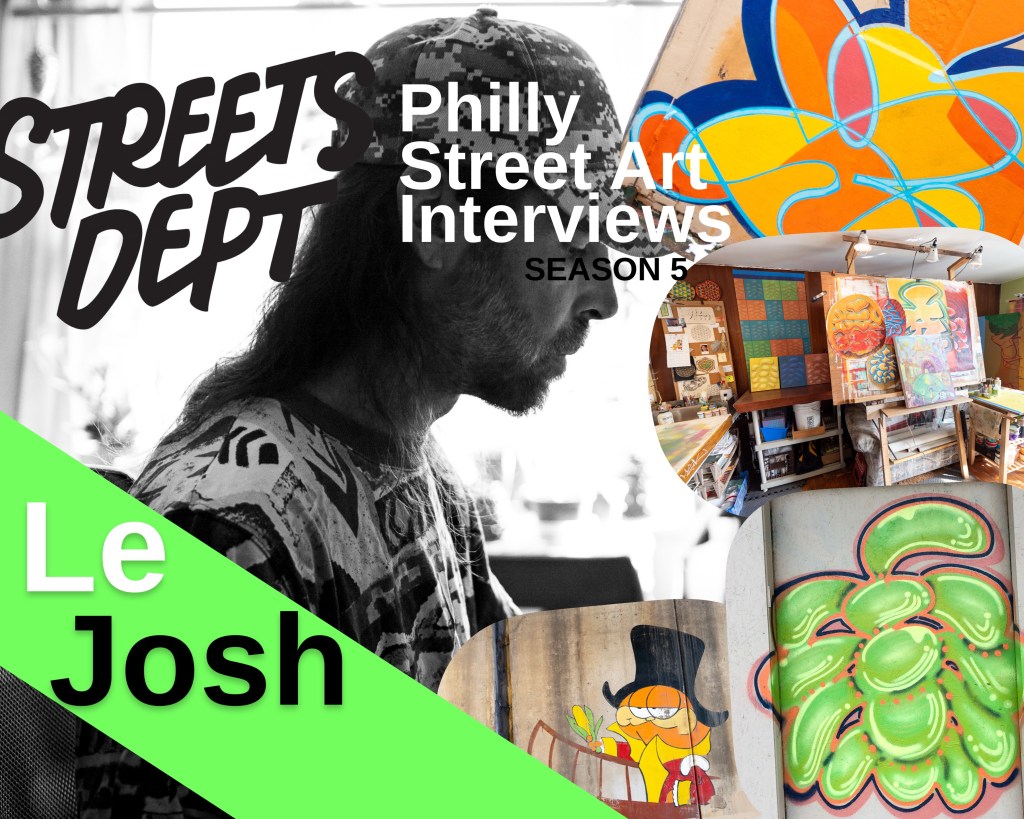

Editor’s Note: I’ve been documenting the work of today’s interviewee since before Streets Dept even existed. In fact, a quick look at a Fishtown Le Josh mural-in-progress was literally one of the very first posts on this blog back in March of 2011. I’ve photographed his work many times over the years, and Le Josh even worked with Streets Dept Walls for a Flower Show mural in 2021. But, in all these years, we’ve never interviewed him. I’m beyond excited that changes today!
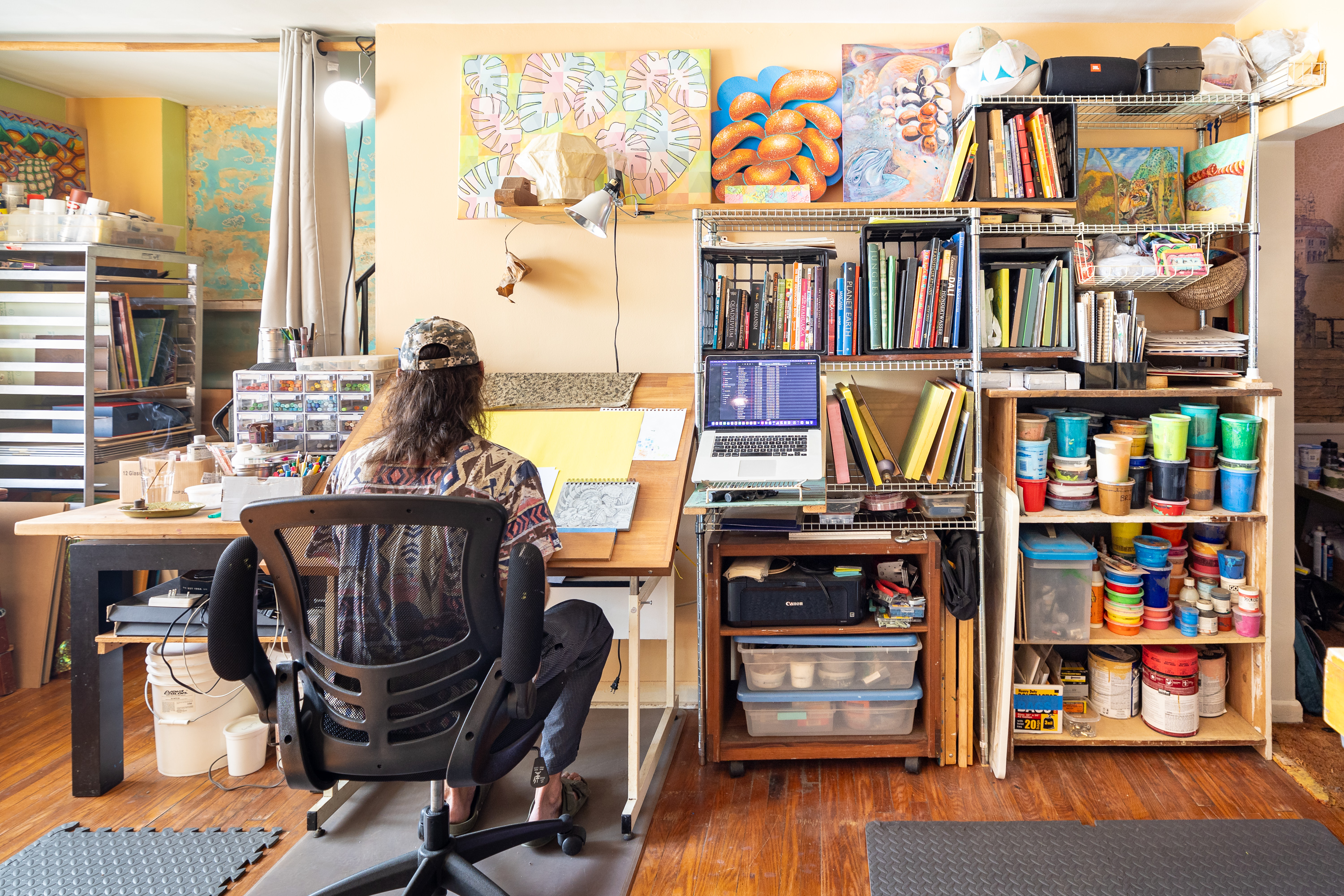
This is the fifth post in our fifth season of Philly Street Art Interviews! This season is sponsored by Philadelphia International Airport (PHL) and its @PHLAirportArt program, which curates museum-quality art exhibitions that introduce millions of visitors from around the world to the vibrant artistic culture of the region. PHL proudly supports Philly arts and culture/365! Interview and photos by Streets Dept Lead Contributor Eric Dale.
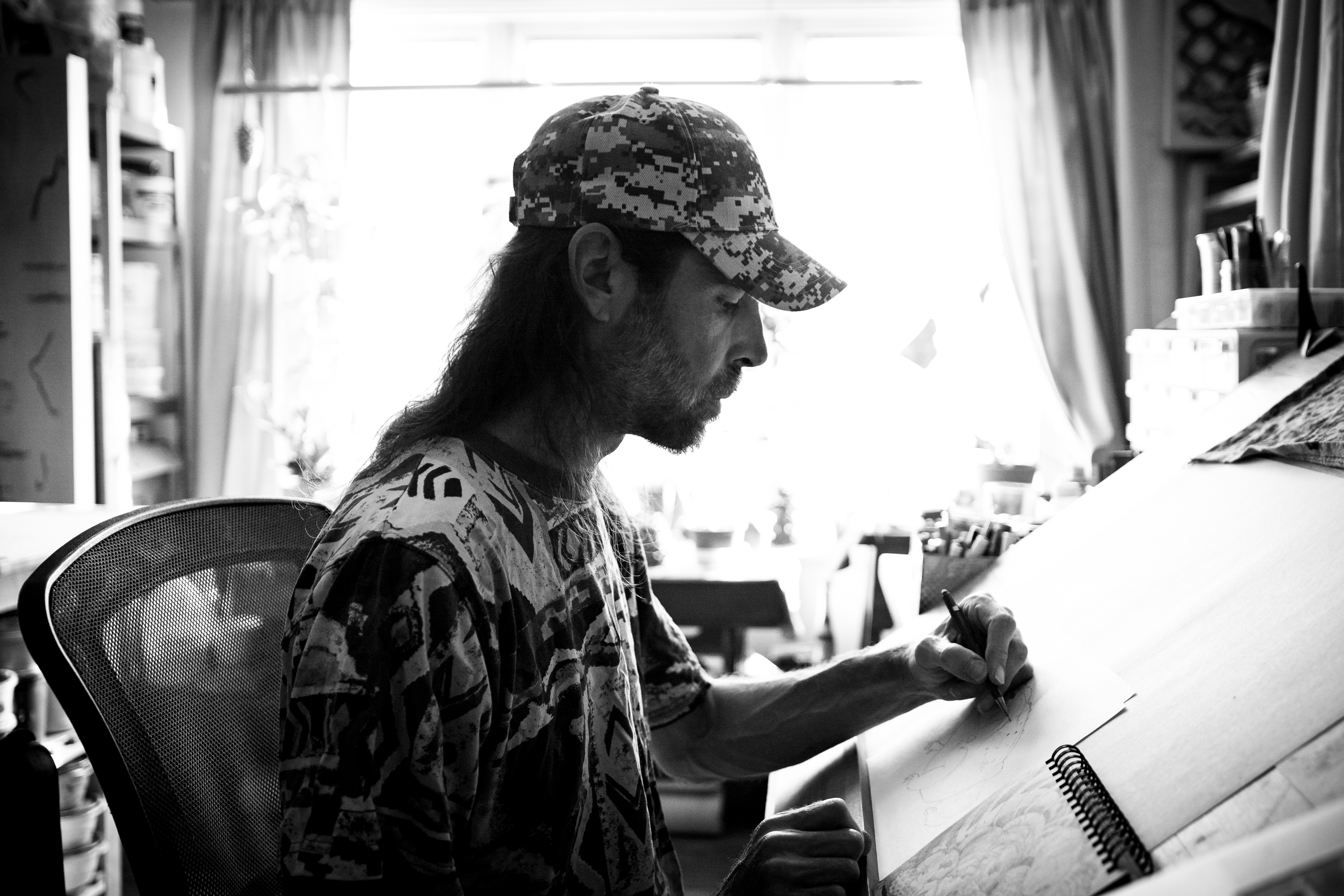
When we talk about murals in Philadelphia, we often credit one person as the creator of the work. But with work on that scale, there are many people who play a role in bringing the piece to life. The lead artist gets the vast majority of the credit for coming up with the design, but there’s often one or more other artists who have a direct connection to the paint and to the wall: the assistant artists. My interview guest this month is one of Philadelphia’s most prolific assistant artists: Josh Smith, or Le Josh.
Working both with Mural Arts Philadelphia and independently, Josh has had a hand in painting murals all over Philadelphia. There’s no doubt that you’ve seen his work without realizing it, but as I learned in our conversation, that’s just fine with him—even if we’re talking about his own artworks.
And Josh is most definitely a talented artist in his own right, creating paintings and murals that brim with vibrant colors, hum with geometric patterns, and rustle with natural imagery. Much of his personal street work feels graffiti-adjacent, in that it’s often non-commissioned. But Josh’s appealing style helps his work avoid the buff—sometimes for longer than a decade. All the while, Josh quietly paints away—in his home studio just outside the city, or up on a lift, pressed against a wall somewhere.

Streets Dept Lead Contributor Eric Dale: First of all, as an interviewer, I have to say that you’re a hard man to learn about. My background research turned up precious little information about you, so I’m curious if that’s intentional.
Le Josh: Somewhat.
SD: Why?
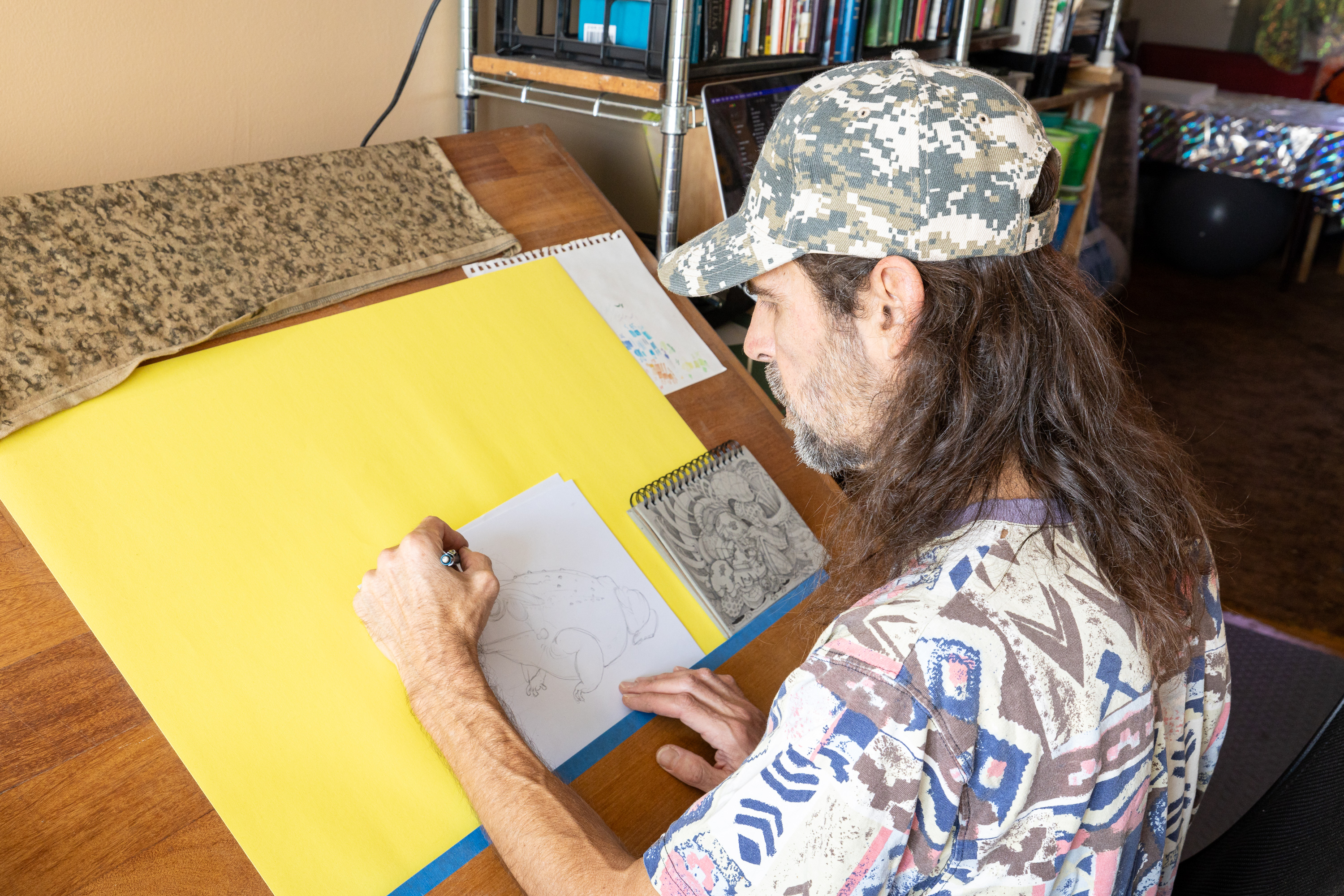
LJ: I like the idea of discretion. It’s more about what I do, not who I am. It’s about how I want my work to speak for itself, in whatever facet that I’m doing it in, whether it’s street art, or making a painting, or doing a drawing—I want that to express itself. It’s not about what’s behind it. It’s about the thing itself.
SD: Okay. I hear that. Well, so since it was so hard for me to learn about you, can you just sort of tell us about your art career? How and where did you get your start, and how did you end up doing this?
LJ: I’ve been doing art my whole life. Ever since I could remember, I’ve been drawing, and drawn towards drawing, and passionate about it. I’ve always found that to be my space, that I’ve found to be comforting the most. And throughout that, by paying attention to it, it’s a craft that I’ve developed over the years. It’s just something I keep finding myself being a fan of doing. You know? Like, what are some of your favorite things to do?—that would be top for me. To be able to have the chance to continue to do it throughout my life, coming to this stage in my life, I feel really grateful.
So, to answer your question, I’ve always done art. And then having an opportunity to be able to pursue it after high school, to be able to go to the Art Institute of Philadelphia, allowed me to pursue it in a more serious way. And take it to a different level within myself of how I treated it.
And then of course that didn’t work out the best as far as schooling goes, but I got a lot from it. Eventually dropped out, but then I met real artists in life that were doing things, that were taking me under their wing and showing me things. I’ve always had people in front of me that were doing things that allowed me to see that it was possible. So throughout college, and then after college, and then just being able to continue to pursue it got me into it.

SD: Who are some of the artists who took you under their wing?
LJ: At the stage of coming out of college, there’s this guy, Marc Brodzik, that I worked with a lot. He was doing all these realistic, real life paintings, but also transforming billboards. So he was doing these street art things in Northern Liberties at the time. And Northern Liberties was like a ghost town. So that was kind of a playground for different artists, and he was one of them—eventually I was one of them—that kind of used that area to explore creatively.
And then I worked with this guy doing glass; slumping and fusing glass; this guy Steven Stormer, who eventually passed away—rest in peace. I worked with him as his assistant.
SD: Working with the glass?
LJ: Yeah. And he had a studio at 8th and Girard, and it was this amazing, like, warehouse. He was really far in his career with glass—he taught at Tyler, and he built his own kilns, and he was in charge of some of the glass places as far as maintenance on their kilns and stuff. So he was really high up in his career, and he would get commissioned to do these really high-end jobs. So it was cool to learn through him, and he allowed me to explore glass in these different forms, almost like paintings in glass. It was really cool for me to explore that.
So he was one of the artists. And then like 1998 or ‘99, this guy Paul Santoleri came to Steve to ask us to do some glass for one of his murals. I saw Paul’s work, and then I kind of started working with him eventually, and that kind of got me into doing murals.
SD: And then Paul never made a mural without glass in it again!
LJ: Hahaha, yeah he experimented with that in different facets and stuff. But those glass pieces we did back then are still up on that wall on 5th and Olive Streets. So that was the transitions of working with different artists—all in Northern Liberties at that time, like the late 90s.
SD: So I only ask because you brought it up—what happened that you dropped out of school, if you don’t mind me asking?
LJ: Oh, I wasn’t going for the right thing. I should have went for fine arts or painting or something. I went into this field called visual communication—which is really cool. I like the idea of visual communication—I feel like I’m still doing that. But it was, like, the guise of graphic design. Graphic design was still forming, so it was like this pre-thing: eventually, visual communication turned into graphic design.
So for me, I was going to school to learn graphic design stuff, and I didn’t realize that at the time. I was just out of high school, and I was like I want to pursue art. And I had the chance to go there, and I didn’t really know what it was. And then once I found out it was more computer stuff, I was not interested.
SD: No Quark for you!
LJ: No. But it was the origins of Photoshop and Illustrator, so I got a handle on that early on, but I was resistant to doing that. We were tracing stuff, and learning typography, and I was like I don’t want to do that. But it’s all stuff I’m using now!
SD: Yeah, but when it’s being taught in that way, it’s not art.
LJ: No, it’s not. It’s more of a business. So it’s more geared towards making flyers or posters or t-shirts. It’s all graphic design. So I’m so glad to have gone through that, but I wanted to just do art and have fun and paint. I wasn’t even painting then! I just wanted to figure out what was next and what art was for me.
SD: So what is art for you now?
LJ: Still the pursuit of staying true to myself and having fun!
SD: How would you describe your work to someone who’s never seen it before?
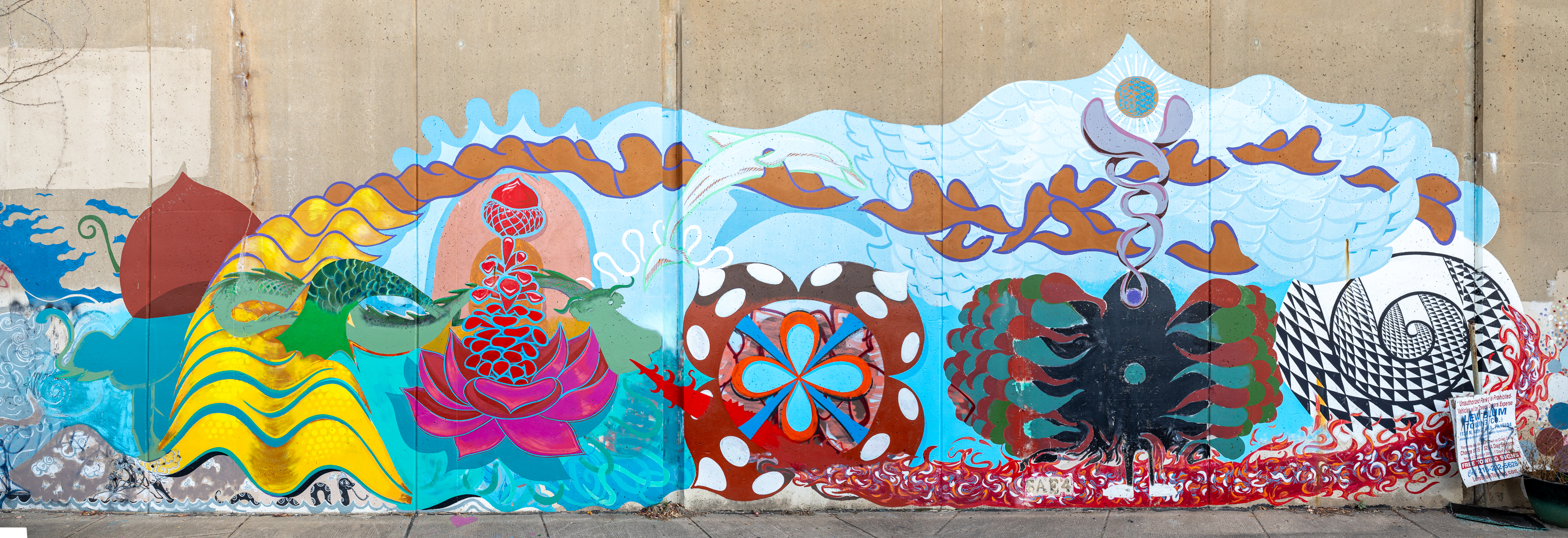
LJ: Abstract. Colorful. Pattern oriented. Hopefully fun. Hopefully positive. Those are feelings that I want people to get out of this thing.
SD: I am always advocating for more abstract public art. Why do you think there is so little in Philly?
LJ: I don’t know why. I feel like there’s an old school style here, that continues to be. There’s facilitators of that, and who knows why, but there’s a step forward that this city can take. I feel like there’s people like you and Conrad that are having more of a word, that can maybe facilitate those actions towards abstract. But since it’s just kind of been slow, maybe the funders or where the money’s coming from isn’t ready for that. But from what I’m seeing, I think there is this time for it to happen, hopefully!
SD: It seems like your signature motif, at least these days, is a pine cone. Where does that come from?
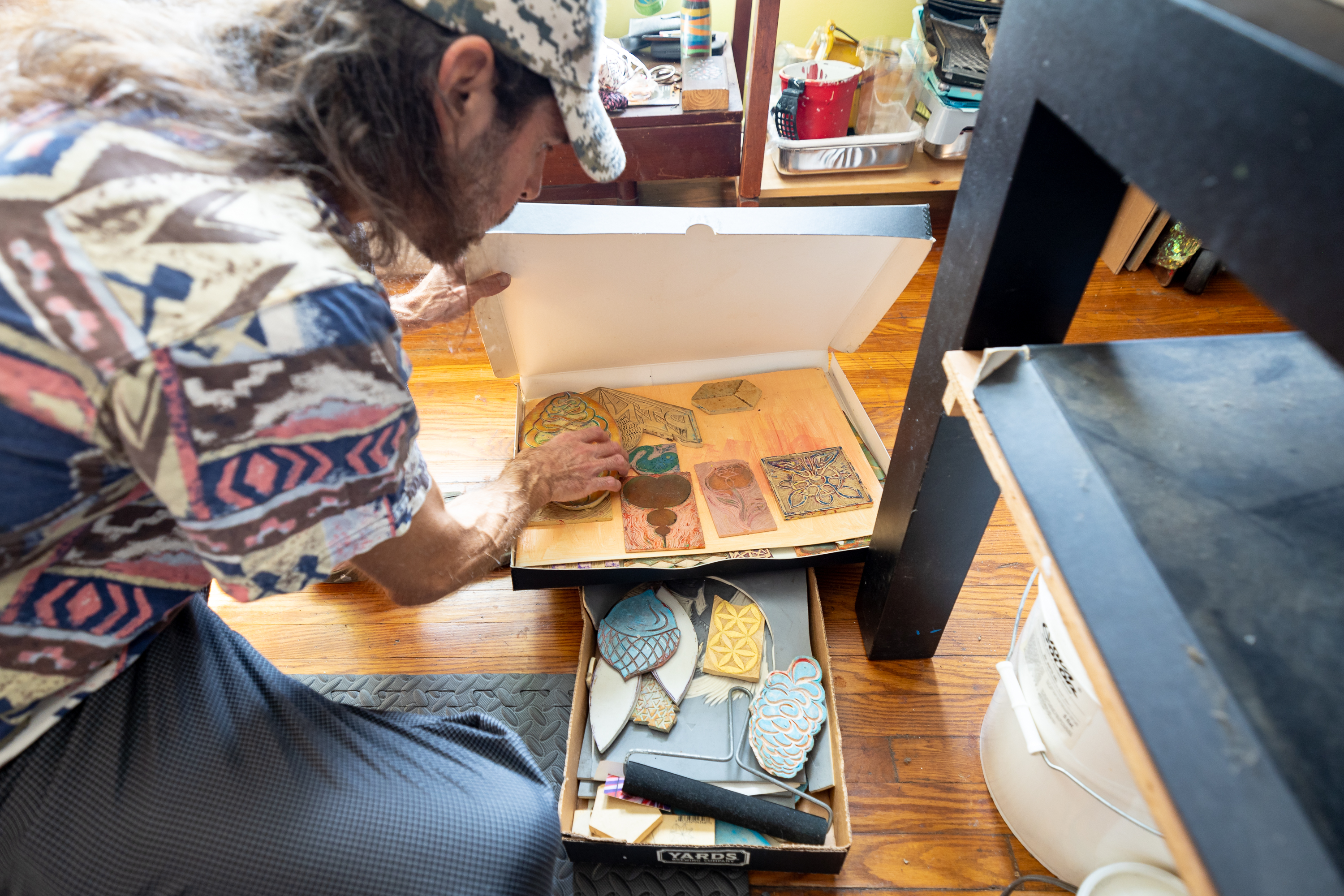
LJ: I like math. So there’s a certain symbolism within the pine cone that is throughout nature in different ways. Like the Fibonacci spiral. So the pine cone kind of holds different symbolisms within this infrastructure of math that is within nature. So it’s kind of cool in that way.
And then throughout history, different people have used its symbolism in different ways—like unity is one of the things that’s kind of neat that it symbolizes. It kind of brings things together.

SD: More broadly, there is a lot of nature-based imagery in your work. Especially when there are geometric patterns to be explored. So, has nature played like a big role in your life or your childhood?
LJ: Yes, and I guess It always has—maybe without realizing it so much when I was younger—but looking back, I’m like oh yeah, it always has. And now that I grow older, it’s something that I value and appreciate more. And it’s something that I learned from. It’s a great teacher, through observation, and paying attention, and being aware—you can learn a lot from nature, the more hands-on you are with it. It’s what we’re part of, what we’re in, and we can learn about ourselves through understanding the atmosphere and the environment that we’re in.
SD: You have a rare gift for finding creative new ways to distort and transform and explore the same forms over and over again. Can you tell me about your creative process and how you’re able to achieve that?
LJ: Through observing and paying attention and continuing to learn through nature. It allows me to kind of have more insight and perspective on the different things that I’m doing by the subject matter that I repeat over and over again. It’s just fun for me to keep it fresh; keep it new; where it doesn’t get stagnant or boring. It’s just ever-evolving, just pushing the limits.
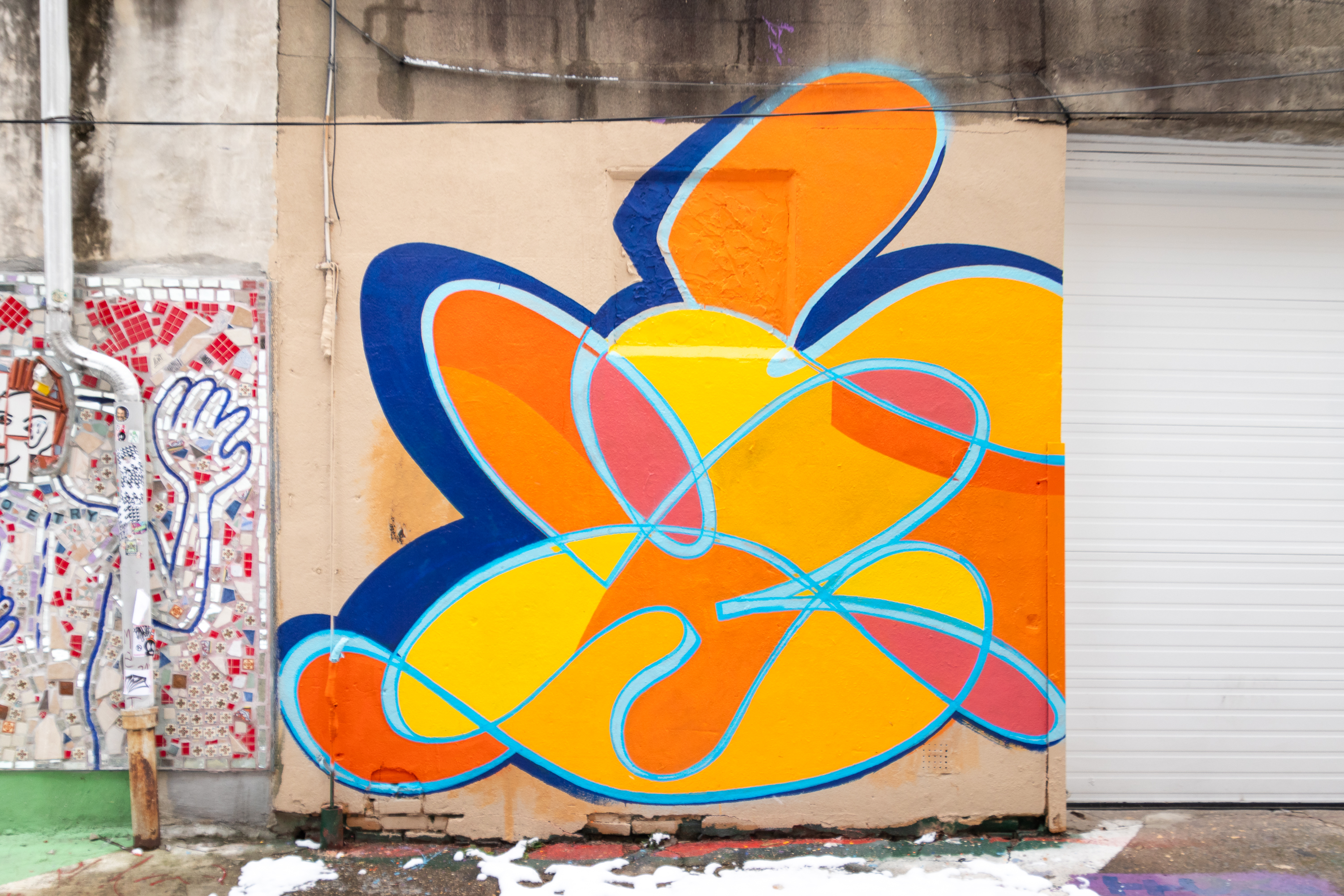
SD: So with the pine cone, for example, do you sit down and go I need to draw this in a new way today? Or does it just happen?
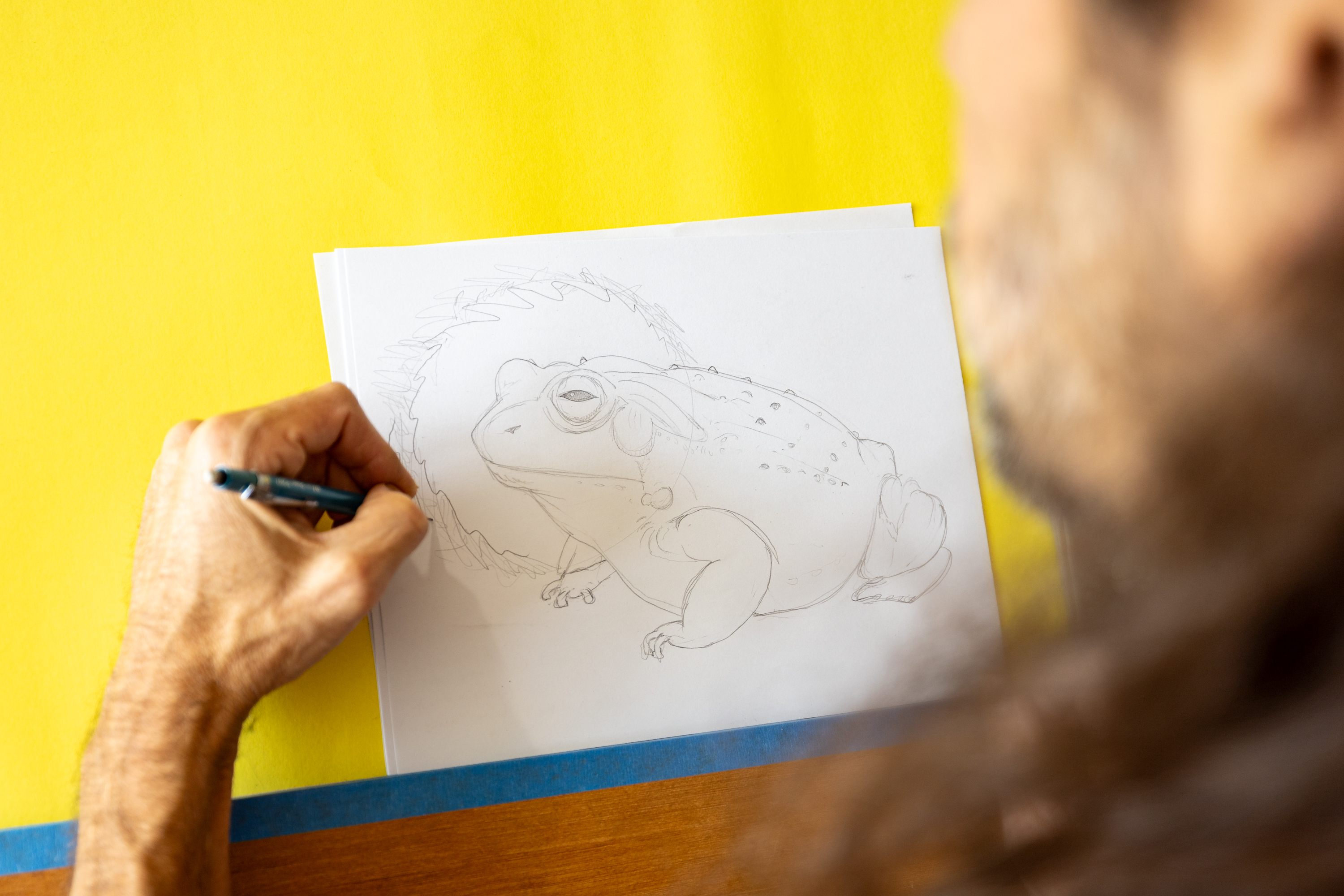
LJ: It’s through a lot of sketching. For me, that’s where I get most of my ideas. Maybe through meditation or riding my bike; tapping into different parts of my brain that allow me to have different ideas. Through physical activity, or being in nature, or just sitting with myself. If you allow yourself to be open to things, you can grow through different perspectives and get different ideas.
And then through exercising that flow of ideas—receiving information whether you’re conscious of it or not and then exercising it out whether it’s poetry or dance or music or drawings. I feel like that’s part of the process with a lot of different arts, whether people are aware of it or not.
But it’s hard, because as an artist, it’s easy to question yourself and be like what am I doing? But you have to push through that. Drawing, to me, is a meditation. Since I was a kid, it always brings me back to my comfort zone, and it’s just kind of healing. It allows me to access a certain part of my brain, which I don’t really find in other aspects of life. So that’s one thing where I can get into that zone state, where time disappears and you’re just in it. It’s like a symbiotic thing. There’s a give and take, and you’re getting ideas based on what you’re doing. It’s almost like a conversation if you’re really in it.
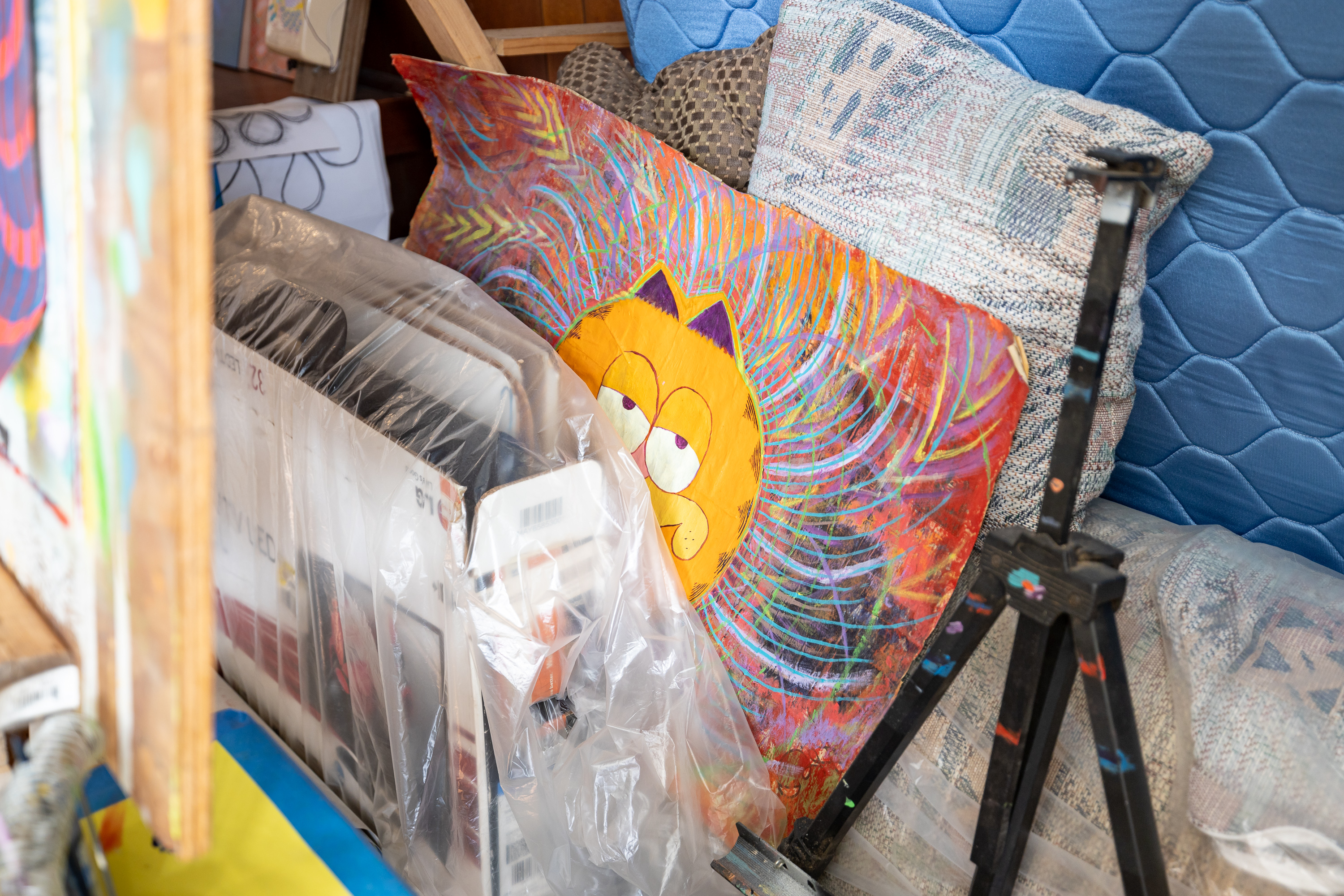
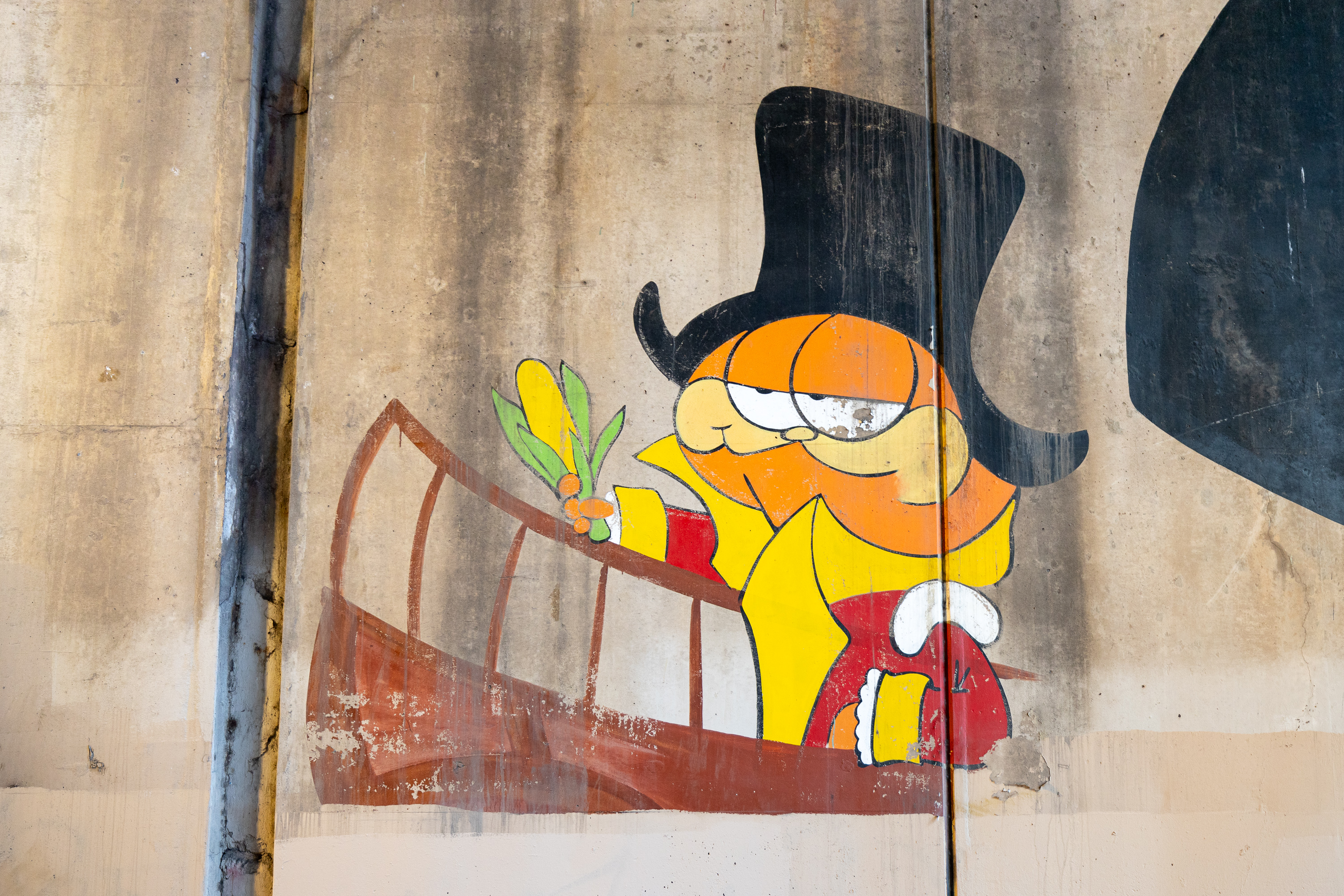
SD: I’ve never heard someone describe their flow state as a conversation! That’s really interesting. So, Garfield is another image that you’ve played around with a lot, which I understand was a big part of your childhood. Have you ever thought about creating your own character?
LJ: Yeah, nah, not so much. I don’t really like that idea of characters, even though I like Garfield. I play around with the idea of creating a character out of a pine cone, like giving it arms and legs, or fuckin’ sunglasses or something.
SD: And why hasn’t that happened? I mean, Philly loves characters in street art, you know?
LJ: I know! Maybe after this conversation… We’ll see. I don’t know.
SD: Did you ever do graffiti?
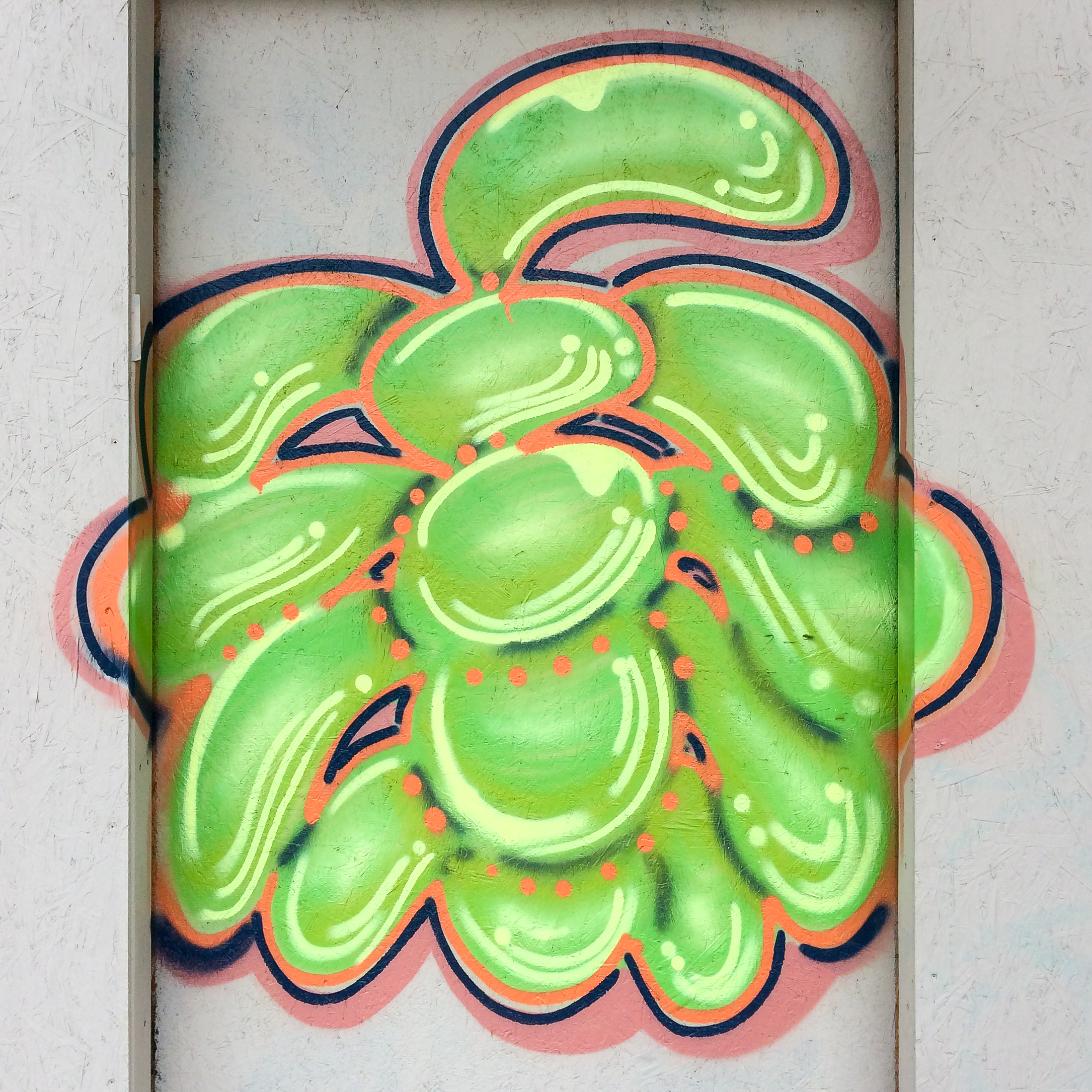
LJ: I’ve dabbled in it. I like drawing letters; I’m inspired by graffiti. Doing forms of letters or geometric shapes on walls—it’s all something similar. So yeah, I’ve dabbled in graffiti, but it’s not like something I’m trying to be or do.
SD: It’s more like you use graffiti techniques.
LJ: Pretty much. And the understanding of graffiti is, like, going back to graphic design. There’s all these different overlaps of what those things are. So I’m always drawing inspiration from what I’m seeing, and in graffiti—it’s graphic; it’s in the word—so it’s making things pop, making things bold, how do you do that with dark outlines and highlights and this and that. So yeah, I kind of draw inspiration from graffiti and I have a lot of friends that do graffiti. And I like drawing letters.
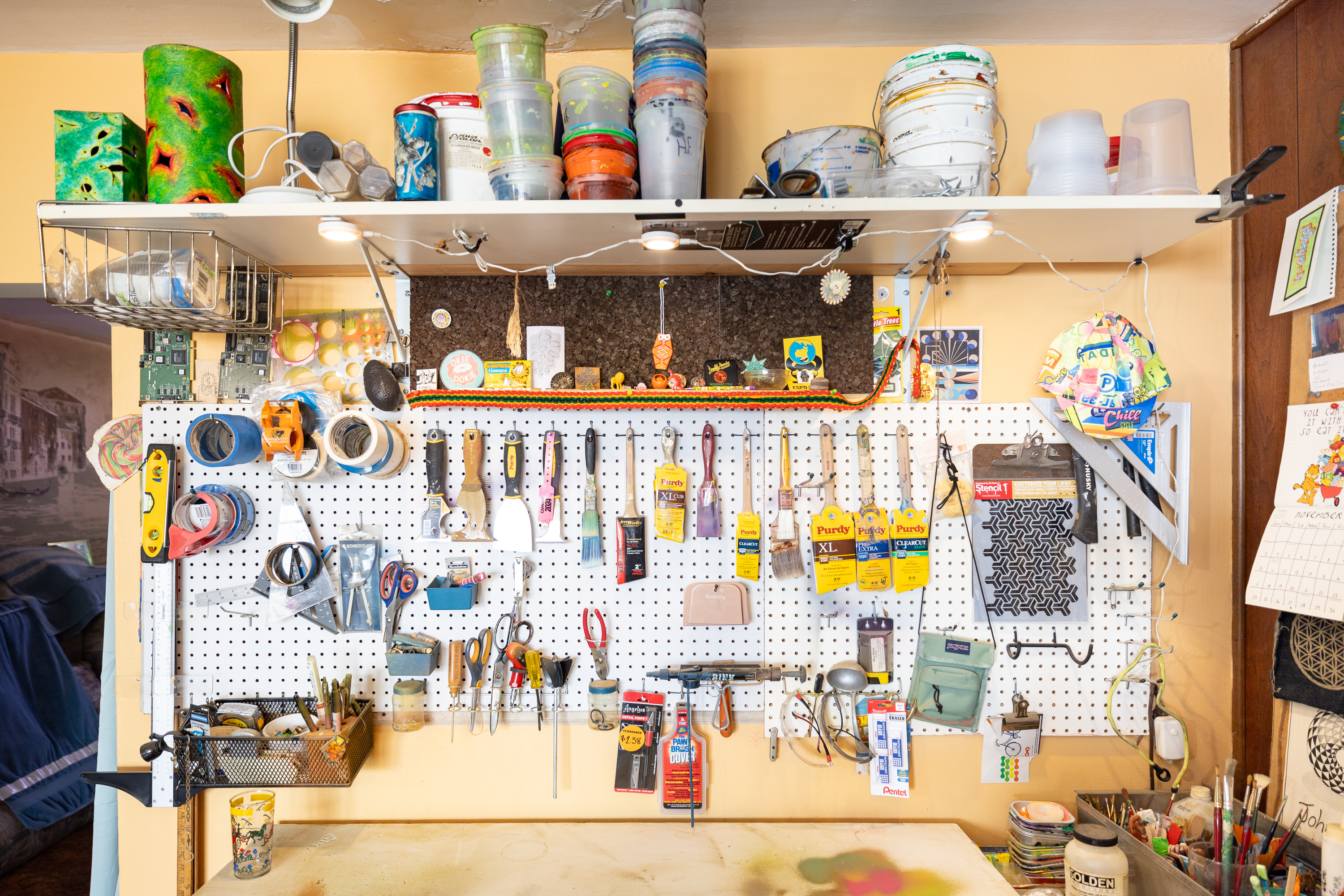
SD: So, part of the reason I wanted to interview you is because countless Philadelphians have seen your work and not even realized it. Because you’ve worked as an assistant artist with Mural Arts Philadelphia for… how many years?
LJ: Roughly 25 years. Since 2000 or ‘99.
SD: Wow.
LJ: Yeah. It was at the beginning stages, but they were definitely well into their thing. But it’s still some of the original artists that I got to work with and learn from. So over the years I’ve had the opportunity to work with so many different great artists, and learn from so many different great people.
SD: I can’t imagine. What a great experience.
LJ: Yeah, it’s a fun job.
SD: So how many murals have you helped paint over that time?
LJ: Hundreds. Even just Love Letters was fifty in one summer, so that just ramps things up. Maybe I didn’t touch every mural in that, but as far as stats and numbers, hundreds, of course. ‘Cause working with Paul for ten plus years—he’s prolific, and he was banging stuff out for many, many years. And working with David Guinn the last ten years; and throughout that working with many other artists.
SD: How does that feel?
LJ: It feels great.
SD: Haha, okay, enough said!
LJ: No, like I said, I’ve been really fortunate to learn from so many different artists. It’s a craft that I take seriously, so I’m just taking tips from all these people that are masters of their field. So for me, I’m just building up my toolbox and different tools I have under my belt. It’s a craft that I continue to want to pursue, so i’m just taking notes.
SD: So what is it like to be an assistant artist on a mural? How do you get involved? What do you do? Do you have any room for creative input?
LJ: Depends on who you work with. Sometimes people are stubborn in their ways, and sometimes people are willing to hear your perspective on how to handle a certain situation; what colors to use. Different people that you work with, you develop relationships where you’re kind of called upon in different scenarios to answer questions. But it’s all different. Every situation’s different; every artist’s different… So overall, as an assistant, you just kind of want to know what’s going on; what the next step is. When you get there, don’t just stand around—set up drop cloths; get water; get mixing sticks. There’s all these things you gotta do before you paint.
You can become more valuable in that scene if people trust you more and if people call upon you in different scenarios and you can travel and go to different places. So for me, as an assistant, it’s like I’d rather have my own thing, but I’ve gotten over my ego enough to allow it to be a cool job, you know? Sometimes I’d rather have my own job; I’d rather have my own assistant do my own murals—and maybe hopefully in the future that can still happen. But for now, it’s a cool gig. It’s allowed me to travel and go to different places in the world and in the country. So it’s been a cool ride.
SD: Yeah, I know you just got back from Miami with David Guinn, and you’ve worked with him on a lot of projects in the last decade. How did you two meet?
LJ: Pretty much through Mural Arts.
SD: But now you work with him on projects outside of Mural Arts?
LJ: Yeah, I mean, we’ve built a relationship enough where he feels comfortable enough to hire me on these gigs outside of Mural Arts, which is great.
SD: Alright, so I want to go back to your work and talk about some obscure pieces of yours I was able to find online… like the chocolate bar wrappers. How did that come about?
LJ: Oh, wow! Phil Asbury came to me, I guess. He was affiliated with this chocolate company. They were based out of South Philly somewhere I think. And he was doing these limited edition runs with different artists doing prints for their labels. And so he knew me and asked me to do a label! At that time I was just having art shows and stuff and he would always pop up and check out what I was doing, and I would see him out in the city, and so we just got kind of got familiar from just bumping into each other. That was a long time ago!
SD: It’s still lingering on the internet out there!
LJ: That’s cool.
SD: And then I believe you also did an album cover for a local band. Is that right?
LJ: I did an album cover for the band Manic Mule a long time ago. That was, like, in the late nineties. They were a jam band and my roommate was the sound man. I like doing artwork for bands, especially my friends. The band Dirty Soap that I’m friends with—over the years, I’ve done flyers for them.
SD: How has your work changed over time?
LJ: As I go throughout time in my work, I just learn more stuff, so I’m able to apply different things that I learn. And then I forget things. And then I circle back. And then I re-remember things. And so it’s like this ever-evolving thing. If you keep pursuing something, there’s more to it. So every so often you get through this different door. And you’re like oh, I learned all this; I thought I was gettin’ somewhere. And then the door opens and you’re like oh, there’s all this more stuff to learn. So it’s like that.
And then different facets of art… Like, the craft of doing murals is one thing—how you’re going to apply primer; how are you going to prepare the wall; how the paint sits on it; how it’s going to endure time and rain and sun. All those things are things to consider in that specific craft.
But then if you’re going to paint, you have to think about color, composition, and how things play out, and how the viewer will see things. So, all those layers of things.

SD: So if I was going to try to identify one aspect of your work that has shifted the most dramatically over time, what would it be?
LJ: Well, the last couple years I started going down this path of making these paintings that were, like, formulated. Like you were saying before, I always do new things. But for me, that’s like a new thing, to have a formula. I’m still doing many other things besides that, but this is something that people are kind of gravitating towards, that I’m getting opportunities in because people like it. So I’m riding out that wave.
And it’s a formula—I’m like this is easy! To me, the idea of making a painting is something that could take months. Not painful, but it’s like this puzzle, and it’s not always easy. It’s like this thing you have to work at and figure it out. For me, that was a painting. But now I’m like oh, I can just make a painting? And that’s a painting? So it’s like getting over that hump of what is art to me?—letting go—for me to be able to let go and present this formulated thing. It’s kind of boring, but it’s not, because I can then figure out how am I going to do fades better? What colors work better together? How am I going to make it pop more? Let’s figure this out. But people are liking it. So it’s like how do I just make it more fun for me?
So that’s a big thing that shifted for me—letting go, and letting it just be fun. It doesn’t have to be this overdeveloped thing with all this thought. Because no one cares. I could write a book about some of my paintings, but no one cares. For me, it’s not about the words, it’s about the image. So the thing itself has to speak to people. It’s “do people like that?,” you know? They don’t have to know what it means, they don’t have to know what it is. Does that vibrate with them? Is it something that they’re drawn towards; something they want to look at? Does it make someone think? So yeah, letting go of what a final piece is.
SD: That’s really interesting. What has been the most challenging or surprising part of your creative journey?
LJ: Part of it is the fact that it has allowed me to travel so much, to different countries and different places; to experience different things that, when I was a kid, I would never think I would do any of these things. For art to be able to provide me with these opportunities—whether it’s mine or someone else’s—that’s kind of a big surprise, like, thinking about where I was when I was younger. Never would I think I would be able to go to France, or Denmark through painting. So that’s a big shocker. I’m super grateful.

SD: Do you have any advice for young artists in Philly?
LJ: I mean, the advice that I got when I was a young artist was stay true to yourself. So, I mean…
SD: Still holds true.
LJ: Yeah.
SD: Seems like you’re doing that.
LJ: Yeah. I’ll take that!
 Streets Dept
Leave a reply to Kelly G Cancel reply